---
author:
- contributor_roles: []
family: Edmunds
given: Scott
url: https://orcid.org/0000-0001-6444-1436
blog:
authors: null
community_id: 52db0518-e228-4260-8c54-c4e323b2569d
created: 1675555200
current_feed_url: null
description: Data driven blogging from the GigaScience editors
doi: https://doi.org/10.59350/gigablog
favicon: https://rogue-scholar.org/api/communities/52db0518-e228-4260-8c54-c4e323b2569d/logo
feed_format: application/atom+xml
feed_url: http://gigasciencejournal.com/blog/feed/atom/
filter: null
generator: Other
home_page_url: https://gigasciencejournal.com/blog
issn: null
language: eng
license: https://creativecommons.org/licenses/by/4.0/legalcode
prefix: '10.59350'
relative_url: null
secure: false
slug: gigablog
status: archived
subfield: '1311'
title: GigaBlog
updated: null
use_api: null
container: GigaBlog
date: '2013-08-20T00:00:00+00:00'
date_updated: '2025-12-06T10:42:54+00:00'
guid: http://finaloriginalblogs.dev/gigablog/?p=767
identifier: https://doi.org/10.59350/vmb4z-g1e81
image: http://gigasciencejournal.com/blog/wp-content/uploads/2013/08/Keith-Bradnam_UC-Davis.jpg
images:
- height: '220'
sizes: '(max-width: 220px) 100vw, 220px'
src: http://gigasciencejournal.com/blog/wp-content/uploads/2013/08/Keith-Bradnam_UC-Davis.jpg
srcset: http://gigasciencejournal.com/blog/wp-content/uploads/2013/08/Keith-Bradnam_UC-Davis.jpg,
http://gigasciencejournal.com/blog/wp-content/uploads/2013/08/Keith-Bradnam_UC-Davis-150x150.jpg,
http://gigasciencejournal.com/blog/wp-content/uploads/2013/08/Keith-Bradnam_UC-Davis-100x100.jpg
width: '220'
- src: http://gigasciencejournal.com/blog/wp-content/uploads/2013/08/Keith-Bradnam_UC-Davis.jpg
issn: null
keywords:
- Technology
- Assemblathon
- Competitions
- Genome Assembly
- Genomics
lang: en
license: https://creativecommons.org/licenses/by/4.0/legalcode
rid: rsj6e-6cn88
rights: https://creativecommons.org/licenses/by/4.0/legalcode
summary: A lot has already been written about last months Assemblathon2
paper in GigaScience (see the growing list of articles here), but for
the box-set completists interested in squeezing every last bit of insight into the
project and how it was put together, there was a lot of additional material left
over from the recent Biome Q&A with Keith Bradnam that we thought it could be
useful to post in a (hopefully final) blog posting.
title: Extended Q&A with Assemblathon2 Author Keith Bradnam
url: https://wayback.archive-it.org/22098/2025-05-01T17:13:42Z/http://gigasciencejournal.com/blog/extended-qa-with-assemblathon2-author-keith-bradnam
version: v1
---
[{.alignleft
.size-full .wp-image-770 loading="lazy" decoding="async"
srcset="http://gigasciencejournal.com/blog/wp-content/uploads/2013/08/Keith-Bradnam_UC-Davis.jpg 220w, http://gigasciencejournal.com/blog/wp-content/uploads/2013/08/Keith-Bradnam_UC-Davis-150x150.jpg 150w, http://gigasciencejournal.com/blog/wp-content/uploads/2013/08/Keith-Bradnam_UC-Davis-100x100.jpg 100w"
sizes="(max-width: 220px) 100vw, 220px" width="220"
height="220"}](http://gigasciencejournal.com/blog/wp-content/uploads/2013/08/Keith-Bradnam_UC-Davis.jpg)A
*lot* has already been written about last months [Assemblathon2
paper](http://www.gigasciencejournal.com/content/1/1/18 "Assemblathon2 paper"){target="_blank"
rel="noopener"} in *GigaScience* (see the growing list of articles
[here](http://assemblathon.org/post/44431915644/feedback-and-analysis-of-the-assemblathon-2-p "Assemblathon Blog"){target="_blank"
rel="noopener"}), but for the box-set completists interested in
squeezing every last bit of insight into the project and how it was put
together, there was a lot of additional material left over from the
recent [Biome Q&A with Keith
Bradnam](http://www.biomedcentral.com/biome/keith-bradnam-on-assemblathon-2-putting-genome-assembly-tools-to-the-test/ "Biome Bradnam Q&A"){target="_blank"
rel="noopener"} that we thought it could be useful to post in a
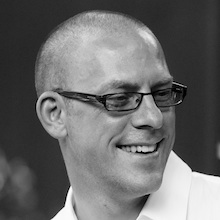
(hopefully final) blog posting. Keith is a project scientist in the
[Korf lab](http://korflab.ucdavis.edu/ "Korf lab"){target="_blank"
rel="noopener"} at UC Davis where he has juggled investigating
intronic-based signals in gene expression and running the Assemblathon.
This is the second Q&A we have collected in Gigablog, after Xin Zhou
provided an [behind-the-scenes
overview](http://blogs.biomedcentral.com/gigablog/2013/04/02/qa-with-xin-zhou-author-of-our-insect-squishome-paper/ "Qin Zhou Q&A"){target="_blank"
rel="noopener"} of his insect \"squishome\" metabarcoding paper, and we
hope to provide more of these in the future that you will be able to
search using the Q&A tag.
**How did the Assemblathon come about?**
The
[Assemblathon](http://assemblathon.org/ "Assemblathon website"){target="_blank"
rel="noopener"} developed as an offshoot of the [Genome 10K
project](https://genome10k.soe.ucsc.edu/ "Genome10K homepage"){target="_blank"
rel="noopener"}, which is aiming to sequence the genomes of 10,000
vertebrates. There is almost no point in attempting to sequence so many
genomes if we are not reasonably sure that we can accurately assemble
those genomes from the initial sequencing read data. As there are so
many different tools out there to perform *de novo* assembly, it seemed
to make sense to try to benchmark some of them.
**Why is it important to assess genome assembly?**
There are many areas of genomics where a researcher can find a plethora
of bioinformatics tools that all try to solve the same problem. However,
different software tools often produce very different answers. Even the
same tool can generate very different answers if you explore all of its
parameters and configuration options. It is not always obvious how the
results from different tools stack up against each other, and it is not
always obvious as to which tools we should trust the most (if any).
If you wanted to know who made the best chili in your local area, then
you could organize a \'chili cook off\'. As well as deciding an overall
winner, you could also award prizes for specific categories of chili
(best vegetarian chili, best low-fat recipe etc.). What we can do for
chili we can also do for genome assemblers.
Contests like the Assemblathon can help reveal the differences in how
different genome assemblers perform, and can also pinpoint the specific
areas where one program might outperform another. However, just as
tasting chili can be a very subjective experience, there can be similar
issues when evaluating genome assemblers. One of the objectives for the
Assemblathon was to try to get a handle on what \'best\' means in the
context of genome assembly.
**As the majority of genomes are currently sequenced using the same
Illumina technology, are things pretty standardized?**
The landscape of sequencing technology is constantly shifting. Illumina
has a strong grip on the sequencing market at the moment; however, there
are many other players out there (Ion Torrent, Roche 454, Pacific
BioSciences, ABI SOLiD), not to mention others who may or may not shake
up the industry in the near future (e.g. Oxford Nanopore, Nabsys).
There can also be a lot of diversity \*within\* a single platform. The
first Illumina (then Solexa) sequencing reads were only 25 bp long; the
latest Illumina technology is promising maybe a 10-fold increase in
length. Writing software to optimize the assembly of 25 bp reads is a
different problem than optimizing the assembly of 250 bp reads. So even
if we only had a single platform, there would still be a need to
evaluate and reevaluate assembly software.
**What was the rationale for using a different approach to Assemblathon
1, where you used synthetic data?**
It helps to put a jigsaw together when you have the picture on the box
to help you! Most of the time that people perform genome assembly, they
don\'t have that picture. So it can be hard to know whether you even
have all of the genome present (let alone whether it is accurately put
together). In Assemblathon 1, we wanted to know what the answer was
going to be \*before\* people started assembling data, so we used an
artificial genome that was created in a way that tried to preserve some
properties of a real genome.
However, for Assemblathon 2 there was a lot of interest in working with
real world data. The genome assembly community wants to be solving
problems that can actually help others with their research.
**Why did you pick the three species that you did (budgie, boa
constrictor and cichlid fish)?**
A major factor was simply the availability of suitable sequencing data.
But it also seemed a good idea to use some fairly diverse species, the
genomes of which might pose different types of challenge for genome
assemblers (different repeat content, heterozygosity etc.).
**What were the main findings of Assemblathon2?**
To paraphrase Abraham Lincoln: you can get an assembler to perform well
across all metrics in some species, across some metrics in all species,
but you can\'t get an assembler to perform well across all metrics in
all species.
**Were you surprised by the huge variations in the results?**
Yes and no. Personally speaking, I was expecting to see variation in
performance between assemblers but I thought that some of the bigger
\'brand name\' assemblers might have shown more consistency when
assessed across species.
**What were the challenges of coordinating such a large project?**
Coordinating 91 co-authors on \*any\* project is tough, but in the case
of Assemblathon 2 most of those co-authors were from competing teams.
Therefore you have to be careful to ensure that suggestions to change
any detail of the project/paper are all in the best scientific interests
of everyone concerned. Data distribution of the raw input data was also
a challenge and was helped greatly by the Pittsburgh Supercomputing
Center that helped make the data available for downloading. In many
cases, it was easier for collaborators to use the \'sneakernet\'
approach and just send us hard drives in the post.
**The way you have embraced pre-prints and blogging, and the way the
more interactive peer-review came about is still quite unusual for
biology. What is the appeal of making your work available in arXiv, and
the open peer-review that *GigaScience* carries out?**
Personally, I am a strong advocate that results from tax-payer funded
research should become publicly available a.s.a.p. I think we can
demonstrably show --- by the volume of blog posts that have now
discussed the Assemblathon 2 project --- that the resulting conversation
about genome assembly has been a useful one. I really hope that more
journals adopt open peer-review and encourage the use of pre-print
servers.
**Has the experience changed the way you plan to publish your own work
in the future, or review others work?**
I think it has made me even more committed to support open access
publishing and open peer-review (I made the decision about a year ago to
start signing my reviews, even when not required). It has also made me
more determined to write more on my [personal
blog](http://keithbradnam.com/ "Keith Bradnam blog"){target="_blank"
rel="noopener"} about bioinformatics and genomics. Blogging and tweeting
about your work can raise your visibility within your field, can help
hone your writing skills, and may even help you compete with others when
applying for jobs.
**Titus Brown, who [openly
blogged](http://ivory.idyll.org/blog/thoughts-on-assemblathon-2.html "Titus Assemblathon blog posting"){target="_blank"
rel="noopener"} about the paper whilst in peer review, suggests that
scientists do a very poor job of communicating the uncertainty in genome
assemblies \'an indictment of much of computational biology\'. Do you
have such a bleak view? What do we need to do to improve this?**
To a large degree, I agree with Titus. The genomics community often
talks about \'drowning in data\', but we are also \'drowning in tools to
analyze that data\'. This is especially so in certain areas, e.g. the
number of programs available that map short-reads back to genomes is
overwhelming. Sometimes it seems that we are in an endless race to keep
on publishing new tools without pausing to really check how well the
existing tools work (or whether they work at all). Maybe we need a
dedicated journal, or online resource, that does nothing other than
assess the comparative performance of bioinformatics tools. We should
also be encouraging students --- i.e. the next generation of
bioinformaticians --- to perhaps be more distrustful of these tools.
Just because a particular piece of software gives you an answer,
doesn\'t make it the right answer (or the only answer).
**On top of what we are doing wrong with genome assembly, what are we
doing right? Are there any positives you have found from the project?**
One of the issues that has partly limited the field of genome assembly
is that we have mostly stuck with the same sequence file formats (FASTA
and FASTQ). These formats limit us to only displaying \*one\* version of
a genome sequence, even when we know about variants that might be
present. This is a bit like having to tick a single box on
questionnaires that ask you about your ethnicity. If you are half
Japanese and half Swedish, which box do you tick? Choosing one option
means you lose a whole lot of information. Currently, a genome assembly
in FASTA format is an assembly that has to tick that one box over and
over again.
Fortunately, an initiative led by the Broad Institute has led to the
development of a new \'FASTG\' sequence format. This format allows a
genome assembly sequence to describe haplotype and other variation. For
example, a contig might contain a region that consists of ACGT followed
by 2 or 3 Cs, optionally followed by a G. The FASTG format allows you to
capture this variation and this will allow for a much better
representation of genome assemblies. A true genome sequence is usually a
mix of two parental genomes, and we should be representing this.
**The results from each of the teams on each of the genomes was very
mixed, but would you say there were some entries that were better
overall? One criticism of Assemblathon is that to get so many groups to
continue to take part, you\'ve been reluctant to promote winners and
losers. How do you respond to this, and can you tell us who the real
winner was?**
We were very diplomatic with how we described the outcome of
[Assemblathon
1](http://genome.cshlp.org/content/21/12/2224.full "Assemblathon1 paper"){target="_blank"
rel="noopener"}, where some assemblers performed consistently better
than others. But in Assemblathon 2, there was so much variation it
seemed hard to say that any single team should be declared a winner. At
best we can say that in a given species, and when considering a specific
genome assembly metric, that there were winners i.e. some assemblers
will give you longer contigs for the fish genome, some others might
capture more of the genes in the snake genome, and others will give
better coverage of the bird genome. These may all be different
assemblers. This is not necessarily what people were hoping to hear, but
that\'s what happened. Hopefully, this information will still be
valuable to people though.
**There has been a lot of criticism lately of large consortia driven
projects such as
[ENCODE](http://encodeproject.org/ENCODE/ "ENCODE project"){target="_blank"
rel="noopener"}. Having had to coordinate over 20 groups, and 90 authors
on this paper, has this changed your perspective on this? What have you
learned from the whole experience, and do you think you will tackle
anything on this scale again?**
Assemblathon 2 is a bit different to projects like ENCODE in that it was
a contest that was predominantly organized by a fairly small group
(three of us at the UC Davis Genome Center). The large number of
co-authors primarily reflect the composition of the 21 competing teams
that took part. I have learned a lot from the experience, especially not
to underestimate the challenges involved when coordinating so many
people! A quick tip to anyone else in a similar position: using Google
Docs to coordinate feedback on a draft manuscript is a viable --- i.e.
sanity-restoring --- alternative to instead emailing many PDFs or Word
Docs back and forth and having to somehow assimilate the resulting melee
of comments.
It\'s hard to imagine doing something like this again, but who knows.
**Do you think there will be an Assemblathon3? If so, what do you think
you would do differently next time?**
I\'m in the process of writing a blog post on this very topic (to be
posted at
[http://assemblathon.org](http://assemblathon.org/ "Assemblathon website"){target="_blank"
rel="noopener"}). There are many things that could, and perhaps should,
be done differently. For starters, if the community embraces the FASTG
format that I mentioned earlier, it would make sense to use this as the
format of choice for Assemblathon 3. Perhaps more importantly, we should
find a different lead author!
**Further reading:**\
[1.](http://dx.doi.org/10.1186/2047-217X-2-10 "Assemblathon paper"){target="_blank"
rel="noopener"} Keith R Bradnam *et al.*, Assemblathon 2: evaluating de
novo methods of genome assembly in three vertebrate species
*GigaScience* 2013 **2**:10
[http://dx.doi.org/10.1186/2047-217X-2-10](http://dx.doi.org/10.1186/2047-217X-2-10 "Assemblathon paper"){target="_blank"
rel="noopener"}
UPDATE 22/8/13 Keith has now posted his \"Is there going to be an
Assemblathon 3?\" blog posting
[here](http://assemblathon.org/post/58945403634/thoughts-on-assemblathon-3 "Assemblathon3 blog").
The post [Extended Q&A with Assemblathon2 Author Keith
Bradnam](http://gigasciencejournal.com/blog/extended-qa-with-assemblathon2-author-keith-bradnam/){rel="nofollow"}
appeared first on
[GigaBlog](http://gigasciencejournal.com/blog){rel="nofollow"}.