---
author:
- contributor_roles: []
family: Edmunds
given: Scott
url: https://orcid.org/0000-0001-6444-1436
blog:
authors: null
community_id: 52db0518-e228-4260-8c54-c4e323b2569d
created: 1675555200
current_feed_url: null
description: Data driven blogging from the GigaScience editors
doi: https://doi.org/10.59350/gigablog
favicon: https://rogue-scholar.org/api/communities/52db0518-e228-4260-8c54-c4e323b2569d/logo
feed_format: application/atom+xml
feed_url: http://gigasciencejournal.com/blog/feed/atom/
filter: null
generator: Other
home_page_url: https://gigasciencejournal.com/blog
issn: null
language: eng
license: https://creativecommons.org/licenses/by/4.0/legalcode
prefix: '10.59350'
relative_url: null
secure: false
slug: gigablog
status: archived
subfield: '1311'
title: GigaBlog
updated: null
use_api: null
container: GigaBlog
date: '2016-06-07T00:00:00+00:00'
date_updated: '2025-12-06T10:33:58+00:00'
guid: http://blogs.biomedcentral.com/gigablog/?p=1759
identifier: https://doi.org/10.59350/tqjce-91w17
image: http://gigasciencejournal.com/blog/wp-content/uploads/2016/06/Life_cycle_of_Schistocephalus_solidus-269x300.jpg
images:
- alt: Francois_Olivier_Hebert
height: '120'
sizes: '(max-width: 120px) 100vw, 120px'
src: http://gigasciencejournal.com/blog/wp-content/uploads/2016/06/Francois_Olivier_Hebert.jpg
srcset: http://gigasciencejournal.com/blog/wp-content/uploads/2016/06/Francois_Olivier_Hebert.jpg,
http://gigasciencejournal.com/blog/wp-content/uploads/2016/06/Francois_Olivier_Hebert-100x100.jpg
width: '120'
- height: '300'
sizes: '(max-width: 269px) 100vw, 269px'
src: http://gigasciencejournal.com/blog/wp-content/uploads/2016/06/Life_cycle_of_Schistocephalus_solidus-269x300.jpg
srcset: http://gigasciencejournal.com/blog/wp-content/uploads/2016/06/Life_cycle_of_Schistocephalus_solidus-269x300.jpg,
http://gigasciencejournal.com/blog/wp-content/uploads/2016/06/Life_cycle_of_Schistocephalus_solidus.jpg
width: '269'
- alt: 13742_2016_128_Fig1_HTML
height: '300'
src: http://gigasciencejournal.com/blog/wp-content/uploads/2016/06/13742_2016_128_Fig1_HTML-293x300.gif
width: '293'
issn: null
keywords:
- Biology
- Technology
- Genomic
- Protocols
- Protocols.io
lang: en
license: https://creativecommons.org/licenses/by/4.0/legalcode
rid: 1fj19-vga72
rights: https://creativecommons.org/licenses/by/4.0/legalcode
summary: Schistocephalus solidus is as an emblematic study system in
parasitology, first discovered by Peter Christian Abildgaard as far back as 1790,
as having an extremely complicated life-cycle with multiple developmental states
and host species (parasitizing crustaceans, fish and birds). Its fitting that such
a classical model system has been used to showcase novel mechanisms of crediting
and sharing research protocols in a reproducible
title: Parasite Protocols Part 2. Author Q&A with François Olivier Hébert
url: https://wayback.archive-it.org/22098/2025-05-01T17:13:42Z/http://gigasciencejournal.com/blog/parasite-protocols-part-2-author-qa-francois-olivier-hebert
version: v1
---
***{.alignleft
.size-full .wp-image-1760 loading="lazy" decoding="async"
srcset="http://gigasciencejournal.com/blog/wp-content/uploads/2016/06/Francois_Olivier_Hebert.jpg 120w, http://gigasciencejournal.com/blog/wp-content/uploads/2016/06/Francois_Olivier_Hebert-100x100.jpg 100w"
sizes="(max-width: 120px) 100vw, 120px" width="120"
height="120"}Schistocephalus solidus is as an emblematic study system in
parasitology, first discovered by [Peter Christian Abildgaard as far
back as
1790](http://www.sciencedirect.com/science/article/pii/0169475890901798),
as having an extremely complicated life-cycle with multiple
developmental states and host species (parasitizing crustaceans, fish
and birds). Its fitting that such a classical model system has been used
to showcase novel mechanisms of crediting and sharing research protocols
in a reproducible manner. Here François Olivier Hébert (Laval
University, Quebec) give some insight into his recent [Data
Note](http://gigascience.biomedcentral.com/articles/10.1186/s13742-016-0128-3)
in GigaScience, the methodological challenges of this work, and how easy
it was to use protocols.io. For more on this collaboration see also the
announcement blogs [from
us](http://blogs.biomedcentral.com/gigablog/2016/06/03/reproducible-research-resources-researching-parasites/)
and protocols.io.***
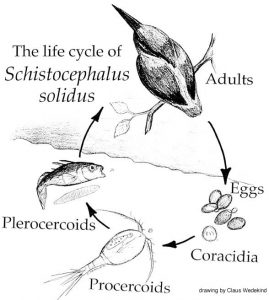
***Schistocephalus solidus* has been studied for more than 200 years, so
what is still to be discovered about this parasite? Why study the
transcriptome?**
{.alignright
.wp-image-1761 .size-medium loading="lazy" decoding="async"
srcset="http://gigasciencejournal.com/blog/wp-content/uploads/2016/06/Life_cycle_of_Schistocephalus_solidus-269x300.jpg 269w, http://gigasciencejournal.com/blog/wp-content/uploads/2016/06/Life_cycle_of_Schistocephalus_solidus.jpg 588w"
sizes="(max-width: 269px) 100vw, 269px" width="269" height="300"}Funny
you should ask this question because I am currently reviewing most of
the « old papers » that were written on Schistocephalus and I find a lot
of parallels between what people found in the 50\'s, 60\'s and 70\'s and
what we find with our transcriptomic analysis. In fact, since 1790,
people have been extremely interested in the life history traits of this
parasite and mainly, its impact on the various hosts is infects. Since
then, the scientific community was able to discover various ways to keep
the worms in the lab, discover their complete life cycle and develop in
vitro techniques that led to important discoveries now widely used in
the treatment of various parasite-induced afflictions. So much of the
phenotypic and physiological aspects of Schistocephalus have been
investigated, but we still don\'t know how these biological traits are
regulated and managed by the worm. In other words, what are the
mechanisms used by the parasite to perform these biological activities?
The physiology of the worm allows us to make the link between what
happens at the macro scale (e.g. morphology of the life stages) and what
happens at the micro scale (e.g. which genes are used at what stage of
the infection). So far, we had the morphological and physiological
parts, but the micro scale was lacking. One of the approaches to
understanding how the functional response of an organism is modulated
during its life cycle involves the study of gene regulation. In order to
do that, we needed to build a transcriptome and use this reference to
investigate how the expression of the genes in the transcriptome is
regulated by Schistocephalus. Understanding the link between these
complementary levels of biological organization, from the micro all the
way up to the macro, will help the scientific community better
understand how complex life cycles work in many parasite species, a
crucial step towards elucidating how these complex life cycles evolved.
**Making your data available in this manner, what do you hope others
will do with it?**
I hope people download the transcriptome and use it to answer various
questions regarding the biology of the parasite. The goal is to use this
reference to answer many different questions, whether it is focused on
the energy metabolism of the worm, its immunity, reproduction,
development, movement, etc. The transcriptome is a very rich and
powerful level of biological organization because it contains all of the
functional elements used at one point during the life of an organism. I
hope people use this reference to study the upper level of biological
organization that can be as powerful as the transcriptome: the proteome.
Proteins are the molecules that have a direct functional impact in the
organism and it all depends on what genes are expressed through the
transcriptome and how these gene transcripts are converted into
proteins. Proteins are then involved in the functional pathways that
give rise to phenotypes, so acquiring some knowledge on what is included
in the transcriptome before working on what happens at the proteome and
the phenome levels represents a fundamental undertaking. We also hope
that people use this reference to perform comparative analyses using
many different study systems, which will help better understand the
evolutionary aspects of complex life cycles.
**How difficult is it to study and collect specimens from all three life
cycles? Was one of the parasite/host combinations particularly difficult
to work with?**
This system is as awesome and fascinating as it is difficult to work
with! In order to sample all of the life cycles, we need to make the
eggs hatch in the water, then successfully infect enough copepods so
that infected copepods can be fed to threespine sticklebacks. We
actually have to « force » the sticklebacks to eat one or multiple
infected copepods and then we just wait for several weeks and hope that
the infection process worked out fine. There are currently no
experimental method available to detect the presence of the parasite
inside the fish at various stages. The only way to know if a fish is
infected is to kill it and dissect it to see if the parasite is located
in the body cavity (in between the organs of the host). Unless the
parasite has become extremely big over the course of the infection,
which tends to create a tremendous abdominal distension in the fish, it
is very difficult to tell if it is infected. This very advanced stage
characterized by swollen fish bellies is actually the last functional
stage of the parasite in the fish, i.e. the infective stage. The problem
is that another stage occurs right before that in the fish: the
non-infective stage. The truth is, it is super hard to collect
Schistocephalus specimens that are at this non-infective stage in the
fish because they are very tiny (they only weight a few milligrams) and
thus, visually non-detectable when we only look at the general aspects
of the host morphology. This non-infective stage was the most difficult
stage to work with. Making the eggs hatch, infecting a bunch of
copepods, then a bunch of fish and culturing the adult worms in test
tubes to stimulate the production of eggs still remain a long process
and a tricky protocol to follow because it involves many different steps
that rely on complex biological processes and interactions. That is the
reason why sometimes, sample sizes are unfortunately quite low.
**Collecting good quality RNA for transcriptomics is difficult enough at
the best of times. Where there any additional challenges of working in
your system?**
{.alignleft
.size-medium .wp-image-1763 loading="lazy" decoding="async" width="293"
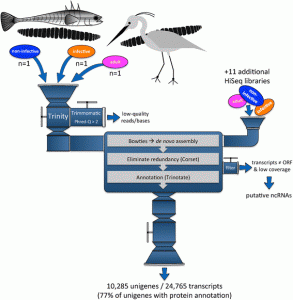
height="300"}Extracting high quality RNA from these worms was some sort
of a challenge because we found something unexpected: cestode RNA does
not behave like most « classical » eukaryotic RNA when using standard
quality assessment protocols. Very few people have tried to work on the
transcriptomics of Schistocephalus and we heard it was quite hard to
extract DNA from these worms, probably because of their strong tegument
that usually resists the biochemical attack by the digestive enzymes of
the hosts. So we thought it would be the same with RNA and we used
homemade extraction protocols, only to discover that the RNA profiles
used to assess the quality of the samples were systematically
« abnormal ». After looking more deeply in the literature, we found that
some other people had the same weird profiles and that this was due to a
special nucleotide pattern in the sequence of the RNA molecules used to
perform the test. This RNA profile can also be found in numerous other
cestode and nematode species, as well as in several arthropod species.
It took us about four months to realize that, which was kind of a pain
because it was supposed to be a standard procedure that usually takes a
few days only. All this time we thought it was impossible to extract RNA
from these worms, whereas in fact, we had super high quality samples.
But that\'s just science, it\'s all part of the game!
**This work is built upon two centuries of research on this species, so
how difficult has it been to reuse, adapt and build upon others work?**
It is a very interesting process for us to work on such an old and
emblematic study system in parasitology because we can benefit from the
work of others. When you look at the very old papers on this system, you
realize that almost everything has been tried and much have been said on
the biology of these organisms. But what is absolutely amazing to
understand is that a lot of what have been investigated so far remain to
be explained in terms of molecular mechanistic. Basically, the
tremendous task that needs to be undertaken consists in bridging what
people discovered several decades ago with our molecular perspective and
understanding of biological phenomena. This is a golden opportunity to
use the scientific method to its full potential because we can read the
valuable work of previous scientists and use that information and
knowledge to build new research questions that are only accessible
through some of the new technologies now widely used in biology (e.g.
DNA/RNA sequencing platforms). So we are actively taking part into this
extraordinary collective effort of knowledge acquisition. Reusing
previous data and results was thus a natural, healthy and essential
process to go further, and the real challenge was to read the prolific
literature on the subject and identify only a few questions to work
with.
**Carrying out an experiment with so many steps involving multiple
hosts, parasite stages, sample collection, data production and
bioinformatics analysis, how difficult has it been to describing all of
this in a manuscript?**
Describing such a long process of field sampling, experimental
infections in the lab using multiple hosts and, of course, the
complementary bioinformatic analyses was one of the greatest challenges
in this paper. Our main concern is the capacity of anybody reading the
paper to reproduce the results that we obtained. From this
simple reproducibility concept stems the most convincing aspect of the
scientific method: if you can reproduce multiple times the same results,
then those results become really strong and from there we can build more
solid interpretations. This is why in our paper we emphasized on the
detailed description of our methods, as well as all of the scripts
and programs used with their corresponding version, including the exact
values used for each parameter of the analysis. We were able to achieve
that by making all of our homemade scripts, programs and datasets
freely available to the public
through [*GigaScience*](http://gigascience.biomedcentral.com/articles/10.1186/s13742-016-0128-3),
[GigaDB](http://dx.doi.org/10.5524/100197) and
[protocols.io](http://dx.doi.org/10.17504/protocols.io.ew9bfh6). They
represent essential complementary platforms that allowed us to
respect our vision of a reproducible science. In order for people to
understand why we obtained these results, they have to be able to
understand how we obtained them. We do not necessarily wish that people
conduct the exact same analyses, with the exact same scripts and the
same raw data because that would be replicability, not reproducibility.
The important thing here is that people eventually obtain similar
results with different methods, different datasets or in different
conditions. But in order to compare different methods and their results,
we believe it is important to fully explain them. This is why we want to
transparently provide to the scientific community with the complete
work we did. After all, science is public and belongs to the public.\
\*\*\
Do you think [protocols.io](http://protocols.io/) will make this process
easier for others to recreate and further build upon your work in the
future?\*\*
In this work, we used very precise experimental conditions and sampled
biological tissues at very precise moments during the experiment. We
think it is crucial for other people to be able to understand what we
did and how we did it, so that other research teams can try
completely different conditions, slightly change certain parameters or
simply improve the protocols and the procedures. Our goal is not that
other people reproduce exactly what we did, because there will always be
differences between experiments. Whether it comes from differences
in the lab equipment that is used or from the populations that are
sampled does not matter. What matters is that our methods and protocols
serve as a reference point for innovation or improvement and
[protocols.io](http://protocols.io) offers that possibility. After all,
science is an iterative process that inherently generates errors.
But, that\'s all good, because it is part of the process!
**How did you find using the tool, and was the integration of it into
our data submission system useful? Are you likely to use it again in the
future?**
Using [protocols.io](http://protocols.io) ended up being quite easy...
easier than we thought actually. It requires a little bit more work than
not publishing the protocols at all, but in the end, it\'s worth it
because it involves sharing information and that is a key element to the
advancement of science in general. The tool developed by
[protocols.io](http://protocols.io) was smoothly integrated into the
submission process. At first I thought it would be a long and painful
procedure, but the platform allows you to enter the information in a
familiar format with clear and succinct instructions. I would definitely
use this tool in the future.
**See Protocols here:**\
Herbert, F.O.; Grambauer, S.; Barber, I.; Landry, C.R., Aubin-Horth, N.
(2016): Protocols for \"Reference transcriptome sequence resource for
the study of the Cestode Schistocephalus solidus, a threespine
stickleback parasite.\". Protocols.io.
The post [Parasite Protocols Part 2. Author Q&A with François Olivier
Hébert](http://gigasciencejournal.com/blog/parasite-protocols-part-2-author-qa-francois-olivier-hebert/){rel="nofollow"}
appeared first on
[GigaBlog](http://gigasciencejournal.com/blog){rel="nofollow"}.