---
author:
- contributor_roles: []
family: Edmunds
given: Scott
url: https://orcid.org/0000-0001-6444-1436
blog:
authors: null
community_id: 52db0518-e228-4260-8c54-c4e323b2569d
created: 1675555200
current_feed_url: null
description: Data driven blogging from the GigaScience editors
doi: https://doi.org/10.59350/gigablog
favicon: https://rogue-scholar.org/api/communities/52db0518-e228-4260-8c54-c4e323b2569d/logo
feed_format: application/atom+xml
feed_url: http://gigasciencejournal.com/blog/feed/atom/
filter: null
generator: Other
home_page_url: https://gigasciencejournal.com/blog
issn: null
language: eng
license: https://creativecommons.org/licenses/by/4.0/legalcode
prefix: '10.59350'
relative_url: null
secure: false
slug: gigablog
status: archived
subfield: '1311'
title: GigaBlog
updated: null
use_api: null
container: GigaBlog
date: '2014-04-16T00:00:00+00:00'
date_updated: '2025-12-06T10:42:22+00:00'
guid: http://finaloriginalblogs.dev/gigablog/?p=1052
identifier: https://doi.org/10.59350/q3zb6-3he70
image: http://gigasciencejournal.com/blog/wp-content/uploads/2014/04/1024px-Chronicon_Pictum_P016_Attila_és_Leó_pápa-253x300.jpeg
images:
- height: '300'
sizes: '(max-width: 253px) 100vw, 253px'
src: http://gigasciencejournal.com/blog/wp-content/uploads/2014/04/1024px-Chronicon_Pictum_P016_Attila_és_Leó_pápa-253x300.jpeg
srcset: http://gigasciencejournal.com/blog/wp-content/uploads/2014/04/1024px-Chronicon_Pictum_P016_Attila_és_Leó_pápa-253x300.jpeg,
http://gigasciencejournal.com/blog/wp-content/uploads/2014/04/1024px-Chronicon_Pictum_P016_Attila_és_Leó_pápa-768x911.jpeg,
http://gigasciencejournal.com/blog/wp-content/uploads/2014/04/1024px-Chronicon_Pictum_P016_Attila_és_Leó_pápa-864x1024.jpeg,
http://gigasciencejournal.com/blog/wp-content/uploads/2014/04/1024px-Chronicon_Pictum_P016_Attila_és_Leó_pápa.jpeg
width: '253'
- alt: c7c935bdc1ddb793b63a7952c98ff1b3
height: '150'
sizes: '(max-width: 150px) 100vw, 150px'
src: http://gigasciencejournal.com/blog/wp-content/uploads/2014/04/c7c935bdc1ddb793b63a7952c98ff1b31-150x150.jpg
srcset: http://gigasciencejournal.com/blog/wp-content/uploads/2014/04/c7c935bdc1ddb793b63a7952c98ff1b31-150x150.jpg,
http://gigasciencejournal.com/blog/wp-content/uploads/2014/04/c7c935bdc1ddb793b63a7952c98ff1b31-100x100.jpg
width: '150'
- src: http://gigasciencejournal.com/blog/wp-content/uploads/2014/04/c7c935bdc1ddb793b63a7952c98ff1b31.jpg
issn: null
keywords:
- Medicine
- GigaDB
- Neuroscience
- Open Peer Review
- Q&A
lang: en
license: https://creativecommons.org/licenses/by/4.0/legalcode
reference:
- id: https://doi.org/10.1186/2047-217x-3-3
unstructured: Eglen, S. J., Weeks, M., Jessop, M., Simonotto, J., Jackson, T., &
Sernagor, E. (2014). A data repository and analysis framework for spontaneous
neural activity recordings in developing retina. Gigascience, 3(1).
- id: https://doi.org/10.5524/100089
unstructured: Eglen, S. J., Weeks, M., Jessop, M., Simonotto, J., Jackson, T., &
Sernagor, E. (2014). Supporting material for "A data repository and analysis
framework for spontaneous neural activity recordings in developing retina".
[Data set]. GigaScience Database.
- id: http://gigasciencejournal.com/blog/qa-on-dynamic-documents/
unstructured: Unknown title
- id: http://gigasciencejournal.com/blog
unstructured: Unknown title
rid: 90hps-yj780
rights: https://creativecommons.org/licenses/by/4.0/legalcode
summary: At GigaScience one of our major goals is to take the scientific
publishing beyond dead trees and static PDFs to a more dynamic and interactive process,
much like science itself has embraced the Internet to become more networked and
data driven.
title: Q&A on dynamic documents
url: https://wayback.archive-it.org/22098/2025-05-01T17:13:42Z/http://gigasciencejournal.com/blog/qa-on-dynamic-documents
version: v1
---
{.alignleft
.size-medium .wp-image-1979 loading="lazy" decoding="async"
srcset="http://gigasciencejournal.com/blog/wp-content/uploads/2014/04/1024px-Chronicon_Pictum_P016_Attila_és_Leó_pápa-253x300.jpeg 253w, http://gigasciencejournal.com/blog/wp-content/uploads/2014/04/1024px-Chronicon_Pictum_P016_Attila_és_Leó_pápa-768x911.jpeg 768w, http://gigasciencejournal.com/blog/wp-content/uploads/2014/04/1024px-Chronicon_Pictum_P016_Attila_és_Leó_pápa-864x1024.jpeg 864w, http://gigasciencejournal.com/blog/wp-content/uploads/2014/04/1024px-Chronicon_Pictum_P016_Attila_és_Leó_pápa.jpeg 1024w"
sizes="(max-width: 253px) 100vw, 253px" width="253" height="300"}At
*[GigaScience](http://www.gigasciencejournal.com/ "GigaScience homepage"){target="_blank"
rel="noopener"}* one of our major goals is to take the scientific
publishing beyond dead trees and static PDFs to a more dynamic and
interactive process, much like science itself has embraced the Internet
to become more networked and data driven. One way we have done this is
by enabling the histories and analyses from papers to be visualized and
executed through our
[GigaGalaxy](http://gigagalaxy.net/ "GigaGalaxy server page"){target="_blank"
rel="noopener"} server (see our recent posting on this), but on top of
[integrating workflows into our papers through citable
DOIs](http://blogs.biomedcentral.com/gigablog/2014/02/06/rewarding-reproducibility-first-papers-in-our-galaxy-series-utilizing-our-gigagalaxy-platform/ "GigaBlog on citing Galaxy workflows"){target="_blank"
rel="noopener"}, the papers themselves can be generated (and
subsequently reproduced) in a similar manner using a number of tools
that allow dynamic report generation. With
[R](http://en.wikipedia.org/wiki/R_%28programming_language%29 "R in wikipedia"){target="_blank"
rel="noopener"}, the open source software environment for statistical
computing continuing to grow in popularity, there are a number of
reporting tools being integrated into it such as
[Knitr](http://yihui.name/knitr/ "Knitr homepage"){target="_blank"
rel="noopener"} and
[Sweave](http://www.stat.uni-muenchen.de/~leisch/Sweave/ "Sweave homepage"){target="_blank"
rel="noopener"}. These support reproducible research and automated
report generation by supporting execution of R code embedded within
various document formats including LaTeX. Our recent [reproducible
neurophysiology
paper](http://dx.doi.org/10.1186/2047-217X-3-3 "Carmen paper"){target="_blank"
rel="noopener"} was a great example of this, and following our
[interview with lead author Stephen
Eglen](http://blogs.biomedcentral.com/gigablog/2014/03/26/carmen-reproducible-research-and-push-button-papers/ "Stephen Eglen Q&A"){target="_blank"
rel="noopener"}, we thought we would get some further insight into the
advantages of dynamic documents by talking to some users about this
example.
[{.alignright
.size-thumbnail .wp-image-1058 loading="lazy" decoding="async"
srcset="http://gigasciencejournal.com/blog/wp-content/uploads/2014/04/c7c935bdc1ddb793b63a7952c98ff1b31-150x150.jpg 150w, http://gigasciencejournal.com/blog/wp-content/uploads/2014/04/c7c935bdc1ddb793b63a7952c98ff1b31-100x100.jpg 100w"
sizes="(max-width: 150px) 100vw, 150px" width="150"
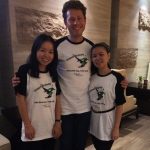
height="150"}](http://gigasciencejournal.com/blog/wp-content/uploads/2014/04/c7c935bdc1ddb793b63a7952c98ff1b31.jpg)Our
editorial board member Wolfgang Huber, on top of promoting the archiving
of bioinformatics R- packages and workflows through the
[bioconductor](http://bioconductor.org/ "Bioconductor homepage"){target="_blank"
rel="noopener"} project is a big advocate of the use of Knitr and
Sweave, last year carrying out a [workshop at our BGI
hosts](http://events.embo.org/13-large-scale-data/ "EMBO workshop in Shenzhen"){target="_blank"
rel="noopener"} that covered this area (see the picture of Wolfgang
modeling our GigaPanda t-shirt). Asking him why, Wolfgang summarizes the
utility of this approach well: \"I do all my projects in Knitr. Having
the textual explanation, the associated code and the results all in one
place really increases productivity, and helps explaining my analyses to
colleagues, or even just to my future self.\"
**Q&A with our reviewers Thomas Wachtler and Christophe Pouzat**\
As we promote open peer-review and like to credit the work of our
reviewers (a process that will be greatly aided by [new moves to credit
reviews](http://blog.f1000research.com/2014/04/07/project-to-include-referee-reports-in-orcid-profiles/ "F1000 Research-ORCID tie in"){target="_blank"
rel="noopener"} in ORCID profiles), we also interviewed the referees of
the paper on if the review process was improved by the authors providing
all of the files required to regenerate the paper. Much of this
interview with Thomas Wachtler (group leader at the
Ludwig-Maximilians-Universität München, and also on our editorial board)
and Christophe Pouzat (Paris Descartes University) has recently been
[published in
Biome](http://www.biomedcentral.com/biome/christophe-pouzat-and-thomas-wachtler-on-reproducible-research-in-neuroscience/ "Biome interview with TW and CP"){target="_blank"
rel="noopener"}, but as with the [Assemblathon2
discussion](http://blogs.biomedcentral.com/gigablog/2013/08/20/extended-qa-with-assemblathon2-author-keith-bradnam/ "Keith Bradman Q&A"){target="_blank"
rel="noopener"} and some of our [other
Q&A\'s](http://blogs.biomedcentral.com/gigablog/tag/qa/ "Q&A's in GigaBlog"){target="_blank"
rel="noopener"} we thought we would focus first on their discussions on
dynamic documents, and then provide the \"box-set completist\" version
by publishing the rest of interview in full.
**Can you give a little insight about the review process? Did you manage
to test and recreate the analyses in the paper in R and how long did it
take you?**
Thomas Wachtler (TW): Providing code and data with a publication so that
it is possible to replicate the analysis is highly valuable.
The paper by Eglen and colleagues is a shining example for such openness
in that it enables replicating the results almost as easily as by
pressing a button.
To be fair it must be acknowledged that such degree of accessibility may
not be practical to achieve for any kind of datasets and studies at this
point in time, but this should not be an excuse for not making the best
efforts to increase accessibility of any study -- to the reviewers as
well as to the readers. This paper can be a strong model example for the
community.
Christophe Pouzat (CP): It took me a couple of hours to get the data,
the few custom developed routines, the \"vignette\" (that is, in the
open-source R statistical software jargon, an executable file mixing
description of what the code is doing with the code itself) and to
REPRODUCE EXACTLY the analysis presented in the manuscript (using a
netbook not a heavy duty desktop computer). With few more hours, I was
able to modify the authors\' code to change a linear scale for a log
scale for their Fig. 4. In addition to making the presented research
trustworthy, the reproducible research paradigm definitely makes the
reviewer\'s job much more fun!
**Can you say a bit more about how you found the paper?**
TW: I was delighted to see this publication, which is the first data
publication of electrophysiology data in *Gigascience*, and one of the
first ever formal electrophysiology data publications.
Several electrophysiology datasets are available publicly, although the
total amount of data is fairly low compared to data collections in other
fields. Sites that provide data hosting, like
[CARMEN](http://www.carmen.org.uk/ "CARMEN homepage"){target="_blank"
rel="noopener"},
[CRCNS.org](http://crcns.org/ "CRCNS.org homepage"){target="_blank"
rel="noopener"}, or
[G-Node](http://www.g-node.org/ "G-node homepage"){target="_blank"
rel="noopener"}, play an important role in enabling neurophysiologists
to share their data, be it between colleagues or publicly, thus raising
awareness for the benefits of data sharing. In some cases datasets have
been made public when funding was provided to annotate and document the
data. Here the incentive of a publication certainly played a role, which
highlights the relevance of journals like *Gigascience* that enable data
publications.
Journals that offer data publications enable scientists to immediately
gain benefit from sharing their data with the community.
Conventional journals can also help raising awareness of this
possibility by explicitly encouraging practices that enhance openness
and reproducibility. Whether it is necessary to go so far as to enforce
this practice is a decision that a journal should consider carefully. We
currently see a growing interest and willingness among neuroscientists
to make their data available anyway, so we can expect this to become
common practice with time anyway.
**Do you think electrophysiological data presents a particular challenge
in terms of sharing and reproducing data?**
TW: A fundamental requirement for open data to be useful is that it is
not only technical accessibility but also practicability, that is, that
both data and metadata are provided in standard or at least clearly
documented and simple formats. The field of electrophysiology faces a
notorious diversity and complexity of data and formats.
To present the data in a unified way, Eglen and colleagues made
impressive efforts to read the data from different formats and to
convert and annotate them. Ideally, such efforts could be greatly
reduced in the future if common standards would be established in the
community.
The INCF\'s Program on data sharing, where members of
[CARMEN](http://www.carmen.org.uk/ "CARMEN homepage"){target="_blank"
rel="noopener"},
[CRCNS.org](http://crcns.org/ "CRCNS.org homepage"){target="_blank"
rel="noopener"}, and
[G-Node](http://www.g-node.org/ "G-node homepage"){target="_blank"
rel="noopener"} are also actively participating, are working towards
such standards.
**How did you find our open peer review process?**
TW: Enhancing transparency by double-open peer review as introduced for
this journal is in line with the increasing openness in the community
and a valuable model alternative to the traditional peer review.
**Why is the reproducible research paradigm important to you, and how
does this paper address that?**
CP: Taking a somewhat \"extreme\" stance, there is no (natural) science
without reproducibility. If there is a long tradition of detailed
description of experiments in the literature (making them mostly
reproducible), the description standards of analysis / simulations
associated to published experimental data have unfortunately been much
\"weaker\". Developing tools making the implementation of the
reproducible research paradigm is very important to improve the
situation; publishing papers, like the present one, describing simply
and beautifully how the paradigm is implemented in a very relevant
scientific context is also of paramount importance.
**This example went to great effort to make data and code available, and
the methods transparent. Do you think it is worth it, and what can we do
to encourage others to follow?**
CP: Yes, I think it is worth it! I\'m sure that by making data (and
code) public, researchers will get more citations as well as attract
more collaborations. But clearly the funding agencies will have a big
role in making scientist switch from the present attitude (or culture)
where they consider \"their\" data and code as private property (even
when the work has been entirely funded by public money) toward a
situation where they give access to both data and code by default. In
order to share data, infrastructures (like the [CARMEN virtual
lab](http://www.carmen.org.uk/ "CARMEN homepage"){target="_blank"
rel="noopener"} or the
[g-node](http://www.g-node.org/ "G-node homepage"){target="_blank"
rel="noopener"}) have to created and maintained and scientists working
on their development must get credit for that.
**This paper is a would probably not have been possible without the
[CARMEN virtual
laboratory](http://www.carmen.org.uk/ "CARMEN homepage"){target="_blank"
rel="noopener"}. Do you have anything you would like to say about
CARMEN?**
CP: A great project!
### **References**
[1.](http://dx.doi.org/10.1186/2047-217X-3-3 "Carmen paper"){target="_blank"
rel="noopener"} Eglen, SJ; Weeks, M; Jessop, M; Simonotto, J; Jackson,
T; Sernagor, E. A data repository and analysis framework for spontaneous
neural activity recordings in developing retina. *GigaScience* 2014,
**3**:3
[http://dx.doi.org/10.1186/2047-217X-3-3](http://dx.doi.org/10.1186/2047-217X-3-3 "Carmen paper"){target="_blank"
rel="noopener"}\
[2.](http://dx.doi.org/10.5524/100089 "Neuroscience data DOI"){target="_blank"
rel="noopener"} Eglen, SJ; Weeks, M; Jessop, M; Simonotto, J; Jackson,
T; Sernagor, E. (2014): Supporting material for \"A data repository and
analysis framework for spontaneous neural activity recordings in
developing retina\". GigaScience Database.
[http://dx.doi.org/10.5524/100089](http://dx.doi.org/10.5524/100089 "Neuroscience data DOI"){target="_blank"
rel="noopener"}
[Save]{style="border-radius: 2px; text-indent: 20px; width: auto; padding: 0px 4px 0px 0px; text-align: center; font: bold 11px/20px 'Helvetica Neue',Helvetica,sans-serif; color: #ffffff; background: #bd081c no-repeat scroll 3px 50% / 14px 14px; position: absolute; opacity: 1; z-index: 8675309; display: none; cursor: pointer; top: 44px; left: 20px;"}
The post [Q&A on dynamic
documents](http://gigasciencejournal.com/blog/qa-on-dynamic-documents/){rel="nofollow"}
appeared first on
[GigaBlog](http://gigasciencejournal.com/blog){rel="nofollow"}.