---
author:
- contributor_roles: []
family: Edmunds
given: Scott
url: https://orcid.org/0000-0001-6444-1436
blog:
authors: null
community_id: 52db0518-e228-4260-8c54-c4e323b2569d
created: 1675555200
current_feed_url: null
description: Data driven blogging from the GigaScience editors
doi: https://doi.org/10.59350/gigablog
favicon: https://rogue-scholar.org/api/communities/52db0518-e228-4260-8c54-c4e323b2569d/logo
feed_format: application/atom+xml
feed_url: http://gigasciencejournal.com/blog/feed/atom/
filter: null
generator: Other
home_page_url: https://gigasciencejournal.com/blog
issn: null
language: eng
license: https://creativecommons.org/licenses/by/4.0/legalcode
prefix: '10.59350'
relative_url: null
secure: false
slug: gigablog
status: archived
subfield: '1311'
title: GigaBlog
updated: null
use_api: null
container: GigaBlog
date: '2022-05-31T00:00:00+00:00'
date_updated: '2025-12-06T10:12:15+00:00'
guid: http://gigasciencejournal.com/blog/?p=4410
identifier: https://doi.org/10.59350/ctw9p-8ym19
image: http://gigasciencejournal.com/blog/wp-content/uploads/2022/05/thumbnailMA-1024x611.png
images:
- height: '458'
sizes: '(max-width: 768px) 100vw, 768px'
src: http://gigasciencejournal.com/blog/wp-content/uploads/2022/05/thumbnailMA-1024x611.png
srcset: http://gigasciencejournal.com/blog/wp-content/uploads/2022/05/thumbnailMA-1024x611.png,
http://gigasciencejournal.com/blog/wp-content/uploads/2022/05/thumbnailMA-300x179.png,
http://gigasciencejournal.com/blog/wp-content/uploads/2022/05/thumbnailMA-768x458.png,
http://gigasciencejournal.com/blog/wp-content/uploads/2022/05/thumbnailMA.png
width: '768'
- height: '600'
sizes: '(max-width: 600px) 100vw, 600px'
src: http://gigasciencejournal.com/blog/wp-content/uploads/2022/05/dd5c623449414fc88253ba0a5cd4d3e1_L.jpg
srcset: http://gigasciencejournal.com/blog/wp-content/uploads/2022/05/dd5c623449414fc88253ba0a5cd4d3e1_L.jpg,
http://gigasciencejournal.com/blog/wp-content/uploads/2022/05/dd5c623449414fc88253ba0a5cd4d3e1_L-300x300.jpg,
http://gigasciencejournal.com/blog/wp-content/uploads/2022/05/dd5c623449414fc88253ba0a5cd4d3e1_L-150x150.jpg
width: '600'
- alt: Mosquito Alert data
height: '636'
sizes: '(max-width: 805px) 100vw, 805px'
src: http://gigasciencejournal.com/blog/wp-content/uploads/2022/05/gigabyte54-g001.jpg
srcset: http://gigasciencejournal.com/blog/wp-content/uploads/2022/05/gigabyte54-g001.jpg,
http://gigasciencejournal.com/blog/wp-content/uploads/2022/05/gigabyte54-g001-300x237.jpg,
http://gigasciencejournal.com/blog/wp-content/uploads/2022/05/gigabyte54-g001-768x607.jpg
width: '805'
- src: http://gigasciencejournal.com/blog/wp-content/uploads/2022/05/thumbnailMA-1024x611.png
- alt: Dr Živko Južnič-Zonta
src: http://gigasciencejournal.com/blog/wp-content/uploads/2022/05/dd5c623449414fc88253ba0a5cd4d3e1_L.jpg
- src: http://gigasciencejournal.com/blog/wp-content/uploads/2022/05/gigabyte54-g001.jpg
issn: null
keywords:
- Medicine
- Biodiversity
- Citizen Science
- Disease Outbreaks
- Disease Vector
lang: en
license: https://creativecommons.org/licenses/by/4.0/legalcode
rid: 9zjcb-v2327
rights: https://creativecommons.org/licenses/by/4.0/legalcode
summary: Citizen Scientists collect and share enormous amounts of data on invasive
mosquitoes from the Mosquito Alert project as part of our GBIF and WHO-supported
series on vector-borne diseases. Just out in GigaByte is the latest
data release from Mosquito Alert, a citizen science system for investigating and
managing disease-carrying mosquitoes, and is part of our WHO-sponsored series on
vector borne human diseases.
title: Publishing Citizen Science data to fight against mosquito borne diseases
url: https://wayback.archive-it.org/22098/2025-05-01T17:13:42Z/http://gigasciencejournal.com/blog/publishing-mosquito-alert-data
version: v1
---
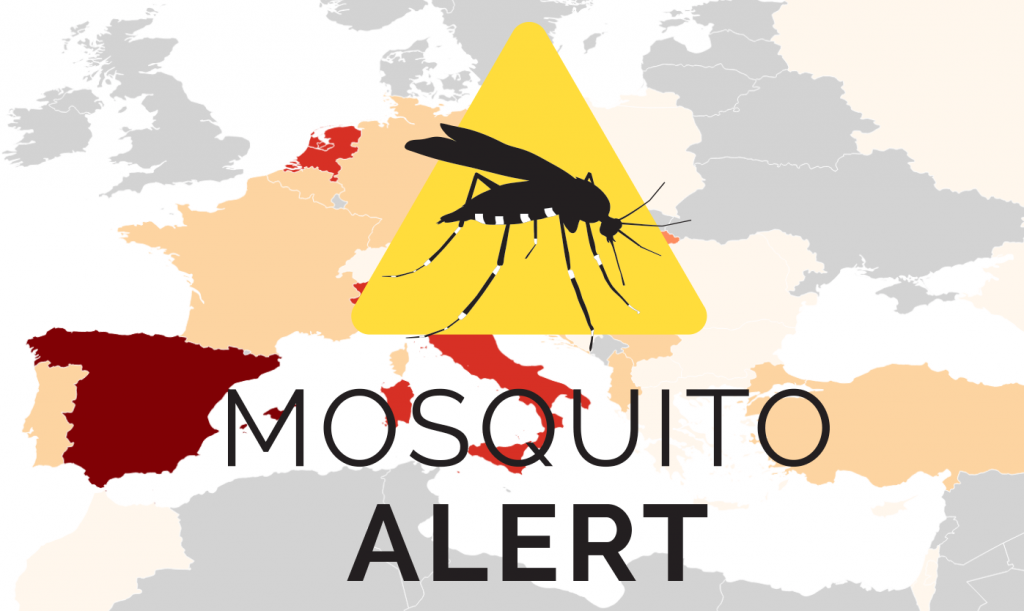
*Citizen Scientists collect and share enormous amounts of data on
invasive mosquitoes from the Mosquito Alert project as part of our GBIF
and WHO-supported series on vector-borne diseases.*
Just [out in *GigaByte*](https://doi.org/10.46471/gigabyte.54) is the
latest data release from [Mosquito
Alert](http://www.mosquitoalert.com/en/project/what-is-mosquito-alert),
a citizen science system for investigating and managing disease-carrying
mosquitoes, and is part of our [WHO-sponsored
series](https://doi.org/10.46471/GIGABYTE_SERIES_0002) on vector borne
human diseases. Presenting 13,700 new database [records in the Global
Biodiversity Information Facility (GBIF)
repository](https://doi.org/10.15470/t5a1os), all linked to photographs
submitted by citizen volunteers and validated by entomological experts
to determine if it provides evidence of the presence of any of the
mosquito vectors of top concern in Europe. This is the latest of [a new
special issue of
papers](http://gigasciencejournal.com/blog/vectors-of-human-diseases-series/)
presenting biodiversity data for research on human diseases health,
incentivising data sharing to fill important particular species and
geographic gaps. As big fans of [citizen science (and Mosquito
Alert)](http://gigasciencejournal.com/blog/citizen-smith-goes-to-nairobi-taking-citizen-science-to-the-un/),
its great to see this new data showcased in the series.
Vector-borne diseases account for more than 17% of all infectious
diseases in humans. There are large gaps in knowledge related to these
vectors, and data mobilization campaigns are required to improve data
coverage to help research on vector-borne diseases and human health. As
part of these efforts, GigaScience Press has partnered with the GBIF;
and has been supported by TDR, the Special Programme for Research and
Training in Tropical Diseases, hosted at the World Health Organization.
Through this we launched this \"Vectors of human disease\" thematic
series. Incentivising the sharing of this extremely important data,
Article Processing Charges have been waived to assist with the global
call for novel data. This effort has already led to the release of newly
digitised location data for over 600,000 vector specimens observed
across the Americas and Europe.
While paying credit to such a large number of volunteers, creating such
a large public collection of validated mosquito images allows this
dataset to be used to train machine-learning models for vector detection
and classification. Sharing the data in this novel manner meant the
authors of these papers had to set up a new credit system to evaluate
contributions from multiple and diverse collaborators, which included
university researchers, entomologists, and other non-academics such as
independent researchers and citizen scientists. In the [*GigaByte*
paper](https://doi.org/10.46471/gigabyte.54) these are acknowledged
through collaborative authorship for the Mosquito Alert Digital
Entomology Network and the Mosquito Alert Community.
In one of our [Q&A\'s](http://gigasciencejournal.com/blog/tag/qa/) we
ask first author Dr Živko Južnič-Zonta from the Centre d\'Estudis
Avançats de Blanes (CEAB-CSIC) in Spain some questions about this work.
Dr Živko Južnič-Zonta
**Tell us about the data being presented in the paper?**
The [Mosquito Alert dataset published on
GBIF](https://www.gbif.org/dataset/1fef1ead-3d02-495e-8ff1-6aeb01123408)
includes occurrence records of adult mosquitoes collected by citizens
through the [Mosquito Alert](http://www.mosquitoalert.com/) smartphone
app. Each record is linked to a photograph which is validated by
entomological experts to assess its species. The temporal coverage of
the dataset is from 2014 through 2021 and the spatial coverage is
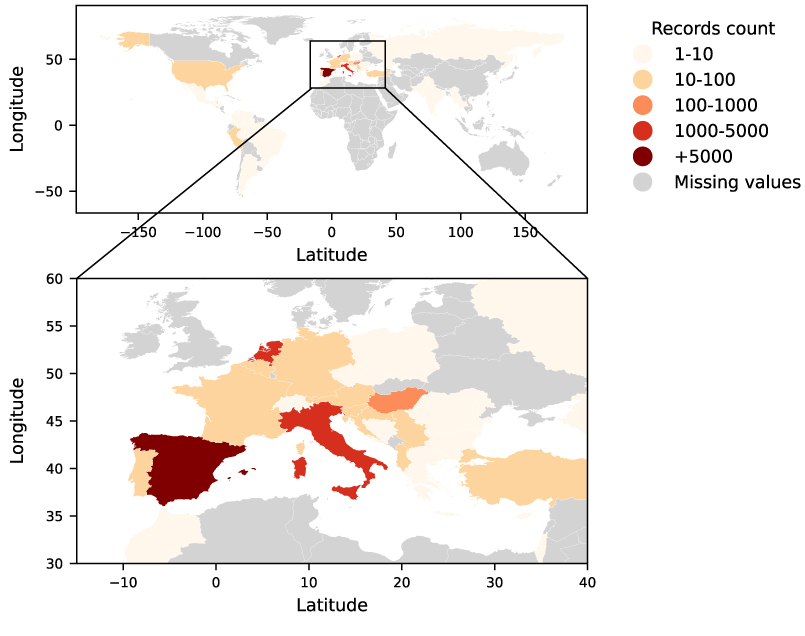
worldwide. Most of the records from 2014 to 2020 are from Spain, while
starting from 2020 the coverage increased in Europe, mainly in the
Netherlands, Italy, and Hungary. Mosquito Alert is now a mature
near-real-time surveillance system of five targeted disease-vector
mosquito species of concern in the EU.
**Were there any particularly interesting or unexpected findings that
have come from this Mosquito Alert data?**
From a surveillance perspective the system has been able to detect many
appearances of *Aedes albopictus* much beyond its immediate expansion
front, like in the Spanish Autonomous Communities of
[Andalucía](https://www.um.es/analesdebiologia/numeros/36/PDF/36_2014_16.pdf)
and
[Aragón](http://www.sea-socios.com/Boletines/PDF/Boletin58/157-158BSEA58.pdf),
which happened as well within other EU countries. A major highlight was
the [first detection in
2018](http://dx.doi.org/10.1186/s13071-019-3317-y) of *Aedes japonicus*
\[the Asian bush mosquito\] in Spain, an isolated population located at
a whopping 1,300 km distance of its nearest known location in Europe.
This species was not expected to appear and thus was not targeted by any
existing surveillance; later up to 2020 the system also collaborated to
assess the distribution area of the species across Northern Spain which
was actually [much broader than
estimated](https://doi.org/10.1186/s13071-021-04874-4) in 2018. As a
biodiversity feature, the expert validators have labeled as many as 28
autochtonous *Culicid* species throughout Europe in only two years.
These are only indicative suggestions because relying only on
photographs, although in some cases where field confirmation was
possible, they led to [publication of distribution
articles](http://dx.doi.org/10.6018/analesbio.40.05) broadening known
distribution of autochtonous species.
**What have been the challenges in sharing it?**
Finding the right format of author citation and setting up a credit
system to evaluate contributions from multiple and diverse
collaborators.
Fulfilling the required and recommended metadata fields in order to
build the GBIF occurrence dataset and automatize data and metadata
generation to ease future dataset update.
**What do you hope others will do with it?**
- Perform data augmentation and calibration in mosquito distribution
models.
- Perform risk assessments, like characterization of critical areas and
seasonal variability for disease risk transmission.
- Mosquito images can be used to train machine-learning models for
mosquito detection and classification.
- The Mosquito Alert dataset published in GBIF is updated annually and
thus could be used for early warning of invasive species across
scales, from city to continental scales.
- The Mosquito Alert dataset published in GBIF is a subset of the row
public dataset that is openly shared and updated daily on the [Zenodo
repository](https://doi.org/10.5281/zenodo.6480745). The [Mosquito
Alert Data
Portal](https://mosquito-alert.github.io/metadata_public_portal)
provides metadata of this row dataset called *reports*. Because of its
daily update, this dataset could help to optimise vector control, as
citizen scientists provide information about nuisance and presence of
mosquitoes at almost real time.
**Further Reading**\
Živko Južnič-zonta, Isis Sanpera-calbet, Roger Eritja, John R.b. Palmer,
Agustí Escobar, Joan Garriga, Aitana Oltra, Alex Richter-boix, Francis
Schaffner, Alessandra Della Torre, Miguel Ángel Miranda, Marion
Koopmans, Luisa Barzon, Frederic Bartumeus Ferre, Mosquito Alert Digital
Entomology Network , Mosquito Alert Community, Mosquito alert:
leveraging citizen science to create a GBIF mosquito occurrence dataset,
Gigabyte, 2022
Read the other papers in the series as they are published
here:[ https://doi.org/10.46471/GIGABYTE_SERIES_0002](https://doi.org/10.46471/GIGABYTE_SERIES_0002)
The post [Publishing Citizen Science data to fight against mosquito
borne
diseases](http://gigasciencejournal.com/blog/publishing-mosquito-alert-data/){rel="nofollow"}
appeared first on
[GigaBlog](http://gigasciencejournal.com/blog){rel="nofollow"}.