---
author:
- contributor_roles: []
family: Edmunds
given: Scott
url: https://orcid.org/0000-0001-6444-1436
blog:
authors: null
community_id: 52db0518-e228-4260-8c54-c4e323b2569d
created: 1675555200
current_feed_url: null
description: Data driven blogging from the GigaScience editors
doi: https://doi.org/10.59350/gigablog
favicon: https://rogue-scholar.org/api/communities/52db0518-e228-4260-8c54-c4e323b2569d/logo
feed_format: application/atom+xml
feed_url: http://gigasciencejournal.com/blog/feed/atom/
filter: null
generator: Other
home_page_url: https://gigasciencejournal.com/blog
issn: null
language: eng
license: https://creativecommons.org/licenses/by/4.0/legalcode
prefix: '10.59350'
relative_url: null
secure: false
slug: gigablog
status: archived
subfield: '1311'
title: GigaBlog
updated: null
use_api: null
container: GigaBlog
date: '2022-02-04T00:00:00+00:00'
date_updated: '2025-12-06T10:12:33+00:00'
guid: http://gigasciencejournal.com/blog/?p=4276
identifier: https://doi.org/10.59350/7kay5-6j097
image: http://gigasciencejournal.com/blog/wp-content/uploads/2022/02/ariel-HkN64BISuQA-unsplash-1024x771.jpg
images:
- alt: 'data awards: research parasites'
height: '578'
sizes: '(max-width: 768px) 100vw, 768px'
src: http://gigasciencejournal.com/blog/wp-content/uploads/2022/02/ariel-HkN64BISuQA-unsplash-1024x771.jpg
srcset: http://gigasciencejournal.com/blog/wp-content/uploads/2022/02/ariel-HkN64BISuQA-unsplash-1024x771.jpg,
http://gigasciencejournal.com/blog/wp-content/uploads/2022/02/ariel-HkN64BISuQA-unsplash-300x226.jpg,
http://gigasciencejournal.com/blog/wp-content/uploads/2022/02/ariel-HkN64BISuQA-unsplash-768x578.jpg,
http://gigasciencejournal.com/blog/wp-content/uploads/2022/02/ariel-HkN64BISuQA-unsplash-1536x1156.jpg,
http://gigasciencejournal.com/blog/wp-content/uploads/2022/02/ariel-HkN64BISuQA-unsplash-2048x1541.jpg
width: '768'
- alt: Jack Pilgrim data awards winner
height: '512'
sizes: '(max-width: 512px) 100vw, 512px'
src: http://gigasciencejournal.com/blog/wp-content/uploads/2022/02/Jack-Pilgrim-2.jpg
srcset: http://gigasciencejournal.com/blog/wp-content/uploads/2022/02/Jack-Pilgrim-2.jpg,
http://gigasciencejournal.com/blog/wp-content/uploads/2022/02/Jack-Pilgrim-2-300x300.jpg,
http://gigasciencejournal.com/blog/wp-content/uploads/2022/02/Jack-Pilgrim-2-150x150.jpg
width: '512'
- src: http://gigasciencejournal.com/blog/wp-content/uploads/2022/02/ariel-HkN64BISuQA-unsplash-1024x771.jpg
- alt: 'Jack Pilgrim, winner of the 2022 Junior Research Parasite
Award'
src: http://gigasciencejournal.com/blog/wp-content/uploads/2022/02/Jack-Pilgrim-2.jpg
issn: null
keywords:
- Open Access
- Insects
- Open Data
- Open Data Award
- Research Parasite
lang: en
license: https://creativecommons.org/licenses/by/4.0/legalcode
rid: yvymz-e6x82
rights: https://creativecommons.org/licenses/by/4.0/legalcode
summary: We are pleased to see the 2022 Junior Research Parasite Award go to
Jack Pilgrim for his work published last year in GigaScience, so here we highlight
the ecosystem of awards acknowledging different parts of the research cycle.
Jokingly spurred by a controversial medical editorial calling people carrying out
data re-use and meta-analyses "research parasites", this gave rise to the launch
of the "Research Parasite Awards" focused on
title: 'Vectors of data awards: acknowledging the entire data sharing food web'
url: https://wayback.archive-it.org/22098/2025-05-01T17:13:42Z/http://gigasciencejournal.com/blog/vectors-of-data-awards
version: v1
---
*We are pleased to see the 2022 Junior Research Parasite Award go to
Jack Pilgrim for his work published last year in GigaScience, so here we
highlight the ecosystem of awards acknowledging different parts of the
research cycle.*
[Jokingly spurred](https://twitter.com/iddux/status/690563238979723267)
by a controversial medical editorial calling people carrying out data
re-use and meta-analyses \"research parasites\", this gave rise to the
launch of the [\"Research Parasite
Awards\"](https://researchparasite.com/) focused on data reuse to
recognize and promote exemplar participants in this scientific
ecosystem. We\'ve been supporters and sponsors of the data awards since
their launch in 2016, and eagerly await the announcement of the winners
each January at the Pacific Symposium on Biocomputing in Hawaii. This
currently consist of two awards: the first recognizes an outstanding
contribution from a junior parasite (postdoctoral, graduate, or
undergraduate trainee), and the second recognizes an individual for a
sustained period of exemplary research parasitism.
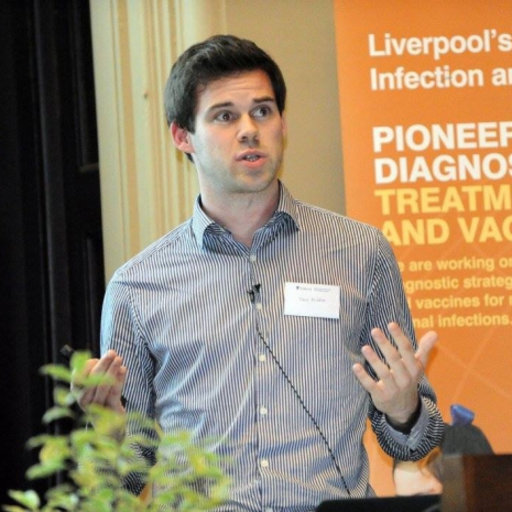
This year was particularly satisfying to see the Junior Parasite Award
go to Jack Pilgrim at Liverpool University for his work [published last
year](https://doi.org/10.1093/gigascience/giab021) in *GigaScience*
(read the [paper](https://doi.org/10.1093/gigascience/giab021) and
[blog](http://gigasciencejournal.com/blog/rickettsia-bacteria-to-rule-them-all/)).
A remarkable study presenting a serendipitous finding from studying the
entire the barcode of life database. While we can state we had no
involvement in the judging, this is the first time the work in one of
our papers has been rewarded. Although we are no strangers to prizes for
data sharing (see the [BMC Open Data Award
winne](http://gigasciencejournal.com/blog/bioinformatics-birthdays-and-booze-at-boston-bosc/)r
[Assemblathon2](https://doi.org/10.1186/2047-217X-2-10)), and have also
been awarded for our own efforts in data sharing (see our [2018 PROSE
award for innovation in
publishing](http://gigasciencejournal.com/blog/gigascience-prose-award-for-innovation/))
this is the first time we\'ve had papers acknowledged for data reuse.
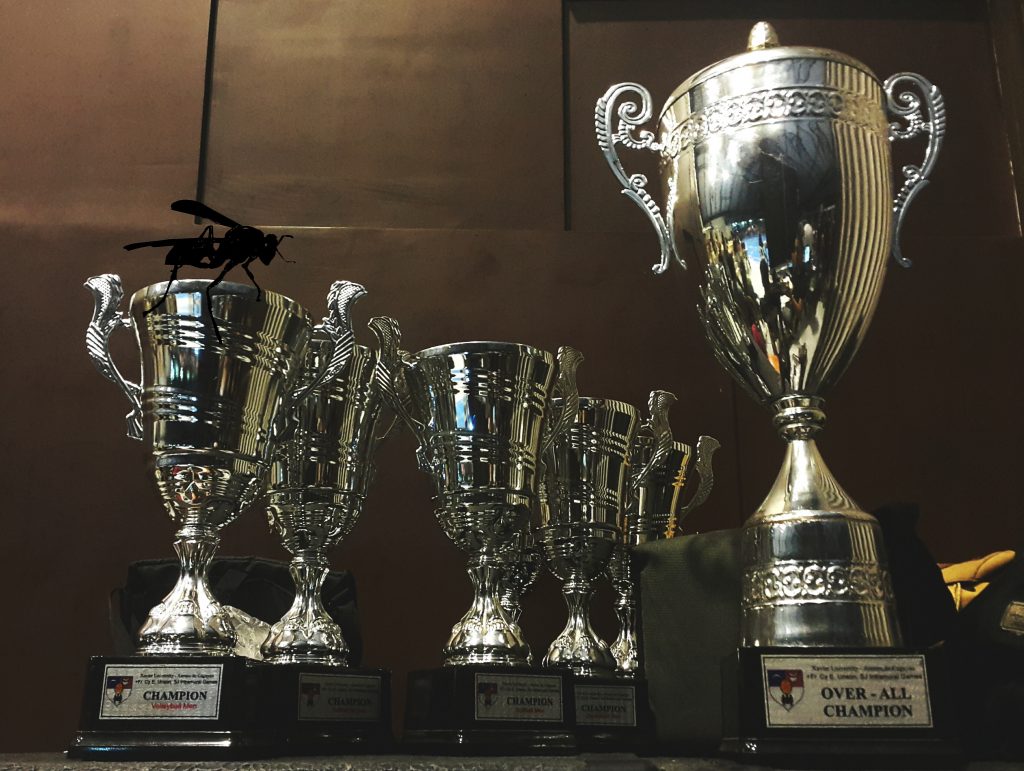
As a journal focussed on open science we are big promoters of research
parasites ([and research on
parasites](http://gigasciencejournal.com/blog/reproducible-research-resources-researching-parasites/)),
and try our best to feed them with open data and tools. As data
producers are already recognised by the [Research Symbiont
Awards](https://researchsymbionts.org/) (last year\'s winner COVID-19
hero Zhang Yongzhen also [winner of the *GigaScience* Prize for
Outstanding Data
Sharing](http://gigasciencejournal.com/blog/covid-19-hero-wins-gigascience-prize/)),
then we as a data journal and amplifier of these efforts probably fit in
this data sharing food web as a data vector.
::: {.wp-block-image}
Jack Pilgrim, winner of the 2022 Junior Research Parasite
Award
:::
To gain additional education insight from these exemplar data re-use
case studies *GigaScience* has been offering the Junior Parasite Award
winners an opportunity to publish commentaries talking about what
lessons they have learned from carrying out their exemplary research.
This publication hopefully being an additional and useful reward for
winners who are all Early Career Researchers. Previous winner Claire
Duvallet [discussed the
humility](https://doi.org/10.1093/gigascience/giz148) required in
carrying out studies based on reuse of others data, and Ayush Raman
[covered the need](https://doi.org/10.1093/gigascience/giab015) to
establish a baseline to avoid errors in secondary analyses. The [latest
commentary](https://doi.org/10.1093/gigascience/giab086) from 2021
winner Nicolás Nieto goes beyond a first perspective view to gives a
wider (and team-based) overview on the relationship between research
parasites and fairness in machine learning. AI and ethics being a
particularly topical and contentious area, especially with a new
Algorithmic Accountability Act [just being
proposed](https://www.wyden.senate.gov/news/press-releases/wyden-booker-and-clarke-introduce-algorithmic-accountability-act-of-2022-to-require-new-transparency-and-accountability-for-automated-decision-systems)
in the US Senate.
We asked Jack Pilgrim for his comments on winning this years award, and
he has obliged with the following:
> \"I\'m honoured to receive this year\'s Junior Research Parasite
> Award. The study which has been acknowledged relating to identifying
> bacterial contaminants within the Barcoding of Life Database (BOLD)
> was an unexpected research direction for myself. As a qualified
> veterinarian, my PhD focussed on assessing the potential impacts of
> bacterial symbionts on the ability of biting insects to transmit
> viruses to animals. It was only through the serendipitous finding that
> genes from my main bacterium of study, Rickettsia, were being
> misclassified as a common molecular marker for taxonomic
> classification (DNA barcodes), that I had the opportunity to take on
> my first project analysing large secondary data sets.
> With this in mind, I\'d like to thank Alex Smith at the University of
> Guelph and collaborators at BOLD, who kindly granted access to DNA
> sequences and metadata which was not publicly available at the time.
> Without this open and collegiate attitude, this study would not have
> been possible in the first place. Our finding of \>1000 bacterial
> sequences in BOLD not only unveiled *Torix Rickettsia* as a neglected
> component of insect biology but also demonstrated the value of
> \'research parasitism\' and networking within science. Finally, I\'d
> like to thank the Hurst lab where I spent 4 enjoyable years studying
> the ecology of insect microbiota. In particular, my friends Stefanos
> Siozios, Panupong Thongprem, Helen Davison and Greg Hurst who were all
> co-authors on the study.\"
This year *GigaScience* also sponsored the other prizes, and
congratulations are also due to 2022 Senior Research Parasite Awardee
Murat Eren for his work re-using data at the intersection of
computational biology and microbiology/microbiome research, as well as
the honourable mentions for Kuoyan Cheng, Nishanth Ulhas Nair and
Duran-Frigola. Please [follow and support the
awards](http://researchparasite.com/) as they continue to showcase and
celebrate the importance of data sharing and reuse.
**Further Reading**\
Park Y, Greene CS. A parasite\'s perspective on data sharing.
*Gigascience*. 2018 Nov 1;**7**(11):giy129. doi:
[10.1093/gigascience/giy129](https://doi.org/10.1093/gigascience/giy129).
Duvallet C. Data detectives, self-love, and humility: a research
parasite\'s perspective. *Gigascience*. 2020 Jan 1\*\*;9\*\*(1):giz148.
doi:
[10.1093/gigascience/giz148](https://doi.org/10.1093/gigascience/giz148).
Raman AT. A research parasite\'s perspective on establishing a baseline
to avoid errors in secondary analyses. *Gigascience*. 2021 Mar
12;**10**(3):giab015. doi:
[10.1093/gigascience/giab015](https://doi.org/10.1093/gigascience/giab015).
Nieto N, Larrazabal A, Peterson V, Milone DH, Ferrante E. On the
relationship between research parasites and fairness in machine
learning: challenges and opportunities. *Gigascience*. 2021 Dec
20;**10**(12):giab086. doi:
[10.1093/gigascience/giab086](https://doi.org/10.1093/gigascience/giab086).
Pilgrim J, Thongprem P, Davison HR, Siozios S, Baylis M, Zakharov EV,
Ratnasingham S, deWaard JR, Macadam CR, Smith MA, Hurst GDD. Torix
Rickettsia are widespread in arthropods and reflect a neglected
symbiosis. *Gigascience*. 2021 Mar 25;**10**(3):giab021. doi:
[10.1093/gigascience/giab021](https://doi.org/10.1093/gigascience/giab021).
The post [Vectors of data awards: acknowledging the entire data sharing
food
web](http://gigasciencejournal.com/blog/vectors-of-data-awards/){rel="nofollow"}
appeared first on
[GigaBlog](http://gigasciencejournal.com/blog){rel="nofollow"}.