{"found":57942,"hits":[{"document":{"authors":[{"affiliation":[{"name":"Technische Informationsbibliothek (TIB)"}],"contributor_roles":[],"family":"Hohlfeld","given":"Michael","url":"https://orcid.org/0000-0002-5236-4522"}],"blog":{"authors":null,"community_id":"db0d8909-9e37-46d0-b16c-0551f575e86b","created":1749772800,"current_feed_url":null,"description":"Das Blog der TIB \u2013 Leibniz-Informationszentrum Technik und Naturwissenschaften und Universit\u00e4tsbibliothek","doi":"https://doi.org/10.65527/tib","favicon":"https://rogue-scholar.org/api/communities/db0d8909-9e37-46d0-b16c-0551f575e86b/logo","feed_format":"application/atom+xml","feed_url":"https://blog.tib.eu/feed/atom/","filter":null,"generator":"WordPress","home_page_url":"https://blog.tib.eu/","issn":null,"language":"deu","license":"https://creativecommons.org/licenses/by/4.0/legalcode","prefix":"10.65527","relative_url":null,"secure":true,"slug":"tib","status":"active","subfield":"1802","title":"TIB-Blog","updated":1793024360,"use_api":true},"blog_name":"TIB-Blog","blog_slug":"tib","content_html":" diesen Beitrag auf Deutsch lesen\n
The newly founded Competence Center at the Leibniz Joint Lab Data Science & Open Knowledge supports companies in Lower Saxony in terms of secure data exchange along the value chain
\n
by Alexandra Garatzogianni, Sandra Niemeyer, Andreas Kemb\u00fcgler, Thorsten H\u00fclsmann
Never before was the world so networked as it is today. Digitalization offers countless opportunities for new business models. Data as a strategic resource can be decisive for the success of companies. Reliable and secure access to and handling of data is therefore of crucial importance for the future of our economy and society.
\n
Key technology for innovative applications\u00a0 in Artificial Intelligence (AI)
\n
Why are data sovereignty and data-based business models important for the competitiveness of the German and international economy? How does secure data exchange between companies generate new value creation potential? And how can secure data exchange between companies be made possible? The International Data Space Association (IDSA) provides answers to these and other questions: Together with its members from industry and research, it is developing a secure, trustworthy architecture for data exchange along cross-company value chains. It thus creates a basis for digitization and more efficient design of industrial production and business processes. It opens up potential for new value creation scenarios.
\n
In particular the non-profit association IDSA would like to establish a standard, namely a de-facto standard for a safe data place and a sovereign data transfer, which will be used by enterprises across industries and countries. The goal is to establish globally valid rules and guidelines for data sovereignty: Who is allowed to do what with which data in which context?
\n
„Companies in Germany and Europe need a strategic tool with which they can securely exchange and combine their data in value creation networks. This is the fundamental prerequisite for innovation and the basis for modern business models,“ says Prof. Dr. Boris Otto, Deputy Chairman of the Executive Board of IDSA and Managing Director of the Fraunhofer Institute for Software and Systems Engineering ISST.
\n
Virtual space for data exchange
\n
The goal: A network of reliable, securely exchangeable data that contributes to more efficient value creation in all domains of the economic activity. In the future, companies will be able to exchange their data in a virtual data space and thus make it usable for other companies. The sovereignty over one’s own data has to be respected and safeguarded; the trustworthy cooperation and integration as well as security have to be guaranteed. „The International Data Spaces make it easier for companies to exploit the potential of digitization for their business models without giving up control over their data,“ explains Otto.
However, there is still a long way to accomplish the open data space. One step in this direction is the establishment of the IDS Competence Centre in Lower Saxony at the Leibniz Joint Lab Data Science & Open Knowledge of the L3S Research Center of Leibniz Universit\u00e4t Hannover (LUH) and the TIB \u2013 Leibniz Information Centre for Science and Technology. Both entities contribute their knowledge and their extensive research and technology competencies in the domain of data science, which they want to transfer to interested companies and cooperation partners. The official founding event, entitled „International Data Spaces (IDS) for Industry 4.0“, took place at the TIB on 19 June 2019. It was part of the TIB and L3S „Research Meets Business“ series of events aimed at helping companies implement digitization via research and innovation.
\n
„It is great that a regional competence center of the International Data Space Association has been founded at the L3S Research Center in Hannover“, explained Dr. Sabine Johannsen, State Secretary in the Ministry of Science and Culture of Lower Saxony, at the official founding event at the end of June. At the moment, a lot is happening in Lower Saxony to shape digitization initiatives. Johannsen continued that it is important for science and industry to exchange ideas and inventions, because this is the only way to turn ideas and inventions into marketable products.
\n
The focus of this event was the IDS and the foundation of the regional competence center: Prof. Dr. Boris Otto focused at his keynote on the „IDS as a smart data infrastructure for future AI applications“. Further presentations focused on data integration in industry 4.0 and semantic data integration in IDS, for instance the following keynotes on „Data integration in industry 4.0“ by Prof. Dr.-Ing. Berend Denkena (Institute of Manufacturing Engineering and Machine Tools, LUH), „Semantic Data Representation in IDS“ by Dr. Sebastian Tramp (eccenca GmbH) and the „EU Project Boost 4.0 (Big Data for Factories) and Semantic Data Networking for IDS“ by TIB's Director Prof. Dr. S\u00f6ren Auer. Moreover AI was an important element of this event with the lectures on „How AI changes the automotive industry“ by Dr. Michael Nolting (Head of Digital Services & Data Analysis at Volkswagen Commercial Vehicles) and „IIP-Ecosphere \u2013 a novel AI ecosystem for networking industry, SMEs and research“ by Dr. Claudia Nieder\u00e9e (L3S).
\n
International, national, regional: IDSA Competence Center Lower Saxony
\n
With the International Data Spaces becoming increasingly popular at national, European and international level, it is a direct result that IDSA’s regional competence centres and innovation hubs are currently also emerging. In the meantime, 100 member institutions from industry and research are actively involved in the IDSA. Together they are working on the further development of the IDS reference architecture and the IDS standard. In order to support the members with know-how, to advance the joint work and to exchange experiences, the IDSA establishes a close network. The nodes in this network are the IDSA competence centere. The IDSA would like to establish these centers primarily at economic and social „hot spots“. Hannover is such a hot spot: as the capital of Lower Saxony, a major city with over half a million inhabitants, and as a globally renowned location for science, industry and trade fairs.
\n
„With the new IDSA Competence Center in Hannover, we want to help companies in Lower Saxony build on trustworthy data infrastructures to implement new business models and innovations through artificial intelligence (AI) in production and other data-driven business areas,“ says Prof. Dr. Wolfgang Nejdl, Managing Director of the L3S Research Center.
\n
„Particularly in Lower Saxony, data exchange along the industrial value chains plays a central role and in our Joint Lab we look forward to working together with companies in the region,“ says TIB's Director Prof. Dr. S\u00f6ren Auer.
\n
„The IDSA Competence Center in Lower Saxony constitutes an interface between industry, research and science. It aims to support the introduction of new AI technologies and business models, the digitisation and the exchange of best practices, standards and data. In this way, Lower Saxony will play an even more important role in the European and international network by ensuring the sustainability and competitiveness of the regional industry,“ says Alexandra Garatzogianni, Senior Project Manager for Research and Innovation at the TIB and the L3S Research Centre and responsible for the Lower Saxony IDSA Competence Centre.
\n
From reference model to open data marketplace
\n
IDSA has been developing a reference architecture for a secure data space since 2016 \u2013 for a future open data marketplace, various requirements must be met: Requirements for such a protected data space must be identified and aligned, so that data from different segments can be shared and exchanged internationally based on predefined rules and regulations. In addition, requirements for the development and operation of such a data space must be defined and recommendations for action must be provided for the companies. The IDSA currently has more than 100 members from 20 countries. These include software and system providers, large medium-sized companies such as Boehringer, Rittal, SICK or Schaeffler, groups such as Allianz, Bosch, IBM or Volkswagen, research institutions such as Fraunhofer, the Institute for Microtechnology at Braunschweig Technical University or TNO, the Dutch Organisation for Applied Natural Science Research. In the (so-called) „IDS Communities“, the members promote the application of the IDS reference architecture and the establishment of the IDS standard. There are the communities such as „Industrial“, „Logistics“ and „Medical“ as well as the SME Alliance for small and medium-sized enterprises.
\n
With „IDS_ready“, the new seal for trustworthy data exchange, the IDS concept is now also ready for commercial use. The IDS architecture can be used by companies outside of the association. This is a big step in the way to a secure and trustful data exchange in the industry.
\n
TIB and L3S: Support for institutions in Lower Saxony
\n
In the IDSA Competence Centre in Lower Saxony, best practices will be exchanged, concrete use cases will be processed, user requirements will be defined and aligned for the future data marketplaces. Furthermore information events and training courses offered to interested organisations from industry, research and administration will be offered. Additionally, the IDS data architecture will be used as a basis for new AI applications such as intelligent production. Intelligent data networking in production processes involving suppliers and specialized service providers will then enable new analysis and forecasting services, for instance in terms of optimizing maintenance intervals or quality management.
\n
In particular, TIB will support semantic data networking using vocabularies and ontologies. The close collaboration of TIB with IDSA will ensure that the data infrastructure \u2013 where possible and useful – is compatible with the IDS reference model, where ontologies are also used for semantic data networking. In concrete terms, this means that information between different companies in a value chain is not only easier to exchange, but can also be processed in a way that is comprehensible to machines and people using semantic descriptions.
\n
As a scientific library and research institution, TIB can contribute its expertise and role as a German information centre for the digitisation of science and technology to the IDSA. The L3S contributes its expertise from digital transformation as well as data and web science. Knowledge transfer in business, policy and society is a central component of the activities of the TIB and the L3S. In this way, synergies can be formed and the IDS can be further developed. One of the first tasks of the IDSA Competence Centre is to develop training courses for regional companies and to work on specific applications. Further steps will then be taken to increasingly network relevant stakeholders, as well as data and processes so that an open data space will be created at the end which guarantees reliable and secure access to and processing of data.
\n
\n
Contact person:
\n
Alexandra Garatzogianni \nSenior Project Manager for Research and Innovation
How search be optimally conducted in large databases on the Internet, in libraries or archives? How can distributed information be better networked and information flows between organizations be smoothly organized? Scientists in the Leibniz Joint Lab Data Science & Open Knowledge of the TIB and the L3S are dealing with these and other questions on the topics of data science and open knowledge.
\n
The aim of the Joint Lab is to research methods that make it possible to support the work of researchers in science and industry in the digital world. In addition to classical publications in document form, videos, research data, software or knowledge graphs must also increasingly be taken into account. Research areas include digital libraries, visual analytics, open science, information retrieval, web science and web archives, data mining and human-computer interaction.
\n
The Joint Lab is headed by Prof. Dr. S\u00f6ren Auer, Director of the TIB and holder of the chair „Data Science & Digital Libraries“ at Leibniz Universit\u00e4t Hannover. Prof. Dr. Wolfgang Nejdl, Director of the Research Center L3S, is the scientific contact person at Leibniz University.
\n
L3S Research Center
\n
Scientists from the L3S Research Centre at Leibniz Universit\u00e4t Hannover are developing methods and technologies for digital change and researching the effects of digitisation in order to derive options for action, recommendations and innovation strategies for business, politicy and society. Through research, development and consulting, the L3S and its partners contribute to the digital transformation, especially in the areas of mobility, health, production and education.
\n
TIB \u2013 Leibniz Information Centre for Science and Technology
\n
TIB is the German National Library for Technology, Architecture, Chemistry, Informatics, Mathematics and Physics, providing literature and information in these domains to the national and international research and industry. It is the world’s largest specialist library in its fields and has an excellent stock of fundamental and highly specialised technical and scientific literature.
\n
TIB is constantly expanding its role as a German information centre for the digitisation of science and technology. At www.tib.eu it provides scientific content, digital services and methodological expertise for specialist and research communities in order to support the various phases of scientific work. As a research library, TIB conducts applied research and development to generate new services and optimize existing ones. The focus is on data science, non-textual materials, open science and visual analytics.
\n
\n
\n
\n\t\t\t
\n\t\t\t\t\n\t\t\t
\n\t\t\t\t\n\t\t\t\tProf. Dr. S\u00f6ren Auer and Prof. Dr. Wolfgang Nejdl (from left to right) announcing that the IDS Competence Centre Lower Saxony is established in Hannover. // Photo: TIB/C. Bierwagen\n\t\t\t\t\n\t\t\t
\n\t\t\t\t\n\t\t\t
\n\t\t\t\t\n\t\t\t\tState Secretary Dr. Sabine Johannsen at the official founding event at the end of June at the TIB // Photo: TIB/C. Bierwagen\n\t\t\t\t\n\t\t\t
\n\t\t\t\t\n\t\t\t
\n\t\t\t\t\n\t\t\t\tProf. Dr. Boris Otto presents the International Data Space // Photo: TIB/C. Bierwagen\n\t\t\t\t\n\t\t\t
\n\t\t\t\t\n\t\t\t
\n\t\t\t\t\n\t\t\t\tSigning ceremony: With the signature of Prof. Dr. Wolfgang Nejdl (right) it is official \u2013 the IDS Competence Center is located at the Leibniz Joint Lab Data Science & Open Knowledge. // Photo: TIB/C. Bierwagen\n\t\t\t\t\n\t\t
\n\n
","doi":"https://doi.org/10.65527/aztpd-2d420","guid":"https://blogs.tib.eu/wp/tib/?p=12915","image":"https://blog.tib.eu/wp-content/uploads/2019/08/idsa-poster-beitragsbild-2.jpg","language":"en","license":"https://creativecommons.org/licenses/by/4.0/legalcode","published_at":1566172800,"rid":"y7r65-w1434","summary":"diesen Beitrag auf Deutsch lesen The newly founded Competence Center at the Leibniz Joint Lab Data Science & ","tags":["FORSCHUNG & PROJEKTE","Lizenz:CC-BY-4.0-INT","L3S","Data Science","Digitization"],"title":"Data \u2013 a success factor for companies","updated_at":1793086294,"url":"https://blog.tib.eu/2019/08/19/data-a-success-factor-for-companies/","version":"v1"}},{"document":{"authors":[{"affiliation":[{"name":"Technische Informationsbibliothek (TIB)"}],"contributor_roles":[],"family":"Hohlfeld","given":"Michael","url":"https://orcid.org/0000-0002-5236-4522"}],"blog":{"authors":null,"community_id":"db0d8909-9e37-46d0-b16c-0551f575e86b","created":1749772800,"current_feed_url":null,"description":"Das Blog der TIB \u2013 Leibniz-Informationszentrum Technik und Naturwissenschaften und Universit\u00e4tsbibliothek","doi":"https://doi.org/10.65527/tib","favicon":"https://rogue-scholar.org/api/communities/db0d8909-9e37-46d0-b16c-0551f575e86b/logo","feed_format":"application/atom+xml","feed_url":"https://blog.tib.eu/feed/atom/","filter":null,"generator":"WordPress","home_page_url":"https://blog.tib.eu/","issn":null,"language":"deu","license":"https://creativecommons.org/licenses/by/4.0/legalcode","prefix":"10.65527","relative_url":null,"secure":true,"slug":"tib","status":"active","subfield":"1802","title":"TIB-Blog","updated":1793024360,"use_api":true},"blog_name":"TIB-Blog","blog_slug":"tib","content_html":" read this article in English\n
Wie K\u00fcnstler:innen und Start-ups Daten nutzen, um gegen Desinformation vorzugehen: Die Initiative MediaFutures pr\u00e4sentiert 24 neue Projekte, bei denen Start-ups, kleine und mittlere Unternehmen und K\u00fcnstler zusammenarbeiten, um innovative Ideen zur Bek\u00e4mpfung von Desinformation mithilfe von Daten zu entwickeln.
\n
Als europ\u00e4isches Innovationshub bringt das EU-gef\u00f6rderte Projekt MediaFutures Start-ups, KMUs (kleine und mittlere Unternehmen) und K\u00fcnstler:innen zusammen, um Herausforderungen in der Medienbranche zu l\u00f6sen und stellt nun 24 neue Projekte vor, die im Rahmen von drei F\u00f6rderprogrammen unterst\u00fctzt werden. F\u00fcnf Projekte nehmen am Residenzprogramm f\u00fcr K\u00fcnstler:innen teil und erhalten bis zu 30.000 Euro und neun Start-ups sowie zehn Kooperationsprojekte zwischen Start-ups und K\u00fcnstler:innen erhalten 5.000 Euro und einen Monat Zeit, um ihre Idee zu entwickeln. Anschlie\u00dfend haben sie die M\u00f6glichkeit, im Rahmen eines Pitch-Wettbewerbs, einen von sieben Pl\u00e4tzen in der n\u00e4chsten Programmphase zu gewinnen, die mit bis zu 80 000 Euro dotiert sind. Die Projekte erhalten Finanzmittel, Mentoring und Trainings, um innovative Ideen zur Bek\u00e4mpfung von Desinformation mithilfe von Daten zu entwickeln.
\n
\"In einer Welt zunehmender Komplexit\u00e4t und Spannungen werden wir einmal mehr daran erinnert, wie wichtig der Zugang zu sachlichen Informationen ist, die uns in die Lage versetzen, angemessene und fundierte Entscheidungen zu treffen. Wir bei MediaFutures sind stolz und freuen uns, unseren zweiten Jahrgang begr\u00fc\u00dfen zu d\u00fcrfen. Unsere Teilnehmer:innen sind die Stars unserer F\u00f6rderprogramme, und wir freuen uns darauf, zu sehen, wie alle Teams durch diese Programme wachsen und gedeihen,\" erkl\u00e4rt Alexandra Garatzogianni, die Koordinatorin von MediaFutures sowie f\u00fcr EU-Projekte an der Leibniz Universit\u00e4t Hannover und den Bereich Wissens- und Technologietransfer der TIB leitet.
\n
\n
MediaFutures umfasst drei Programme: \"Artists for Media\", ein Residenzprogramm f\u00fcr K\u00fcnstler:innen, \"Startups for Citizens\" und \"Startup meets Artist\", ein besonderes Programm, das K\u00fcnstler:innen und Start-ups bei der gemeinsamen Arbeit an einem Projekt unterst\u00fctzt.
\n
\"Artists for Media\" \u2013 Projekte im Residenzprogramm f\u00fcr K\u00fcnstler:innen
\n
\n
Edit Wars ist ein interaktives Projekt von vier Datenjournalisten und K\u00fcnstlern aus Georgien und Deutschland. Ihre Arbeit analysiert Medienpublikationen, welche die zunehmende Militarisierung und Manipulation des Massenbewusstseins in Russland begleiten. Es befasst sich insbesondere mit der Verwendung aggressiver Narrative in den von der autorit\u00e4ren Regierung kontrollierten Medien, sodass die \u00d6ffentlichkeit kaum noch die M\u00f6glichkeit hat, sich objektiv \u00fcber die tats\u00e4chliche Situation zu informieren.
\n
How many heartbeats to send a love email? Das Kunstwerk der K\u00fcnstlerin Kasia Molga bietet durch interaktive Erfahrungen, die unsere eigene K\u00f6rperenergie einbezieht, eine neue Wahrnehmung \u00fcber Energie und digitale Daten. Mit diesem Kunstwerk soll ein Bewusstsein f\u00fcr die digitale Umweltverschmutzung durch Informations\u00fcberflutung und Fake News geschaffen und unsere intime Beziehung zu Online-Daten hinterfragt werden.
\n
Invisible Voice ist ein von Mark Farid geleitetes Projekt, in dem ein kostenloses Browser-Plug-in entwickelt wird, das es den Nutzenden erm\u00f6glicht, durchdachte Entscheidungen \u00fcber die von ihm genutzten Websites und Unternehmen zu treffen. Beim Klicken auf einer der Browser-Schaltfl\u00e4chen, \u00f6ffnet sich ein Pop-up-Fenster, das folgende Informationen enth\u00e4lt: Eigent\u00fcmer, Muttergesellschaft, verbundene Unternehmen, politische Ausrichtung, Einnahmen, Verm\u00f6genswerte, Mitarbeiterzahlen, Statistiken zu Inklusion und Vielfalt, Umweltpraktiken, billige Arbeitskr\u00e4fte und weitere Informationen \u00fcber die Praktiken des Unternehmens.
\n
Synthetic Identity Speculations ist ein partizipatorisches, k\u00fcnstlerisches Forschungsprojekt von Michael Wallinger und Blaukind, das die individuellen Synergieeffekte von Algorithmen sozialer Netzwerke und ihre Auswirkungen auf K\u00f6rperbilder untersucht. Die Forschung beginnt mit der Erkundung des Potenzials synthetischer Daten und des Data Scraping, um die Auswirkungen algorithmischen Handelns auf \u00c4sthetik, Ikonografie, Choreografie und Authentizit\u00e4t zu verfolgen und zu vergleichen.
\n
The more the better (two truths and a lie) ist eine Multimedia-Installation des ungarisch-amerikanischen K\u00fcnstlers Mih\u00e1ly Kornai, die das Verh\u00e4ltnis zwischen Fremdsprachen, Muttersprachen und Vertrauensw\u00fcrdigkeit untersucht. Die aus 100 Kan\u00e4len und 100 Sprachen bestehende Installation kombiniert experimentelle Dokumentarfilme, Videokunst, Raumklang und Assemblage und nutzt das Kinderspiel \"Zwei Wahrheiten und eine L\u00fcge\u00a7, um Wahrheit und Fiktion \u00fcber den Punkt der Unterscheidbarkeit hinaus zu vermischen.
\n
\n
\"Startups for Citizens\" \u2013 Projekte im Start-up-Accelerator-Programm
\n
\n
B-ray (oder Bot-ray) wurde von einem Team aus Forschern, Datenwissenschaftlern, Designern und Unternehmern entwickelt, das Twitter-Netzwerke durchleuchtet, um jegliche kognitive Verzerrungen (zu Engl.: noise) zu isolieren, das durch 33 Prozent der Inhalte und 66 Prozent der URLs verursacht wird, die ausschlie\u00dflich von Bots geteilt werden.
\n
Citizens Economy Dashboard stammt von der britischen Wohlt\u00e4tigkeitsorganisation Economy, die Gemeinschaften in den Mittelpunkt stellt, um der Wirtschaft einen Sinn zu geben. Sie werden partizipatorische Methoden einsetzen, um gemeinsam mit der \u00d6ffentlichkeit die Art und Weise, wie im Vereinigten K\u00f6nigreich \u00fcber Wirtschaftsdaten berichtet wird, neu zu gestalten. Das Projekt wird Raum bieten, um zu hinterfragen, welche Daten als \"wichtig\" angesehen werden, und um zu erforschen, wie wir ihre Bedeutung f\u00fcr das Leben der Menschen kontextualisieren.
\n
Cut the BS out ist ein Projekt des niederl\u00e4ndischen Deeptech-Start-ups CADChain, das einen Bias-Score-Algorithmus entwickelt, um die Ungleichheit zwischen den Geschlechtern in textuellen Datenquellen zu beseitigen und den Frauen, die die zugrunde liegenden Datens\u00e4tze oder Algorithmen erstellen, die Anerkennung und Teilhabe zu \u00fcbertragen. Ihr Algorithmus wird als G\u00fctesiegel f\u00fcr die Datennutzung eines Unternehmens dienen und transparente Einblicke (unter Wahrung der Privatsph\u00e4re) in ihren Bias Score (BS) liefern.
\n
Factiverse ist ein B2B-Tool mit Schwerpunkt auf Fakten\u00fcberpr\u00fcfung und Glaubw\u00fcrdigkeit. Es stattet Journalist:innen und Autor:innen von Inhalten mit patentierten KI-gesteuerten L\u00f6sungen aus, die ihnen helfen, ihre Arbeit schneller zu erledigen und die Verbreitung von Desinformation zu verhindern. Es bietet eine automatische Erkennung von Fehlinformation und eine Glaubw\u00fcrdigkeitspr\u00fcfung f\u00fcr alle Online-Informationen durch den Einsatz modernster k\u00fcnstlicher Intelligenz und nat\u00fcrlicher Sprachverarbeitung.
\n
Ochi ist eine App der ukrainischen wissenschaftlichen Medienplattform Kunsht, die die Zeit am Bildschirm in Zeit zum Lernen von Medienkompetenz f\u00fcr Kinder verwandelt. Es gibt eine Reihe von Spielen und Tests zu Themen wie Hassreden, Echokammern, F\u00e4lschungen, die Arbeit von Algorithmen, Gatekeepern, Trolling, Stereotypen, kognitiven Vorurteilen und mehr. Das alles zusammen mit einem virtuellen Dinosaurier, der durch die regelm\u00e4\u00dfige Besch\u00e4ftigung mit der App, die sich zusammen mit dem Wissen des Kindes entwickelt, unterst\u00fctzt wird.
\n
Our Tribune will einen Raum f\u00fcr alle schaffen, die sich aktiv am politischen Leben der Gesellschaft beteiligen wollen. Die Mission von Our Tribune ist es, das b\u00fcrgerliche Engagement zu st\u00e4rken, indem ein unabh\u00e4ngiges Medienangebot geschaffen wird, das qualitativ hochwertige Inhalte von Autore:innen mit offenen Regierungsdaten verbindet. Sch\u00f6pfer:innen und Verbraucher:innen werden in die Lage versetzt, zusammenzuarbeiten und es werden offenere und direktere Verbindungen zwischen Institutionen und Verbraucher:innen geschaffen.
\n
Polltix ist ein litauisches Start-up-Unternehmen, das ein Widget entwickeln wird, mit dem Medienunternehmen ihre Leser:innen direkt auf ihrer Webseite befragen und repr\u00e4sentative Ergebnisse erhalten k\u00f6nnen. Das Widget wird auch einen Desinformationsindex enthalten, der das Ausma\u00df der Beeinflussung der \u00f6ffentlichen Meinung durch Desinformation aufzeigt und die Medien in die Lage versetzt, mehr Inhalte zu produzieren, die sich mit den einflussreichsten Desinformationsnarrativen befassen, und so dazu beitr\u00e4gt, die Widerstandsf\u00e4higkeit der \u00d6ffentlichkeit gegen\u00fcber diesen Narrativen zu erh\u00f6hen.
\n
Ptolemy ist eine Karten-App f\u00fcr Tourist:innen, die von dem Kartographen Nick Lempesis und dem Tourismusexperten Simone Vaccari entwickelt wurde und sich auf das kulturelle, historische und k\u00fcnstlerische Erbe von Reisezielen in Europa konzentriert. Ptolemy nutzt moderne Webtechnologien und verkn\u00fcpfte offene Daten sowie die Erfahrung lokaler Geschichtenerz\u00e4hler:innen, um Reiseerfahrungen zu vertiefen, den Zugang zu hochwertigen Informationen zu erleichtern und Orte durch Multimedia und Angebote zu entdecken, die den Reisenden eine erinnerungsw\u00fcrdige Erfahrung bieten.
\n
Relevanzreporter N\u00fcrnberg ist eine unabh\u00e4ngige Lokalredaktion aus N\u00fcrnberg, die gemeinsam mit den B\u00fcrger:innen der Stadt zukunfts- und l\u00f6sungsorientierten Journalismus liefert. Mit Hilfe von MediaFutures starten sie ein Community-Forschungsprojekt, das GPS-Technologie mit Community-gesteuertem Lokaljournalismus kombiniert, um einen positiven Einfluss auf die Gesellschaft, die Politik, die Umwelt und insgesamt das Vertrauen in die Medien zur\u00fcckzugewinnen, indem sie selbst Teil davon werden.
\n
\n
\"Startup meets Artist\" \u2013 Projekte im Kooperationsprogramm f\u00fcr gemeinsame Start-up- und K\u00fcnstler:innenteams
\n
\n
Doppelg\u00e4nger ist eine Zusammenarbeit zwischen dem Dokumentarfilmer Michael Madsen und dem Deep-Tech-Unternehmen Kaspar, das sich mit Fragen der Massen\u00fcberwachung befasst, insbesondere mit Video\u00fcberwachungssystemen und den aktuellen Datenschutzvorschriften in Europa. Doppelg\u00e4nger zielt darauf ab, die Neutralit\u00e4t und Vertrauensw\u00fcrdigkeit von Bildern, die von einer Maschine aufgenommen wurden, in einem Zeitalter, in dem Deep-Fake-Technologie weit verbreitet ist, in Frage zu stellen.
\n
EPIPHANY ist das Projekt eines Teams von Wissenschaftler:innen, Ingenieur:innen, Kunstschriftsteller:innen, Kurator:innen und K\u00fcnstler:innen, das k\u00fcnstliche Intelligenz auf der Grundlage von maschinellem Lernen einsetzt, um Realit\u00e4ten zu schaffen, die nicht existieren, und damit die \u00d6ffentlichkeit dazu zu bringen, das zu hinterfragen, was sie wei\u00df. Anhand einer Erz\u00e4hlung und Kleingedrucktem, die sich an die Avantgarde des Surrealismus anlehnen, werden die Produktion von Fake News und die Art und Weise, wie wir eine Tatsache als real akzeptieren, erforscht, um schlie\u00dflich eine Erkenntnis der Wahrheit herbeizuf\u00fchren.
\n
Factinsect ist ein KI-gest\u00fctztes automatisches Tool zur \u00dcberpr\u00fcfung von Fakten mit einem einfachen Ampelsystem, das den Leser:innen Informationen \u00fcber die Glaubw\u00fcrdigkeit ihrer Nachrichteninhalte liefert, um den Schaden durch Fake News zu mindern. Die audiovisuelle Darstellung \u00e4ndert sich je nach Vertrauensw\u00fcrdigkeit des Artikels und den Emotionen der Leserin bzw. des Lesers. Ziel ist es, die positiven Auswirkungen des Factinsect \u00fcber die Kunst zu zeigen und die M\u00f6glichkeiten zu erforschen, neue technologische Fortschritte in k\u00fcnstlerische Kreationen einzubeziehen.
\n
Maya ist ein Projekt, das vom italienischen Unternehmen WPWEB und der T\u00e4nzerin und Choreografin Matilde Demarchi entwickelt wurde, um die \u00d6ffentlichkeit f\u00fcr die Konzepte der Desinformation und Fehlinformation zu sensibilisieren. Es handelt sich um eine interaktive Live-Performance, bei der Tanz, Projektionen und fortgeschrittene Techniken der k\u00fcnstlichen Intelligenz miteinander kombiniert werden, wobei das Publikum einer Reihe von Behauptungen ausgesetzt wird: einige sind offenkundig wahr, andere offenkundig falsch, und wieder andere k\u00f6nnten je nach Kontext sowohl wahr als auch falsch sein.
\n
mdAID ist ein Projekt der K\u00fcnstler Fotis Pehlivanidis und Sotos Anagnos sowie des Start-ups IntelliDech. Sie werden Folgendes entwickeln: eine kostenlos nutzbare und \u00f6ffentlich zug\u00e4ngliche Visualisierungsmaschine f\u00fcr Fake News; eine Gemeinschaftsplattform zur Bek\u00e4mpfung von Desinformation, die es B\u00fcrger:innen, K\u00fcnstler:innenn und Journalist:inneen erm\u00f6glicht, ihre Ansichten, ihr Material und ihr Fachwissen offen mitzuteilen, um die Verbreitung von Fake News zu bek\u00e4mpfen; und eine KI-gest\u00fctzte Daten-API, die Journalisten und Verlegern hilft, Fake News zu erkennen, bevor sie ver\u00f6ffentlicht werden.
\n
MUMIDIS ist ein offener Online-Raum der ukrainischen Forschungskooperation uTrigg, der die Menschen \u00fcber die Methoden der Gehirnw\u00e4sche durch Desinformation aufkl\u00e4ren soll. Mithilfe realistischer visueller (eine 3D-Stadt) und akustischer (Klangkunst) Erlebnisse werden die Menschen auf spielerische Weise aufgefordert, falsche und vertrauensw\u00fcrdige Nachrichten zu erraten, wobei die Emotions-KI-Technologie die Emotionen der Leserinnen und Leser misst und vergleicht, w\u00e4hrend sie vertrauensw\u00fcrdige oder gef\u00e4lschte Nachrichten konsumieren.
\n
Museum of Re:Information ist ein interaktives Multiplattform-Projekt von Concept Studio und dem bildenden K\u00fcnstler Momchil Alexiev. Es besteht aus einer Reihe von Nachrichtenspielen und digitalen Kunstwerken, die in einem virtuellen Raum aufgebaut sind. Es definiert Re:Information als den Prozess der Rekontextualisierung gegens\u00e4tzlicher Standpunkte durch eine Spielumgebung, um das Bewusstsein zu sch\u00e4rfen und den Einzelnen zu bef\u00e4higen, die von ihm konsumierten Informationen kritisch zu bewerten.
\n
SciArt Checker ist das Ergebnis einer Zusammenarbeit zwischen dem Opscidia-Startup ‚Science Checker‘ und einer Wissenschafts-Comedy-Showgruppe, die sich auf Theater in der Wissenschaftsvermittlung spezialisiert hat. Das Projekt bietet eine neue Art der Darstellung wissenschaftlicher Informationen durch Theatralisierung. Der Bildschirm der SciArt Checker-Anwendung verwandelt sich in eine Szene, in der Avatare erscheinen, um den Benutzer herauszufordern und zu f\u00fchren und ihm ein einzigartiges Erlebnis zu bieten.
\n
The Oracle Network ist ein Kunstwerk eines Teams, das sich aus einem Full-Stack-Entwickler, einem Forscher f\u00fcr k\u00fcnstliche Intelligenz, einem visuellen K\u00fcnstler mit einem Hintergrund in Philosophie und Anthropologie und einem Spielek\u00fcnstler Es beginnt mit urbaner Augmented-Reality-Kunst (AR), die \u00fcber die ganze Stadt verteilt ist und wie eine Schatzsuche zum Central Hub f\u00fchrt, wo die Besucher mit Kunstinstallationen der k\u00fcnstlichen Intelligenz interagieren, die den Betrachter allm\u00e4hlich in den abstrakten technischen Raum der Fake-Medien einf\u00fchren.
\n
Time-Lapse Migration ist ein digitales Tool des Start-ups La Tempesta und des K\u00fcnstlerteams Varvara&Mar, das der Desinformation \u00fcber das Fl\u00fcchtlingsph\u00e4nomen in Europa entgegenwirken soll, indem es einen breiteren Kontext und ein anderes Licht auf die Migrationsstr\u00f6me, ihre Beweggr\u00fcnde und Probleme, aber auch auf vergangene Episoden von Zwangsmigration in Europa und ihre Beitr\u00e4ge zur europ\u00e4ischen Kultur wirft. Die Idee ist, die Geschichten der Fl\u00fcchtlinge mithilfe von KI in eine visuelle Sprache zu \u00fcbersetzen.
Das Projekt wird von der Europ\u00e4ischen Kommission im Rahmen des Horizon 2020 Programms \"Big Data Innovation Hubs Programm\" finanziert. MediaFutures ist Teil der \u00f6ffentlich-privaten Partnerschaft Big Data Value und des S+T+ARTS-\u00d6kosystems.
\n
Ansprechpartnerin f\u00fcr das Projekt MediaFutures ist Alexandra Garatzogianni, Koordinatorin von MediaFutures, Leiterin des Wissens- und Technologietransfers an der TIB und Koordinatorin von EU-Projekten am Forschungszentrum L3S.
","doi":"https://doi.org/10.65527/tg8e2-hqa07","guid":"https://blogs.tib.eu/wp/tib/?p=17816","image":"https://blog.tib.eu/wp-content/uploads/2022/04/MediaFutures-800x765-1-e1707993288408.jpg","language":"de","license":"https://creativecommons.org/licenses/by/4.0/legalcode","published_at":1651190400,"rid":"8kvsy-kkj95","summary":"read this article in English Wie K\u00fcnstler:innen und Start-ups Daten nutzen, um gegen Desinformation vorzugehen: Die Initiative MediaFutures pr\u00e4sentiert 24 neue Projekte, bei denen Start-ups, kleine und mittlere Unternehmen und K\u00fcnstler zusammenarbeiten, um innovative Ideen zur Bek\u00e4mpfung von Desinformation mithilfe von Daten zu entwickeln. Als europ\u00e4isches Innovationshub bringt das EU-gef\u00f6rderte Projekt MediaFutures Start-ups,","tags":["FORSCHUNG & PROJEKTE","EU-Projekt","Daten","Data Science","K\u00fcnstliche Intelligenz"],"title":"Von Augmented-Reality-Dinosauriern bis zu gef\u00e4lschten Video\u00fcberwachungsanlagen","updated_at":1793086291,"url":"https://blog.tib.eu/2022/04/29/von-augmented-reality-dinosauriern-bis-zu-gefaelschten-videoueberwachungsanlagen/","version":"v1"}},{"document":{"authors":[{"affiliation":[{"name":"Technische Informationsbibliothek (TIB)"}],"contributor_roles":[],"family":"Hohlfeld","given":"Michael","url":"https://orcid.org/0000-0002-5236-4522"}],"blog":{"authors":null,"community_id":"db0d8909-9e37-46d0-b16c-0551f575e86b","created":1749772800,"current_feed_url":null,"description":"Das Blog der TIB \u2013 Leibniz-Informationszentrum Technik und Naturwissenschaften und Universit\u00e4tsbibliothek","doi":"https://doi.org/10.65527/tib","favicon":"https://rogue-scholar.org/api/communities/db0d8909-9e37-46d0-b16c-0551f575e86b/logo","feed_format":"application/atom+xml","feed_url":"https://blog.tib.eu/feed/atom/","filter":null,"generator":"WordPress","home_page_url":"https://blog.tib.eu/","issn":null,"language":"deu","license":"https://creativecommons.org/licenses/by/4.0/legalcode","prefix":"10.65527","relative_url":null,"secure":true,"slug":"tib","status":"active","subfield":"1802","title":"TIB-Blog","updated":1793024360,"use_api":true},"blog_name":"TIB-Blog","blog_slug":"tib","content_html":" diesen Beitrag auf Deutsch lesen\n
Today’s networked world produces large amounts of data with great diversity in terms of volume and data sources, with data from industry 4.0 and self-organized systems or services gaining an ever-increasing share. The invention of new technologies in the field of Big Data therefore requires new know-how. A key path to the integration of value creation and digitisation systems and related services in industry 4.0 is to support human decision making with automated digital algorithms. The gap between human cognitive abilities and the need to understand large amounts of data is widening and therefore requires technological support and specially trained professionals.
\nPhoto: Prof. Dr.-Ing. Roman Obermaisser, University of Siegen\n
BRIDGE-US is funded by the Federal Ministry of Education and Research within the context of the campaign \"The Future of Work\". \nThis project aims to strengthen the required capabilities as a Big Data Expert by comprehensively marketing research. The project includes various activities ranging from different types of workshops, the presentation of a Big Data Award to the marketing of Big Data Research Made in Germany through innovative promotional materials and social networking activities. The project started on 1 June 2019 and has a duration of 18 months. Our focus is on research topics in the areas of supply chain management, logistics, smart cities and digital processes in healthcare. In this project, joint German-American concepts are to be developed which complement each other and are to be continued after the end of the project in order to sustainably develop project results.
\n
According to Andrea Nahles, former Federal Minister of Labor and Social Affairs, „digitization drives our imagination and innovation and surprises us with an endless stream of new products and business models. The Minister stressed the role of big data, digital transformation, industry 4.0 and crowdworking as the most important technical prerequisites for progressive work 4.0. In this respect, Cyber-Physical Systems (CPS) are best suited to revolutionize traditional business models and personnel development. BRIDGE-US defines the concept of Human Cyber Physical Systems (HCPS), which are not limited to the area of Work 4.0 and Smart Offices, but also include applied CPS in the area of human well-being, Smart Health Care systems and human services, which are key requirements in the innovative world of Work 4.0 concept. In this context, training in digitisation and in particular expertise in handling large amounts of data are particularly important skills. We therefore believe that special efforts should be made in the area of Big Data to revolutionise and modernise the world of work.
\n
The Consortium of BRIDGE-US consists of three full partners, i.e. the University of Siegen, Petanux GmbH and the TIB \u2013 Leibniz Information Center for Science and Technology. The University of Maryland, Georgia Tech and the Mississippi State University complement the Consortium as Associated Partners.
\n
The BRIDGE-US project focuses on benefiting:
\n\n
Universities, academics and young researchers from the Big Data research area. This target group is addressed in particular by our scientific events. Topics such as artificial intelligence and data sciences are our focus. Young researchers are specifically addressed by our Start-Up Workshop.
\n
Startups with a focus on innovative new technologies in the field of Big Data and Artificial Intelligence. Start-ups are particularly addressed by our Big Data Innovation Award and through their participation provide innovative impulses for young scientists and companies.
\n
Companies that are successful in the Big Data market. Start-ups and scientists can learn from the experience of established companies. The companies will also benefit from new impulses from science and start-ups as well as from the research network.
\n\n
In this regard, several communication activities are planned for the upcoming months, including innovation and startup workshops and the Big Data Innovation Award. Follow us on Linkedin and Twitter to stay tuned!
","doi":"https://doi.org/10.65527/p1re6-2gz55","guid":"https://blogs.tib.eu/wp/tib/?p=13119","image":"https://blog.tib.eu/wp-content/uploads/2019/09/the-future-of-work-beitragsbild.jpg","language":"en","license":"https://creativecommons.org/licenses/by/4.0/legalcode","published_at":1569542400,"rid":"p376s-2m149","summary":"diesen Beitrag auf Deutsch lesen Today's networked world produces large amounts of data with great diversity in terms of volume and data sources, with data from industry 4.0 and self-organized systems or services gaining an ever-increasing share. The invention of new technologies in the field of Big Data therefore requires new know-how.","tags":["FORSCHUNG & PROJEKTE","AI","Big Data","Artificial Intelligence","Bridge-US"],"title":"The BRIDGE-US Project \u2013 Big Data Made in Germany Inspiring the US","updated_at":1793086289,"url":"https://blog.tib.eu/2019/09/27/the-bridge-us-project-big-data-made-in-germany-inspiring-the-us/","version":"v1"}},{"document":{"authors":[{"affiliation":[{"name":"Technische Informationsbibliothek (TIB)"}],"contributor_roles":[],"family":"Hohlfeld","given":"Michael","url":"https://orcid.org/0000-0002-5236-4522"}],"blog":{"authors":null,"community_id":"db0d8909-9e37-46d0-b16c-0551f575e86b","created":1749772800,"current_feed_url":null,"description":"Das Blog der TIB \u2013 Leibniz-Informationszentrum Technik und Naturwissenschaften und Universit\u00e4tsbibliothek","doi":"https://doi.org/10.65527/tib","favicon":"https://rogue-scholar.org/api/communities/db0d8909-9e37-46d0-b16c-0551f575e86b/logo","feed_format":"application/atom+xml","feed_url":"https://blog.tib.eu/feed/atom/","filter":null,"generator":"WordPress","home_page_url":"https://blog.tib.eu/","issn":null,"language":"deu","license":"https://creativecommons.org/licenses/by/4.0/legalcode","prefix":"10.65527","relative_url":null,"secure":true,"slug":"tib","status":"active","subfield":"1802","title":"TIB-Blog","updated":1793024360,"use_api":true},"blog_name":"TIB-Blog","blog_slug":"tib","content_html":" Read this article in English on the PLATOON website\n
Wie PLATOON eine digitale Plattform und Analyse-Tools auf den Energiemarkt bringt
\n
Das von der EU gef\u00f6rderte H2020-Projekt PLATOON stellt neue Ans\u00e4tze und Analyse-Tools f\u00fcr energiespezifische Big Data bereit. Damit unterst\u00fctzt es den \u00dcbergang zu einem CO2-freien Energiesektor und die Entwicklung neuer Dienstleistungen im Energiebereich. In einem zunehmend komplexen und heterogenen Umfeld erm\u00f6glicht PLATOON die Entwicklung von einem klassischen, zentralisierten hin zu einem st\u00e4rker dezentralisierten Energiesektor, mit erneuerbaren Energiequellen und neuen erweiterten digitalen F\u00e4higkeiten.
\n
Die TIB \u2013 Leibniz-Informationszentrum Technik und Naturwissenschaften ist als Projektpartnerin bei PLATOON f\u00fcr Verbreitung und Kommunikation des Projektes und die Entwicklung von Techniken zum Big-Data-Management verantwortlich, die die Aufnahme, Transformation und Integration von Big Data im Energiesektor erm\u00f6glichen.
\n
Pilotprojekte im Energiesektor in f\u00fcnf europ\u00e4ischen L\u00e4ndern
\n
PLATOON leistet einen Beitrag zu k\u00fcnstlicher Intelligenz (KI), Interoperabilit\u00e4t, Datenschutz und Sicherheit, h\u00e4lt dabei die Standards der International Data Spaces Association (IDSA) ein und strebt damit die Realisierung des ersten IDS-konformen Datenmarktplatzes f\u00fcr den Energiesektor an. Das Projekt wird in Pilotprojekten in f\u00fcnf L\u00e4ndern (Frankreich, Spanien, Italien, Belgien und Serbien) validiert, wobei reale energiespezifische Big-Data-F\u00e4lle behandelt werden. Die Pilotprojekte von PLATOON decken das gesamte Spektrum der Energiedienstleistungen entlang der Energieversorgungskette ab: von Energieeffizienz \u00fcber Strombilanz und vorausschauende Wartung von Windparks und Smart Cities bis zu Geb\u00e4uden und Office Hubgrades (Optimierung von Energieeffizienz und Wartung in B\u00fcrogeb\u00e4uden). Sie haben das Ziel, die Betriebsleistung mit physikalischen Modellen und KI-Algorithmen zu erh\u00f6hen. Dar\u00fcber hinaus konzentrieren sich die Pilotprojekte von PLATOON auf die Stabilit\u00e4t, Konnektivit\u00e4t und der Verl\u00e4ngerung der Lebensdauer von Stromnetzen, fortschrittliche Energiemanagementsysteme und das Energiemanagement von Mikronetzen. PLATOON wird den Technologietransfer auf dem Energiemarkt durch ein gut etabliertes Verfahren \u00fcber offene Ausschreibungen erleichtern.
\n
Digitalisierung unterst\u00fctzt Weg zum CO2-freien Energiesektor
\n
Die Digitalisierung des Energiesektors erm\u00f6glicht ein h\u00f6heres Ma\u00df an betrieblicher Spitzenleistung durch den Einsatz bahnbrechender Technologien. Das energiespezifische Big Data Framework der modernen und intelligenten Energienetze bietet das ideale \u00d6kosystem f\u00fcr die Nutzung von Wissen aus Daten. Der international t\u00e4tige Energieversorgungskonzern ENGIE investiert stark in einen CO2-freien \u00dcbergang f\u00fcr Unternehmen und lokale Beh\u00f6rden. Zur Umsetzung dieses Ziels bietet ENGIE integrierte L\u00f6sungen als Dienstleistung an, um den Energieverbrauch zu senken und die Energieeffizienz zu verbessern. ENGIE koordiniert das Projekt PLATOON \u00fcber sein ENGIE Lab CRIGEN. Das ENGIE Lab CRIGEN ist das Unternehmenszentrum f\u00fcr Forschung und Entwicklung der ENGIE-Gruppe und geh\u00f6rt zum Netzwerk der ENGIE Labs. Der Koordinator des PLATOON-Projektes, Dr. Philippe Calvez, Leiter des Labors f\u00fcr Informatik und k\u00fcnstliche Intelligenz (CSAI-Lab), ist \u00fcberzeugt, dass das PLATOON-Projekt ENGIE in die Lage versetzen wird, die Entwicklung seiner ehrgeizigen Strategie zu beschleunigen, neue Gesch\u00e4ftsmodelle zu entwickeln, vollst\u00e4ndig kompatible und intelligente L\u00f6sungen sowie fortschrittliche, eingebettete Entscheidungshilfen zu erarbeiten und gleichzeitig mit den an dieser \u00f6kologischen und energetischen Revolution beteiligten Akteuren zu interagieren.
\n
Effizientere Netzverwaltung,\u00a0 st\u00e4rkere Beteiligung der Verbraucher und Schaffung neuer datengest\u00fctzter Gesch\u00e4ftsmodelle
\n
Wie Erik Maqueda, Datenanalyst bei TECNALIA und Technischer Leiter des Projektes, erkl\u00e4rt: „PLATOON wird bereits bestehende digitale Plattformen im Energiesektor durch die Entwicklung einer Interoperabilit\u00e4tsschicht, von Data-Governance-Modulen und einer benutzerfreundlichen Datenanalyse-Toolbox effektiv integrieren und verbessern. Dies wird einen vollst\u00e4ndig digitalisierten und integrierten Energiesektor erm\u00f6glichen, in dem Daten von verschiedenen Interessengruppen gemeinsam genutzt und verwertet werden, wodurch eine effizientere Netzverwaltung, eine st\u00e4rkere Beteiligung der Verbraucher und die Schaffung neuer datengest\u00fctzter Gesch\u00e4ftsmodelle und Dienste erm\u00f6glicht wird.“
\n
PLATOON wird Technologien zu distributiven Edge Processing- und Datenanalysen f\u00fcr ein optimiertes und eicht handhabbares Energiesystemmanagement in Echtzeit f\u00fcr den Energiebereich einsetzen. Die Data Governance, das ganzheitliche Management von Daten, zwischen den verschiedenen Anspruchsgruppen f\u00fcr den Datenaustausch, die Koordinierung und die Zusammenarbeit innerhalb der Energie-Wertsch\u00f6pfungskette wird \u00fcber ein Data-Governance-Framework gew\u00e4hrleistet, das den Standards der International Data Spaces Association (IDSA) entspricht. Diese Austauschumgebung wird sich zu einem offenen und vertrauensw\u00fcrdigen Datenmarktplatz entwickeln, der einen sicheren Datenaustausch und die Gew\u00e4hrleistung der Datenhoheit im Einklang mit den IDSA-Grunds\u00e4tzen erm\u00f6glicht. Der IDS-Rahmen, der aus Datencontainern, Brokern und dem Markt selbst als Teil der PLATOON-Referenzarchitektur besteht, garantiert die Datenverwaltung und den sicheren Transfer vom Dateneigent\u00fcmer zum Technologieanbieter.
\n
Benutzerfreundlicher Marktplatz im Energiebereich
\n
Nach Angaben des Fraunhofer-Instituts f\u00fcr Intelligente Analyse- und Informationssysteme (IAIS) erm\u00f6glicht das PLATOON-Projekt die Anwendung innovativer Datenarchitekturen, die die Zusammenf\u00fchrung und Verarbeitung verteilter Daten im Besitz verschiedener Interessengruppen auf einem Marktplatz erleichtern k\u00f6nnen. Dar\u00fcber hinaus wird das Projekt die flexiblen F\u00e4higkeiten der interoperablen Comprehensive Architecture for Smart Grid (COSMAG) weiterentwickeln und nutzen, um skalierbare und replizierbare Energiemanagementl\u00f6sungen aufzubauen und einzusetzen. COSMAG erm\u00f6glicht die Interoperabilit\u00e4t heterogener Datenquellen, -formate und -schnittstellen und garantiert gleichzeitig die Datenverwaltung und -sicherheit f\u00fcr mehrere Datenbesitzer und -anbieter sowie die Benutzerfreundlichkeit f\u00fcr Experten aus dem Energiebereich, die nicht \u00fcber umfangreiche mathematische Kenntnisse verf\u00fcgen.
\n
Durch das etablierte Verfahren von PLATOON \u00fcber offene Ausschreibungen wird der Technologietransfer in den Markt systematisch erm\u00f6glicht. Dies stellt eine wichtige Gelegenheit dar, die tats\u00e4chlichen gesch\u00e4ftlichen Auswirkungen des Projektes zu verifizieren, indem die Reife und die Auswirkungen neuer Technologien auf die Energieakteure demonstriert werden. Auf diese Weise wird die Schaffung eines offenen Marktes f\u00fcr fortschrittliche analytische L\u00f6sungen in Europa gef\u00f6rdert, sodass Versorgungsunternehmen den Wert der Energiedaten nutzen k\u00f6nnen. W\u00e4hrend des letzten Jahrzehnts hat der Konsortialpartner Minsait als Indra-Unternehmen, das ein wichtiger technologischer Akteur in Europa ist, bereits relevante Technologien in seine Energiemanagementprodukte integriert. F\u00fcr das Institut Mihajlo Pupin wird PLATOON die M\u00f6glichkeit bieten, die Projektergebnisse f\u00fcr eine zuverl\u00e4ssige Prognose der Energieerzeugung und des Energieverbrauchs einzusetzen, um effiziente, nutzerorientierte Dienste der intelligenten Netze bereitzustellen. Pupin verf\u00fcgt \u00fcber einen bedeutenden Marktanteil in Serbien, was die Steuerung und \u00dcberwachung der Stromerzeugung durch Wasserkraft-, W\u00e4rmekraft- und Photovoltaikanlagen, Windparks sowie die Strom\u00fcbertragung und -verteilung betrifft.
\n
Verantwortungsvoller Energieverbrauch als wichtiger Erfolgsfaktor f\u00fcr Umweltfreundlichkeit
\n
Die Digitalisierung des Energiesektors erfordert neue, auf lokaler Ebene spezifische L\u00f6sungen bei der Regulierung mit Echtzeit-Datenverarbeitung. „Durch die Teilnahme an verschiedenen PLATOON-Pilotprojekten wollen wir neue Algorithmen entwickeln und verschiedene Szenarien vor Ort angehen“, erl\u00e4utert Andrej \u010campa, unabh\u00e4ngiger Entwicklungsingenieur bei ComSensus. Pau Joan Cort\u00e9s Forteza, Leiter der Forschungsabteilung von Sampol Ingenieria y Obras, erkl\u00e4rt: „PLATOON wird L\u00f6sungen im Zusammenhang mit der Digitalisierung integrieren, indem es Industry-4.0-L\u00f6sungen mit Energieexperten verbindet und so das Smart Grid \u2013 das intelligente Stromnetz \u2013 der Zukunft kreiert. Die Digitalisierung wird auf diesem Weg eine wichtige Rolle spielen, indem sie jedes \u00fcbersch\u00fcssige Watt \u00fcberwacht und analysiert. Die EU f\u00fchrt uns mit Projekten wie PLATOON zu einem verantwortungsvollen Energieverbrauch und einer fortschrittlicheren Gesellschaft, in der Umweltfreundlichkeit ein Erfolgsfaktor ist.“
\n
Jose I. Hormaeche, Generaldirektor des Basque Energy Clusters (CEPV), teilt mit: „Unserer Meinung als Cluster-Organisation nach, werden die Ergebnisse des PLATOON-Projektes von entscheidender Bedeutung sein, um den Datenzugang und die Datennutzung im Energiesektor zu erleichtern. Die zu definierende Architektur, die zu entwickelnden Analyse-Tools und die zu implementierenden Standards f\u00fcr die Datenverwaltung sollten es den Unternehmen in den verschiedenen Segmenten der Energiewertsch\u00f6pfungskette erm\u00f6glichen, untereinander Daten auszutauschen und miteinander zusammenzuarbeiten, um aus den Daten, die aus den Energieanlagen gesammelt werden, einen \u00f6konomischen Wert zu erzielen.“
\n
Daten als Ressource f\u00fcr die Maximierung der Energieeffizienz
\n
PLATOON hat zweifellos das Potenzial, die Modernisierung der europ\u00e4ischen Energienetze durch die Einf\u00fchrung innovativer L\u00f6sungen zu erm\u00f6glichen. Durch die Einf\u00fchrung der neuen Implementierungen von verteilter Energiedatenverarbeitung und Datenanalyse versucht PLATOON, auf Daten als Ressource f\u00fcr die Maximierung der Energieeffizienz aufzubauen. Da der Ansatz von PLATOON darauf abzielt, alle Elemente innerhalb der Wertsch\u00f6pfungskette anzusprechen, ist der Interessenschutz der Endnutzerinnen und Endnutzer und die Schaffung von Vertrauen eine Schl\u00fcsselvoraussetzung um sicherzustellen, dass dieses Projekt eine positive Wirkung hat und seine Ergebnisse vom Energiesektor auf EU-Ebene \u00fcbernommen werden k\u00f6nnen.
\n
Adrian Quesada Rodriguez, Projektleiter und Datenschutzbeauftragter bei Mandat International, best\u00e4tigt: „In diesem Zusammenhang werden wir uns darauf konzentrieren, die Einhaltung der einschl\u00e4gigen ethischen und rechtlichen Anforderungen sicherzustellen (mit besonderem Schwerpunkt auf dem Schutz personenbezogener Daten). Wir versuchen, das Vertrauen der Endnutzerinnen und Endnutzer in PLATOON zu st\u00e4rken, indem wir auf den Erfahrungen, die wir in einer langen Reihe von erfolgreichen H2020-Forschungsprojekten gesammelt haben, sowie auf dem multidisziplin\u00e4ren Fachwissen, das unsere Organisation seit jeher auszeichnet, aufbauen.“
\n
Wenn Sie mehr \u00fcber PLATOON erfahren oder assoziierter Partner, Mentor oder Botschafter werden m\u00f6chten, nehmen Sie gerne Kontakt mit uns auf.
Das H2020-Projekt PLATOON wird durch das Forschungs- und Innovationsprogramm Horizon 2020 der Europ\u00e4ischen Union im Rahmen der Zuschussvereinbarung Nr. 872592 finanziert. Das Projekt startete 2020 und l\u00e4uft drei Jahre. PLATOON wird die europ\u00e4ischen Bem\u00fchungen um die Modernisierung des europ\u00e4ischen Stromnetzes verst\u00e4rken und den Verbraucherinnen und Verbrauchern Zugang zu billigerer und nachhaltiger Energie bei gleichzeitiger Maximierung des sozialen Wohlergehens verschaffen. Zusammen mit ENGIE beteiligen sich die folgenden Institutionen und Unternehmen an dem Projekt: TECNALIA Research & Innovation, Universit\u00e4t Bonn, das Fraunhofer-Institut f\u00fcr Intelligente Analyse- und Informationssysteme (IAIS), Engineering, Universit\u00e4t Br\u00fcssel (VUB) mit dem dazugeh\u00f6rigen OWI-Lab, das Institut Mihajlo Pupin, Giroa als Mitglied der VEOLIA-Gruppe, SISTEPLANT, SAMPOL Ingenier\u00eda y Obras S.A., TIB \u2013 Leibniz-Informationszentrum Technik und Naturwissenschaften, Politecnico di Milano, die Stadtverwaltung Rom, Poste Italiane, Mandat International, FundingBox Accelerator (FBA), Minsait (ein Unternehmen der Indra), ComSensus, Basque Energy Cluster (CEPV) und UDG Alliance.
Dieses Projekt wurde durch das Forschungs- und Innovationsprogramm Horizon 2020 der Europ\u00e4ischen Union im Rahmen der Zuschussvereinbarung Nr. 872592 finanziert. Jegliche Verbreitung der hier vorgestellten Ergebnisse spiegelt nur die Sicht des Konsortiums wider. Die Kommission ist nicht verantwortlich f\u00fcr die Verwendung der darin enthaltenen Informationen.
","doi":"https://doi.org/10.65527/z50b0-70r95","guid":"https://blogs.tib.eu/wp/tib/?p=14276","image":"https://blog.tib.eu/wp-content/uploads/2020/05/beitragsbild.png","language":"de","license":"https://creativecommons.org/licenses/by/4.0/legalcode","published_at":1589500800,"rid":"jrgns-85e88","summary":"Read this article in English on the PLATOON website Wie PLATOON eine digitale Plattform und Analyse-Tools auf den Energiemarkt bringt Das von der EU gef\u00f6rderte H2020-Projekt PLATOON stellt neue Ans\u00e4tze und Analyse-Tools f\u00fcr energiespezifische Big Data bereit. Damit unterst\u00fctzt es den \u00dcbergang zu einem CO 2 -freien Energiesektor und die Entwicklung neuer Dienstleistungen im Energiebereich.","tags":["FORSCHUNG & PROJEKTE","EU-Projekt","Digitalisierung","Big Data","Energiemarkt"],"title":"Digitalisierung des Energiesektors mit bahnbrechenden Technologien","updated_at":1793086287,"url":"https://blog.tib.eu/2020/05/15/digitalisierung-des-energiesektors-mit-bahnbrechenden-technologien/","version":"v1"}},{"document":{"authors":[{"affiliation":[{"name":"Technische Informationsbibliothek (TIB)"}],"contributor_roles":[],"family":"Hohlfeld","given":"Michael","url":"https://orcid.org/0000-0002-5236-4522"}],"blog":{"authors":null,"community_id":"db0d8909-9e37-46d0-b16c-0551f575e86b","created":1749772800,"current_feed_url":null,"description":"Das Blog der TIB \u2013 Leibniz-Informationszentrum Technik und Naturwissenschaften und Universit\u00e4tsbibliothek","doi":"https://doi.org/10.65527/tib","favicon":"https://rogue-scholar.org/api/communities/db0d8909-9e37-46d0-b16c-0551f575e86b/logo","feed_format":"application/atom+xml","feed_url":"https://blog.tib.eu/feed/atom/","filter":null,"generator":"WordPress","home_page_url":"https://blog.tib.eu/","issn":null,"language":"deu","license":"https://creativecommons.org/licenses/by/4.0/legalcode","prefix":"10.65527","relative_url":null,"secure":true,"slug":"tib","status":"active","subfield":"1802","title":"TIB-Blog","updated":1793024360,"use_api":true},"blog_name":"TIB-Blog","blog_slug":"tib","content_html":" read this article in English\n
24 Start-ups und K\u00fcnstler:innen wurden ausgew\u00e4hlt, um am F\u00f6rderprogramm des H2020-Projektes MediaFutures teilzunehmen \u2013 mit ihrer Arbeit unterst\u00fctzen sie die Bek\u00e4mpfung von Online-Fehlinformationen durch die innovative Nutzung von Daten.
\n
Als europ\u00e4isches Innovationshub bringt das EU-gef\u00f6rderte Projekt MediaFutures Start-ups, KMUs (kleine und mittlere Unternehmen) und K\u00fcnstler:innen zusammen, um Herausforderungen in der Medienbranche zu l\u00f6sen und stellt nun 24 neue Projekte vor, die im Rahmen des F\u00f6rderprogramms unterst\u00fctzt werden. F\u00fcnf Projekte nehmen am Residenzprogramm f\u00fcr K\u00fcnstler:innen teil und erhalten bis zu 40.000 Euro und 19 Start-ups nehmen an Projekten zu \"Start-up meets Artist\" und \"Start-up for Citizens\" teil. Die Gewinner erhalten einen Zuschuss von bis zu 40.000 Euro f\u00fcr K\u00fcnstler und bis zu 80.000 Euro f\u00fcr Start-ups sowie Beratung und Unterst\u00fctzung durch Expert:innen, um die Wertsch\u00f6pfungskette im Medienbereich neu zu gestalten.
\n
\n
Im Juni 2022 startete MediaFutures den dritten und letzten Open Call mit dem Schwerpunkt auf Online-Fehlinformationen und Online-Desinformationen. Gesucht wurden Projekte, die B\u00fcrger:innen durch Co-Design, Nutzertests oder andere partizipative Prozesse aktiv in die Projektentwicklung miteinbeziehen. Alle, die eine innovative Idee hatten, konnten sich f\u00fcr einen der drei Bereiche bewerben:
\n
\n
\"Artists for Media\", ein auf K\u00fcnstler:innen spezialisiertes Programm
\n
\"Start-up for Citizens\", ein Programm mit Fokus auf Start-ups
\n
\"Start-up meets Artist\", ein einzigartiges Programm, das K\u00fcnstler;innen und Start-ups bei der Zusammenarbeit an einem Projekt unterst\u00fctzt
\n
\n
99 Bewerbungen aus 32 L\u00e4ndern weltweit!
\n
Alle 99 eingegangenen Bewerbungen wurden von einer Jury bewertet, die sich aus MediaFutures-Organisationen und externen Expert:innen zusammensetzt, sodass 24 Projekte ausgew\u00e4hlt werden konnten.
\n
Alexandra Garatzogianni, Koordinatorin von MediaFutures, Leiterin des Bereichs Wissens- und Technologietransfer an der TIB und Koordinatorin f\u00fcr EU-Projekte an der Leibniz Universit\u00e4t Hannover, zur letzten F\u00f6rderungde im Projekt MediaFutures:
\n
Wir bei MediaFutures sind erfreut und f\u00fchlen uns geehrt, mit unserer dritten und letzten Kohorte zusammenzuarbeiten, die das Fachwissen, die Erfahrung und die Netzwerke aller Konsortialpartner mit den neuen, vielf\u00e4ltigen und innovativen Projekten der Kohorte verbindet, die sich mit den vielf\u00e4ltigen Aspekten der sich entwickelnden Medien-, Kunst- und Technologielandschaft befassen. Unser gemeinsamer Schwerpunkt liegt nach wie vor darauf, neue Wege in den Bereichen Online-Fehlinformation und Desinformation zu beschreiten und unserer Kohorte zu erm\u00f6glichen, sich zu entfalten, zu wachsen und zu gedeihen.
\n
Wir stellen vor: 24 weitere spannende MediaFutures-Projekte
\n
Die Projekte im Residenzprogramm f\u00fcr K\u00fcnstler:innen:
\n
\n
Ctrl. Alt. Img. Durch eine interaktive Installation stellt das Projekt die Frage, wie Daten und Dialog genutzt werden k\u00f6nnen, um kollektives Wissen zu nutzen, um einen alternativen Ansatz f\u00fcr die Art und Weise zu finden, wie unterrepr\u00e4sentierte Gruppen in den Medien dargestellt werden, und wie dies die Art und Weise beeinflusst, wie Bilder von Maschinen erzeugt und verwendet werden.
\n
Sock Puppet Theatre. Ein interaktives Medienkunstwerk mit animierten Sockenpuppen, die die Worte von Social-Media-Posts von Sockenpuppen-Accounts sprechen, die bekannterma\u00dfen an Desinformationskampagnen beteiligt sind. Sockenpuppen sind gef\u00e4lschte Social-Media-Konten, die geschaffen wurden, um Gruppen zu infiltrieren, zu \u00fcberwachen, zu provozieren und Desinformationen zu verbreiten.
\n
Honest Signals. Honest Signals unterstreicht die Bedeutung qualitativ hochwertiger Medien und die Notwendigkeit f\u00fcr die B\u00fcrger:innen, sich kritisch mit den Informationen auseinanderzusetzen, die \u00fcber soziale Medienplattformen verbreitet werden. Der Datenschwerpunkt des Projektes ist die Desinformation \u00fcber den Klimawandel, wobei der Preis f\u00fcr ein verschmutztes Informations\u00f6kosystem darin besteht, dass die dringend erforderlichen Ma\u00dfnahmen zur Rettung des Planeten nicht ergriffen werden.
\n
Mining Hate. Mining Hate ist eine improvisierte interaktive Performance mit vom Publikum generierten Inhalten, die das Bewusstsein f\u00fcr die Praktiken anonymer Hacker:innen sch\u00e4rfen soll, die es auf Journalist:innen und Minderheiten in Indien abgesehen haben, um Fehlinformationen zu verbreiten.
\n
Trolls vs Elves. I-Doc. \"Trolls vs. Elves\" i-doc ist eine Synergie zwischen einem Dokumentarfilm und einem Spiel. Er befasst sich mit dem Problem der Desinformation im Internet im Zusammenhang mit ukrainischen Fl\u00fcchtlingen und untersucht die Aktivit\u00e4ten von Internet-Trollen und Aktivisten, die Cyber-Elfen genannt werden.
\n
\n
Projekte im Programm \"Start-up for Citizens\"
\n
\n
Disinformation Early Warning Data Tool (DEWARD). DEWARD ist ein datengest\u00fctzter Dienst, der Organisationen, Forschenden und anderen Akteur:innen rechtzeitig Informationen \u00fcber entstehende und potenzielle Desinformationskampagnen in den Bereichen Gender, Migration und Klimawandel liefert.
\n
Online Debate for Impact. Das Projekt zielt darauf ab, Leser:innen in die Lage zu versetzen, Desinformationen und Fehlinformationen in Online-Diskussionen entgegenzuwirken, indem sie ihre Kommentare auf Fakten \u00fcberpr\u00fcfen k\u00f6nnen, bevor sie sie auf der Debattenplattform f\u00fcr Medienseiten ver\u00f6ffentlichen.
\n
Overtone: Misinformation based on Article DNA. Overtone bietet Einblicke, indem es die Qualit\u00e4ten des Textes selbst betrachtet, anstatt terti\u00e4re Metriken wie Klicks und Anteile. Es nutzt die Fortschritte im NLP (Natural Language Processing), um Medienunternehmen die Art von Daten zur Verf\u00fcgung zu stellen, die Teams von Analysten generieren k\u00f6nnten.
\n
POLLTIX: REDUCING POLARISATION THROUGH CONSENSUS-BUILDING. Eine neue Art der \u00f6ffentlichen Konsultation, die darauf abzielt, das zentrale Problem hinter der Verbreitung von Desinformation anzugehen. Es wird den Akteur:innen des \u00f6ffentlichen Sektors erm\u00f6glichen, offene Fragen zu stellen, w\u00e4hrend die B\u00fcrger:innen ihre eigenen Antworten einreichen und die Antworten anderer bewerten k\u00f6nnen.
\n
Queering the Quantified Self. Eine Plattform f\u00fcr B\u00fcrger:innen, um Informationen \u00fcber unsere K\u00f6rper zu erstellen, zu besitzen und zu analysieren. Sie schl\u00e4gt eine Alternative vor: Die Nutzenden, die die Daten erstellen, sind diejenigen, die sie besitzen; die Gemeinschaften, die die Forschung ben\u00f6tigen, f\u00fchren die Analysen selbst durch.
\n
Questvertising as an alternative for hard paywalls that keeps the reliable content open to the general public. Die \"Moneyless Paywall\"-L\u00f6sung ist eine Kombination aus Werbung und einem Content-Gate, bei dem die Nutzende durch die Beantwortung einer Frage \"bezahlen\", die sich in der Regel auf die Anzeige bezieht, was den Herausgeber:innen erhebliche Einnahmen verschafft. Im Gegenzug f\u00fcr die Antwort erh\u00e4lt die/der Nutzende Zugang zum Rest des Artikels.
\n
RainbowRights.eu (RR). RR ist die europ\u00e4ische Plattform, die die Situation der LGBTQ+-Rechte auf dem europ\u00e4ischen Kontinent \u00fcberwacht und die dahinter stehenden Daten den B\u00fcrger:innen zug\u00e4nglich macht. Die Plattform wird den aktuellen Stand und die Entwicklung der Rechte von LGBTQ+ ab 2013 in sieben Themenbereichen \u00fcberwachen.
\n
Ve\u00efns \u2013 Neighbours. Ein mobiles Konversationsspiel, das das Crowdsourcing von Daten \u00fcber interkulturelle Stereotypen und Ger\u00fcchte auf lokaler Ebene erm\u00f6glicht, indem es Informationen aus allen Interaktionen im Spiel sammelt.
\n
Viriditas \u2013 Screen every investment for climate change risk. Viriditas macht das Screening von Investmentfonds und Unternehmen einfacher als je zuvor: Die Nutzenden k\u00f6nnen das Risikoniveau eines bestimmten Fonds oder Unternehmens einsehen und zus\u00e4tzliche Indikatoren anzeigen, die helfen zu verstehen, warum das Risikoniveau so hoch ist, sowie Nachrichtenartikel, die Verbesserungspotenzial oder Anzeichen von Greenwashing aufzeigen.
\n
\n
Projekte im Programm f\u00fcr gemeinsame Startup- und K\u00fcnstlerteams
\n
\n
Blind Spots. Ein interaktiver Audiowalk, der sich dynamisch an die sich \u00e4ndernden Parameter der realen Welt anpasst. Er konzentriert sich auf kognitive Voreingenommenheit und darauf, wie sie uns anf\u00e4llig f\u00fcr Fehlinformationen und Manipulation macht. Der Audiowalk lenkt die Aufmerksamkeit des Publikums auf das Ausma\u00df, in dem kognitive Voreingenommenheit ihren Alltag pr\u00e4gt.
\n
Dark Listening: Deconstructing Coercive Content Discovery in Music. Identit\u00e4ten \u2013 wie Musik \u2013 sollten entdeckt und nicht zugewiesen werden. Ein Unternehmen, das sein Geld mit Werbung verdient, profitiert von einem Kund:innenstamm, der genau in algorithmische K\u00e4stchen passt, die sich leicht mit Werbung und kulturellen Botschaften ansprechen lassen.
\n
Dataware. Dataware ist ein Tool zur Sensibilisierung f\u00fcr Daten und eine Kunstinstallation, die als Initiative zur Sensibilisierung f\u00fcr die Auswirkungen des Klimawandels im st\u00e4dtischen Kontext durch das Medium der Datenkunst konzipiert wurde. Diese Bewusstseinsbildung richtet sich an die sozial und wirtschaftlich am st\u00e4rksten benachteiligten Gruppen von B\u00fcrger:innen, um die Risiken zu verringern, die sich aus den Auswirkungen extremer Wetterereignisse ergeben.
\n
Head Radio. Das Projekt befasst sich mit der Herausforderung der Online-Falsch- und Desinformation, indem es eine p\u00e4dagogische Erfahrung in Form eines Brettspiels schafft. Das Ziel ist es, Engagement und Empathie durch Gamification und Storytelling zu erreichen, anstatt trockene Fakten und Zahlen zu pr\u00e4sentieren.
\n
I (be)come. Eine Online-Theaterauff\u00fchrung, mit der das Publikum interagieren kann, indem es polarisierende Schieberegler mit Aussagen verwendet, aus denen es w\u00e4hlen kann. Das Ziel ist es, zu betonen, wie wir sowohl kollektiv als auch individuell (in den H\u00e4nden der KI-Datenanalyse) an der Ver\u00e4nderung von Online-Medieninhalten teilnehmen.
\n
Ekometic DUBB-E. Technologie- und Kunstprojekt, das auf der Idee basiert, dass Daten ein formbares Material sind, das in eine Vielzahl von Medien jenseits der konventionellen, stummen Darstellungen wie Diagramme, Karten, Grafiken und statische Bilder im Allgemeinen umgewandelt und umgestaltet werden kann.
\n
Faking News: Video discussions about post-truth. Das Projekt zielt darauf ab, hinter die Kulissen von Fake News und Fehlinformationen zu blicken, indem es eine Vielzahl von Akteur;innen in interaktiven Videodiskussionen zusammenbringt. Es bezieht K\u00fcnstler:innen, Wissenschaftler:innen, Medienexpert:innen, Politiker:innen und die breite \u00d6ffentlichkeit ein, um Post-Wahrheitserz\u00e4hlungen zu analysieren und gemeinsam Mikro-Mockumentaries f\u00fcr Bildungszwecke zu entwickeln.
\n
Metagraffiti. Im Rahmen des Projekts werden gro\u00dfformatige digitale Kunstwerke erstellt und positioniert, die mit Hilfe der Augmented-Reality-Technologie erlebt werden k\u00f6nnen: Die Kunstwerke erscheinen, wenn f\u00fcnf ausgew\u00e4hlte Geb\u00e4ude in europ\u00e4ischen St\u00e4dten, in denen sich Medien/Neue Medien befinden, mit einem Smartphone gescannt werden.
\n
RELU \u2013 dancing with REaL and Unreal. Dieses Projekt sieht die immersive und virtuelle Medientechnologie als eine M\u00f6glichkeit, gegen Desinformation, falsche Darstellung und Stigmatisierung von Behinderung in den Mainstream-Medien vorzugehen, indem Hindernisse f\u00fcr den Zugang und die Sichtbarkeit sowohl f\u00fcr k\u00f6rperlich behinderte als auch f\u00fcr neurodiverse Menschen beseitigt werden.
\n
\"SOMEONE MUST HAVE BEEN TELLING LIES \u2026\". Das Projekt wird gegen Fehlinformationen und Desinformation vorgehen, indem es Wege f\u00fcr marginalisierte Menschen und Gemeinschaften schafft, Daten zu finden, zu erstellen und zu nutzen, um die Macht der Gemeinschaft zu st\u00e4rken.
Das Projekt wird von der Europ\u00e4ischen Kommission im Rahmen des Horizon 2020 Programms \"Big Data Innovation Hubs Programm\" finanziert. MediaFutures ist Teil der \u00f6ffentlich-privaten Partnerschaft Big Data Value und des S+T+ARTS-\u00d6kosystems.
\n
Ansprechpartnerin f\u00fcr das Projekt MediaFutures ist Alexandra Garatzogianni, Koordinatorin von MediaFutures, Leiterin des Wissens- und Technologietransfers an der TIB und Koordinatorin von EU-Projekten am Forschungszentrum L3S.
","doi":"https://doi.org/10.65527/7xydj-skk11","guid":"https://blogs.tib.eu/wp/tib/?p=19157","image":"https://blog.tib.eu/wp-content/uploads/2022/04/MediaFutures-800x765-1-e1707993288408.jpg","language":"de","license":"https://creativecommons.org/licenses/by/4.0/legalcode","published_at":1673827200,"rid":"a97z9-c4r17","summary":"read this article in English 24 Start-ups und K\u00fcnstler:innen wurden ausgew\u00e4hlt, um am F\u00f6rderprogramm des H2020-Projektes MediaFutures teilzunehmen \u2013 mit ihrer Arbeit unterst\u00fctzen sie die Bek\u00e4mpfung von Online-Fehlinformationen durch die innovative Nutzung von Daten.","tags":["FORSCHUNG & PROJEKTE","Lizenz:CC-BY-4.0-INT","Desinformation","EU-Projekt","Forschung Und Entwicklung"],"title":"MediaFutures begr\u00fc\u00dft neue Projektteams","updated_at":1793086284,"url":"https://blog.tib.eu/2023/01/16/mediafutures-begruesst-neue-projektteams/","version":"v1"}},{"document":{"authors":[{"affiliation":[{"name":"Technische Informationsbibliothek (TIB)"}],"contributor_roles":[],"family":"Hohlfeld","given":"Michael","url":"https://orcid.org/0000-0002-5236-4522"}],"blog":{"authors":null,"community_id":"db0d8909-9e37-46d0-b16c-0551f575e86b","created":1749772800,"current_feed_url":null,"description":"Das Blog der TIB \u2013 Leibniz-Informationszentrum Technik und Naturwissenschaften und Universit\u00e4tsbibliothek","doi":"https://doi.org/10.65527/tib","favicon":"https://rogue-scholar.org/api/communities/db0d8909-9e37-46d0-b16c-0551f575e86b/logo","feed_format":"application/atom+xml","feed_url":"https://blog.tib.eu/feed/atom/","filter":null,"generator":"WordPress","home_page_url":"https://blog.tib.eu/","issn":null,"language":"deu","license":"https://creativecommons.org/licenses/by/4.0/legalcode","prefix":"10.65527","relative_url":null,"secure":true,"slug":"tib","status":"active","subfield":"1802","title":"TIB-Blog","updated":1793024360,"use_api":true},"blog_name":"TIB-Blog","blog_slug":"tib","content_html":" Read this article in English\n
Die Online-Community des H2020-Projektes PLATOON schafft ein dynamisches \u00d6kosystem, das Synergien zwischen verschiedenen Interessengruppen f\u00f6rdert, die an der Digitalisierung des Energiesektors interessiert sind
\n
Online-Communities werden zunehmend zu einem Schl\u00fcsselaspekt bei der Erreichung gemeinsamer Ziele. Die Mitglieder dieser Communities verbinden gemeinsame Interessen sowie ein starkes Zugeh\u00f6rigkeitsgef\u00fchl. Sie lassen sich von einer einheitlichen Vision leiten und haben die Absicht, gemeinsame Ziele zu erreichen.
\n
In diesem Sinne wurde die Online-Community des PLATOON-Projektes ins Leben gerufen. Die Idee besteht darin, gleichgesinnte Community-Mitglieder, die an der Entwicklung vom klassischen, zentralisierten Energiesektor hin zu einem st\u00e4rker dezentralisierten Sektor mit intermittierenden erneuerbaren Energiequellen und neuen, erweiterten digitalen M\u00f6glichkeiten interessiert sind. Ziel ist es, s\u00e4mtliche Akteurinnen und Akteure aus der Energiewirtschaft anzusprechen und mit einzubinden: Forschende, Innovatoren, Start-ups, politische Entscheidungstr\u00e4gerinnen und -tr\u00e4ger sowie alle Interessenvertreterinnen und -vertreter, die an der Entwicklung der Energiewirtschaft zu einer st\u00e4rker digital ausgerichteten Branche beteiligt sind.
\n
Die PLATOON-Community wird auch mit unterst\u00fctzenden Partnern und Botschaftern zusammenarbeiten, die das Projekt in verschiedenen L\u00e4ndern f\u00f6rdern werden. Ein unterst\u00fctzender Partner k\u00f6nnte jede europ\u00e4ische Einrichtung sein, zum Beispiel eine Start-up- Community, ein Akzelerator oder ein Regierungsprogramm, das PLATOON dabei helfen k\u00f6nnte, Innovation und Unternehmertum an der Schnittstelle zwischen IKT und Energie zu f\u00f6rdern. Zudem sind Botschafter Experten mit einem klaren Ruf, starken Verbindungen zu Unternehmen, Universit\u00e4ten, Regierungen sowie dem europ\u00e4ischen Start-up-\u00d6kosystem und mit nachgewiesener Erfahrung im Big-Data- sowie Energiesektor. Botschafter sind wichtige Meinungsf\u00fchrer, die \u00fcber ihre digitalen Kan\u00e4le, aber auch Offline-Veranstaltungen Bewusstsein schaffen und gleichzeitig in der Community-Plattform aktiv sind und somit wertvolles Wissen und Expertise bereitstellen.
\n
Nicht zuletzt wird die Community auch als Auskunftsstelle fungieren, um alle Fragen im Zusammenhang mit den offenen Ausschreibungen zu beantworten, die im Laufe des PLATOON-Projektes durchgef\u00fchrt werden. Im Rahmen von zwei offenen Ausschreibungen wird das PLATOON-Projekt insgesamt 13 innovative KMU/ Start-ups ausw\u00e4hlen, die in zwei verschiedene Technologietransferprogramme aufgenommen werden:
\n
\n
Erste Kohorte, bestehend aus 6 KMU/Start-ups, im zweiten Quartal 2021
\n
Zweite Kohorte, bestehend aus 7 KMU/Start-ups, im ersten Quartal 2022.
\n
\n
Mitglieder der Community werden die M\u00f6glichkeit haben, mit anderen Fachleuten in Kontakt zu treten, Wissen auszutauschen und Informationen aus erster Hand \u00fcber die offenen Ausschreibungen und Technologietransferexperimente von PLATOON zu erhalten.
\n
Die PLATOON Community wird in der FundingBox-Communities-Plattform gehostet, einem digitalen Kommunikationstool, das den Wissensaustausch und die Zusammenarbeit f\u00f6rdert.
Das H2020-Projekt PLATOON wird durch das Forschungs- und Innovationsprogramm Horizon 2020 der Europ\u00e4ischen Union im Rahmen der Zuschussvereinbarung Nr. 872592 finanziert. Das Projekt startete 2020 und l\u00e4uft drei Jahre. PLATOON wird die europ\u00e4ischen Bem\u00fchungen um die Modernisierung des europ\u00e4ischen Stromnetzes verst\u00e4rken und den Verbraucherinnen und Verbrauchern Zugang zu billigerer und nachhaltiger Energie bei gleichzeitiger Maximierung des sozialen Wohlergehens verschaffen. Zusammen mit ENGIE beteiligen sich die folgenden Institutionen und Unternehmen an dem Projekt: TECNALIA Research & Innovation, Universit\u00e4t Bonn, das Fraunhofer-Institut f\u00fcr Intelligente Analyse- und Informationssysteme (IAIS), Engineering, Universit\u00e4t Br\u00fcssel (VUB) mit dem dazugeh\u00f6rigen OWI-Lab, das Institut Mihajlo Pupin, Giroa als Mitglied der VEOLIA-Gruppe, SISTEPLANT, SAMPOL Ingenier\u00eda y Obras S.A., TIB \u2013 Leibniz-Informationszentrum Technik und Naturwissenschaften, Politecnico di Milano, die Stadtverwaltung Rom, Poste Italiane, Mandat International, FundingBox Accelerator (FBA), Minsait (ein Unternehmen der Indra), ComSensus, Basque Energy Cluster (CEPV) und UDG Alliance.
Dieses Projekt wurde durch das Forschungs- und Innovationsprogramm Horizon 2020 der Europ\u00e4ischen Union im Rahmen der Zuschussvereinbarung Nr. 872592 finanziert. Jegliche Verbreitung der hier vorgestellten Ergebnisse spiegelt nur die Sicht des Konsortiums wider. Die Kommission ist nicht verantwortlich f\u00fcr die Verwendung der darin enthaltenen Informationen.
","doi":"https://doi.org/10.65527/gczbd-g7t84","guid":"https://blogs.tib.eu/wp/tib/?p=14890","image":"https://blog.tib.eu/wp-content/uploads/2020/05/beitragsbild.png","language":"de","license":"https://creativecommons.org/licenses/by/4.0/legalcode","published_at":1601942400,"rid":"fsbmm-r5j11","summary":"Read this article in English Die Online-Community des H2020-Projektes PLATOON schafft ein dynamisches \u00d6kosystem, das Synergien zwischen verschiedenen Interessengruppen f\u00f6rdert, die an der Digitalisierung des Energiesektors interessiert sind Online-Communities werden zunehmend zu einem Schl\u00fcsselaspekt bei der Erreichung gemeinsamer Ziele.","tags":["FORSCHUNG & PROJEKTE","EU-Projekt","Forschung Und Entwicklung","Digitalisierung","Forschung"],"title":"PLATOON ruft eigene Online-Community ins Leben","updated_at":1793086282,"url":"https://blog.tib.eu/2020/10/06/platoon-ruft-eigene-online-community-ins-leben/","version":"v1"}},{"document":{"authors":[{"affiliation":[{"name":"Technische Informationsbibliothek (TIB)"}],"contributor_roles":[],"family":"Hohlfeld","given":"Michael","url":"https://orcid.org/0000-0002-5236-4522"}],"blog":{"authors":null,"community_id":"db0d8909-9e37-46d0-b16c-0551f575e86b","created":1749772800,"current_feed_url":null,"description":"Das Blog der TIB \u2013 Leibniz-Informationszentrum Technik und Naturwissenschaften und Universit\u00e4tsbibliothek","doi":"https://doi.org/10.65527/tib","favicon":"https://rogue-scholar.org/api/communities/db0d8909-9e37-46d0-b16c-0551f575e86b/logo","feed_format":"application/atom+xml","feed_url":"https://blog.tib.eu/feed/atom/","filter":null,"generator":"WordPress","home_page_url":"https://blog.tib.eu/","issn":null,"language":"deu","license":"https://creativecommons.org/licenses/by/4.0/legalcode","prefix":"10.65527","relative_url":null,"secure":true,"slug":"tib","status":"active","subfield":"1802","title":"TIB-Blog","updated":1793024360,"use_api":true},"blog_name":"TIB-Blog","blog_slug":"tib","content_html":" read this article in english\n
In der vernetzten Welt von heute werden\u00a0 gro\u00dfe Datenmengen mit gro\u00dfer Vielfalt in Bezug auf Volumen und Datenquellen produziert. Dabei gewinnen Daten aus Industrie 4.0 und selbstorganisierten Systemen bzw. Dienstleistungen einen immer gr\u00f6\u00dfer werdenden Anteil. Die Erfindung neuer Technologien im Bereich Big Data erfordert daher neues Know-how. Ein Schl\u00fcssel zur Integration von Wertsch\u00f6pfungs- und Digitalisierungssystemen sowie zugeh\u00f6rigen Dienstleistungen in Industrie 4.0 besteht darin, die menschliche Entscheidungsfindung mit automatisierten digitalen Algorithmen zu unterst\u00fctzen. Die Kluft zwischen den menschlichen kognitiven F\u00e4higkeiten und der Notwendigkeit, gro\u00dfe Datenmengen zu verstehen, wird immer gr\u00f6\u00dfer und erfordert daher technologische Unterst\u00fctzung und besonders geschultes Fachpersonal.
\nFoto: Prof. Dr.-Ing. Roman Obermaisser, Universit\u00e4t Siegen\n
BRIDGE-US wird vom Bundesministerium f\u00fcr Bildung und Forschung (BMBF) im Rahmen der Kampagne \"The Future of Work\" gef\u00f6rdert. \nDas Projekt zielt darauf ab, die erforderlichen F\u00e4higkeiten als Big-Data-Experte durch die umfassende Vermarktung der Forschung zu st\u00e4rken. Das Projekt umfasst verschiedene Aktivit\u00e4ten, die von verschiedenen Workshops, \u00fcber die der Verleihung eines Big Data Awards bis hin zur Vermarktung von Big Data Forschung Made in Germany durch innovative Werbematerialien und Aktivit\u00e4ten in sozialen Netzwerken reichen. Das Projekt startete am \u00a01. Juni 2019 und hat eine Laufzeit von 18 Monaten. In unserem Fokus liegen dabei Forschungsthemen aus den Bereichen Supply Chain Management, Logistik, Smart Cities sowie digitale Prozesse im Gesundheitswesen. In diesem Projekt sollen gemeinsame deutsch-amerikanische Konzepte entwickelt werden, die sich gegenseitig erg\u00e4nzen und auch nach Projektende fortgef\u00fchrt werden, um Projektergebnisse nachhaltig zu entwickeln.
\n
Laut der ehemaligen Bundesministerin f\u00fcr Arbeit und Soziales, Andrea Nahles, \"treibt die Digitalisierung unsere Phantasie und Innovation voran und \u00fcberrascht uns mit einem unendlichen Strom neuer Produkte und Gesch\u00e4ftsmodelle.\" Die Bundesministerin betonte die Rolle von Big Data, digitaler Transformation, Industrie 4.0 und Crowdworking als wichtigste technische Voraussetzungen f\u00fcr die progressive Arbeit 4.0. In dieser Hinsicht sind Cyber-Physische Systeme (CPS) am besten geeignet, um traditionelle Gesch\u00e4ftsmodelle und Personalentwicklung zu revolutionieren. BRIDGE-US definiert das Konzept der Human Cyber Physical Systems (HCPS), die sich nicht nur auf den Bereich Arbeit 4.0 und Smart Offices beschr\u00e4nken, sondern auch angewandte CPS im Bereich menschliches Wohlbefinden, Smart Health-Care-Systeme und Dienstleistungen f\u00fcr den Menschen umfassen, die Schl\u00fcsselanforderungen in der innovativen Welt des Arbeit-4.0-Konzeptes sind. In diesem Kontext sind die Ausbildung im Bereich der Digitalisierung und insbesondere die Expertisen zum Umgang mit gro\u00dfen Datenmengen besonders wichtige F\u00e4higkeiten. Wir glauben daher, dass gerade im Bereich Big Data besondere Anstrengungen unternommen werden sollten, um die Arbeitswelt zu revolutionieren und zu modernisieren.
\n
Das Konsortium von BRIDGE-US besteht aus drei Partnern: der Universit\u00e4t Siegen, der Petanux GmbH und der TIB \u2013 Leibniz-Informationszentrum Technik und Naturwissenschaften. Die University of Maryland, Georgia Tech und die Mississippi State University erg\u00e4nzen das Konsortium als assoziierte Partner.
\n
Das Projekt BRIDGE-US konzentriert sich auf folgende Ziele:
\n\n
Universit\u00e4ten, Wissenschaftlerinnen und Wissenschaftler sowie Nachwuchswissenschaftlerinnen und -wissenschaftler aus dem Forschungsbereich Big Data. Diese Zielgruppe wird insbesondere durch unsere wissenschaftlichen Veranstaltungen angesprochen. Themen wie K\u00fcnstliche Intelligenz und Datenwissenschaften stehen im Mittelpunkt. Junge Forschende werden durch unseren Start-up-Workshop gezielt angesprochen.
\n
Start-ups mit Fokus auf innovativen neuen Technologien im Bereich Big Data und K\u00fcnstliche Intelligenz. Start-ups werden durch unseren Big Data Innovation Award besonders angesprochen und geben durch ihre Beteiligung innovative Impulse f\u00fcr junge Wissenschaftlerinnen und Wissenschaftler sowie Unternehmen.
\n
Unternehmen, die im Big-Data-Markt erfolgreich sind. Start-ups sowie Wissenschaftlerinnen und Wissenschaftler k\u00f6nnen von den Erfahrungen etablierter Unternehmen lernen. Die Unternehmen werden auch von neuen Impulsen aus Wissenschaft und Start-ups sowie aus dem Forschungsnetzwerk profitieren.
\n\n
In diesem Zusammenhang sind f\u00fcr die kommenden Monate mehrere Kommunikationsaktivit\u00e4ten geplant, darunter Innovations- und Start-up-Workshops und der Big Data Innovation Award. Folgen Sie uns auf Linkedin und Twitter, um auf dem Laufenden zu bleiben!
","doi":"https://doi.org/10.65527/bsega-f6069","guid":"https://blogs.tib.eu/wp/tib/?p=13117","image":"https://blog.tib.eu/wp-content/uploads/2019/09/the-future-of-work-beitragsbild.jpg","language":"de","license":"https://creativecommons.org/licenses/by/4.0/legalcode","published_at":1569542400,"rid":"7dpp3-rh016","summary":"read this article in english In der vernetzten Welt von heute werden gro\u00dfe Datenmengen mit gro\u00dfer Vielfalt in Bezug auf Volumen und Datenquellen produziert. Dabei gewinnen Daten aus Industrie 4.0 und selbstorganisierten Systemen bzw. Dienstleistungen einen immer gr\u00f6\u00dfer werdenden Anteil. Die Erfindung neuer Technologien im Bereich Big Data erfordert daher neues Know-how.","tags":["FORSCHUNG & PROJEKTE","K\u00fcnstliche Intelligenz","Big Data","KI","Bridge-US"],"title":"Das BRIDGE-US-Projekt \u2013 Big Data Made in Germany Inspiring the US","updated_at":1793086279,"url":"https://blog.tib.eu/2019/09/27/das-bridge-us-projekt-big-data-made-in-germany-inspiring-the-us/","version":"v1"}},{"document":{"authors":[{"affiliation":[{"name":"Technische Informationsbibliothek (TIB)"}],"contributor_roles":[],"family":"Hohlfeld","given":"Michael","url":"https://orcid.org/0000-0002-5236-4522"}],"blog":{"authors":null,"community_id":"db0d8909-9e37-46d0-b16c-0551f575e86b","created":1749772800,"current_feed_url":null,"description":"Das Blog der TIB \u2013 Leibniz-Informationszentrum Technik und Naturwissenschaften und Universit\u00e4tsbibliothek","doi":"https://doi.org/10.65527/tib","favicon":"https://rogue-scholar.org/api/communities/db0d8909-9e37-46d0-b16c-0551f575e86b/logo","feed_format":"application/atom+xml","feed_url":"https://blog.tib.eu/feed/atom/","filter":null,"generator":"WordPress","home_page_url":"https://blog.tib.eu/","issn":null,"language":"deu","license":"https://creativecommons.org/licenses/by/4.0/legalcode","prefix":"10.65527","relative_url":null,"secure":true,"slug":"tib","status":"active","subfield":"1802","title":"TIB-Blog","updated":1793024360,"use_api":true},"blog_name":"TIB-Blog","blog_slug":"tib","content_html":" read this article in english\n
Neugegr\u00fcndetes Kompetenzzentrum am Leibniz Joint Lab Data Science & Open Knowledge unterst\u00fctzt nieders\u00e4chsische Unternehmen beim sicheren Datenaustausch entlang der Wertsch\u00f6pfungskette
\n
ein Beitrag von Alexandra Garatzogianni, Sandra Niemeyer, Andreas Kemb\u00fcgler, Thorsten H\u00fclsmann
Noch nie war die Welt so vernetzt wie heute. Die Digitalisierung bietet unz\u00e4hlige Chancen f\u00fcr neue Gesch\u00e4ftsmodelle. Dabei k\u00f6nnen Daten als eine strategische Ressource f\u00fcr den Erfolg von Unternehmen entscheidend sein. Der zuverl\u00e4ssige und sichere Zugriff und Umgang mit Daten ist daher f\u00fcr die Zukunft unserer Wirtschaft und Gesellschaft von entscheidender Bedeutung.
\n
Schl\u00fcsseltechnologie f\u00fcr innovative Anwendungen der K\u00fcnstlichen Intelligenz (KI)
\n
Aber warum sind Datensouver\u00e4nit\u00e4t und datenbasierte Gesch\u00e4ftsmodelle wichtig f\u00fcr die Wettbewerbsf\u00e4higkeit der deutschen und internationalen Wirtschaft? Wie entstehen aus dem sicheren Datenaustausch zwischen Unternehmen neue Wertsch\u00f6pfungspotenziale? Und wie kann der sichere Datenaustausch zwischen Unternehmen erm\u00f6glicht werden? Antworten auf diese und weitere Fragen gibt die International Data Space Association (IDSA): Sie entwickelt mit ihren Mitgliedern aus Wirtschaft und Forschung eine sichere, vertrauensw\u00fcrdige Architektur f\u00fcr den Datenaustausch entlang unternehmens\u00fcbergreifender Wertsch\u00f6pfungsketten. Sie schafft damit eine Basis f\u00fcr die Digitalisierung und effizientere Gestaltung industrieller Produktions- und Gesch\u00e4ftsprozesse. Sie er\u00f6ffnet Potenziale f\u00fcr neue Wertsch\u00f6pfungsszenarien.
\n
Insbesondere m\u00f6chte der gemeinn\u00fctzige Verein IDSA einen Standard etablieren \u2013 einen de-facto-Standard f\u00fcr einen sicheren Datenraum und einen souver\u00e4nen Datentransfer, den Unternehmen branchen- und l\u00e4nder\u00fcbergreifend nutzen k\u00f6nnen. Das Ziel sind global g\u00fcltige Regeln und Richtlinien f\u00fcr die Datensouver\u00e4nit\u00e4t: Wer darf was mit welchen Daten in welchem Kontext was machen?
\n
\"Unternehmen in Deutschland und Europa brauchen ein strategisches Werkzeug, mit dem sie ihre Daten in Wertsch\u00f6pfungsnetzwerken sicher austauschen und miteinander kombinieren k\u00f6nnen. Dies ist die grundlegende Voraussetzung f\u00fcr Innovationen und Basis moderner Gesch\u00e4ftsmodelle\", sagt Prof. Dr. Boris Otto, stellvertretender Vorstandsvorsitzender der IDSA und gesch\u00e4ftsf\u00fchrender Leiter des Fraunhofer-Instituts f\u00fcr Software- und Systemtechnik ISST.
\n
Virtueller Raum f\u00fcr den Datenaustausch
\n
Das Ziel: Ein Netzwerk zuverl\u00e4ssiger, sicher austauschbarer Daten, das zu einer effizienteren Wertsch\u00f6pfung in allen Bereichen der Wirtschaft beitr\u00e4gt. Unternehmen sollen zuk\u00fcnftig in einem virtuellen Datenraum ihre Daten austauschen und so f\u00fcr andere Unternehmen nutzbar machen k\u00f6nnen. Die Souver\u00e4nit\u00e4t \u00fcber die eigenen Daten soll dabei respektiert und gewahrt sowie die vertrauensvolle Zusammenarbeit und Integration sowie die Sicherheit gew\u00e4hrleistet werden. \"Die International Data Spaces erleichtern es Unternehmen, das Potenzial der Digitalisierung f\u00fcr ihre Gesch\u00e4ftsmodelle zu nutzen, ohne dabei die Kontrolle \u00fcber ihre Daten abzugeben\", erkl\u00e4rt Otto.
Der Weg bis zum offenen Datenraum ist jedoch noch lang. Ein Schritt ist die Gr\u00fcndung des IDSA-Kompetenzzentrums Niedersachsen am Leibniz Joint Lab Data Science & Open Knowledge des Forschungszentrums L3S der Leibniz Universit\u00e4t Hannover (LUH) und der TIB \u2013 Leibniz-Informationszentrum Technik und Naturwissenschaften. Beide Akteure bringen dort ihr Wissen und ihre umfangreichen Forschungs- und Technologie-Kompetenzen aus dem Bereich Data Science ein, die sie an interessierte Unternehmen und Kooperationspartner weitergeben wollen. Die offizielle Gr\u00fcndungsveranstaltung fand unter dem Titel \"International Data Spaces (IDS) f\u00fcr Industrie 4.0\" am 19. Juni 2019 in der TIB statt. Sie war Teil der Veranstaltungsreihe \"Forschung trifft Wirtschaft\" von TIB und L3S, die darauf abzielt, Unternehmen bei der Digitalisierung durch Forschung und Innovation zu unterst\u00fctzen.
\n
\"Ich freue mich sehr, dass ein regionales Kompetenzzentrum der International Data Space Association am L3S in Hannover gegr\u00fcndet worden ist\", erkl\u00e4rte Dr. Sabine Johannsen, Staatssekret\u00e4rin im Nieders\u00e4chsischen Ministerium f\u00fcr Wissenschaft und Kultur, bei der offiziellen Gr\u00fcndungsveranstaltung Ende Juni. Es passiere derzeit einiges zur Gestaltung der Digitalisierung in Niedersachsen. Wichtig sei dabei der Austausch von Wissenschaft und Wirtschaft, denn nur so k\u00f6nnten aus den Ideen und Erfindungen marktf\u00e4hige Produkte werden, fuhr Johannsen fort.
\n
Der Fokus der gesamten Veranstaltung lag auf den IDS und der Gr\u00fcndung des regionalen Kompetenzzentrums: Prof. Dr. Boris Otto besch\u00e4ftigte sich in seiner Keynote mit \"IDS als smarte Dateninfrastruktur f\u00fcr zuk\u00fcnftige KI-Anwendungen\". Weitere Vortr\u00e4ge thematisierten die Datenintegration in Industrie 4.0 sowie die semantische Datenintegration im IDS, zum Beispiel \"Datenintegration in Industrie 4.0\" von Prof. Dr.-Ing. Berend Denkena (Institut f\u00fcr Fertigungstechnik und Werkzeugmaschinen, LUH), \"Semantische Datenrepr\u00e4sentation in der IDS\" von Dr. Sebastian Tramp (eccenca GmbH) und das \"EU-Projekt Boost 4.0 (Big Data for Factories) und semantische Datenvernetzung f\u00fcr die IDS\" von TIB-Direktor Prof. Dr. S\u00f6ren Auer. Au\u00dferdem war KI mit den Vortr\u00e4gen \"Wie KI die Automobilindustrie ver\u00e4ndert\" von Dr. Michael Nolting (Leiter Digital Services & Datenanalytik bei Volkswagen Nutzfahrzeuge) und \"IIP-Ecosphere \u2013 ein neuartiges KI-\u00d6kosystem zur Vernetzung von Industrie, KMU und Forschung\" von Dr. Claudia Nieder\u00e9e (L3S) ein wichtiges Element.
Nachdem die International Data Spaces national, in Europa und international zunehmend an Popularit\u00e4t gewinnen, ist es nur logisch, dass nun auch regionale Kompetenzzentren und Innovationshubs der IDSA entstehen. In der IDSA engagieren sich inzwischen 100 Mitgliedseinrichtungen aus Wirtschaft und Forschung. Gemeinsam arbeiten sie an der Weiterentwicklung der IDS-Referenzarchitektur und des IDS-Standards. Um die Mitglieder mit Know-how zu unterst\u00fctzen, die gemeinsame Arbeit voranzutreiben und Erfahrungen auszutauschen, kn\u00fcpft die IDSA ein enges Netzwerk. Die Knotenpunkte in diesem Netz sind die IDSA-Kompetenzzentren. Diese m\u00f6chte die IDSA vor allem an \u00f6konomischen und gesellschaftlichen \"Hot Spots\" etablieren. Hannover ist ein solcher Hot Spot: als nieders\u00e4chsische Landeshauptstadt, als Gro\u00dfstadt mit \u00fcber einer halben Million Einwohnerinnen und Einwohner, als namhafter Wissenschafts-, Industrie- und Messestandort.
\n
\"Mit dem neuen IDSA-Kompetenzzentrum in Hannover wollen wir nieders\u00e4chsischen Unternehmen helfen, aufbauend auf vertrauensw\u00fcrdigen Dateninfrastrukturen neue Gesch\u00e4ftsmodelle und Innovationen durch K\u00fcnstliche Intelligenz (KI) im Bereich der Produktion und in anderen datengetriebenen Gesch\u00e4ftsbereichen zu verwirklichen\", sagt Prof. Dr. Wolfgang Nejdl, gesch\u00e4ftsf\u00fchrender Direktor am L3S.
\n
\"Insbesondere in Niedersachsen spielt der Datenaustausch entlang den industriellen Wertsch\u00f6pfungsketten eine zentrale Rolle und in unserem Joint Lab freuen wir uns darauf, mit Unternehmen der Region zusammenzuarbeiten\", erg\u00e4nzt TIB-Direktor Prof. Dr. S\u00f6ren Auer.
\n
\"Das nieders\u00e4chsische IDSA-Kompetenzzentrum versteht sich als Schnittstelle zwischen Industrie, Forschung und Wissenschaft. Es zielt darauf ab, die Einf\u00fchrung neuer KI-Technologien und Gesch\u00e4ftsmodelle, die Digitalisierung sowie den Austausch von Best Practices, Standards und Daten zu unterst\u00fctzen. Auf diese Weise wird Niedersachsen eine noch bedeutendere Rolle im europ\u00e4ischen und internationalen Netzwerk spielen, indem die Nachhaltigkeit und Wettbewerbsf\u00e4higkeit der regionalen Industrie sichergestellt wird\", so Alexandra Garatzogianni, Senior Projektmanagerin f\u00fcr Forschung und Innovation an der TIB und dem L3S und zust\u00e4ndig f\u00fcr das nieders\u00e4chsische IDSA-Kompetenzzentrum.
\n
Vom Referenzmodell zum offenen Datenmarktplatz
\n
Eine Referenzarchitektur f\u00fcr einen sicheren Datenraum entwickelt die IDSA bereits seit 2016 \u2013 f\u00fcr einen zuk\u00fcnftigen offenen Datenmarktplatz m\u00fcssen verschiedene Voraussetzungen erf\u00fcllt sein: Es m\u00fcssen Anforderungen an einen solchen gesch\u00fctzten Datenraum identifiziert und geb\u00fcndelt werden, in dem Daten aus verschiedenen Segmenten international gemeinsam genutzt und basierend auf vordefinierten Regelwerken ausgetauscht werden k\u00f6nnen. Au\u00dferdem m\u00fcssen Anforderungen an die Entwicklung und den Betrieb eines solchen Datenraums festgelegt und Handlungsempfehlungen f\u00fcr die Unternehmen bereitgestellt werden. Derzeit hat die IDSA mehr als 100 Mitglieder aus 20 L\u00e4ndern. Dazu geh\u00f6ren Software- und Systemanbieter, gro\u00dfe mittelst\u00e4ndische Unternehmen wie Boehringer, Rittal, SICK oder Schaeffler, Konzerne wie Allianz, Bosch, IBM oder Volkswagen, Forschungseinrichtungen wie Fraunhofer, das Institut f\u00fcr Mikrotechnik\u00a0 der Technischen Universit\u00e4t Braunschweig oder die TNO, die Niederl\u00e4ndische Organisation f\u00fcr Angewandte Naturwissenschaftliche Forschung. In den (sogenannten) \"IDS Communities\" treiben die Mitglieder die Anwendung der IDS-Referenzarchitektur und die Etablierung des IDS-Standards voran. Es gibt die Communities \"Industrial\", \"Logistics\" und \"Medical\" sowie die SME Alliance f\u00fcr klein- und mittelst\u00e4ndische Unternehmen.
\n
Mit \"IDS_ready\", dem neuen Siegel f\u00fcr vertrauensw\u00fcrdigen Datenaustausch, ist das IDS-Konzept nun auch bereit f\u00fcr den kommerziellen Einsatz. Die IDS-Architektur kann von Unternehmen au\u00dferhalb des Vereins genutzt werden. Dies ist ein gro\u00dfer Schritt auf dem Weg zu einem sicheren und vertrauensvollen Datenaustausch in der Industrie.
\n
TIB und L3S: Unterst\u00fctzung f\u00fcr nieders\u00e4chsische Einrichtungen
\n
Im IDSA-Kompetenzzentrum Niedersachsen sollen zuk\u00fcnftig Best Practices ausgetauscht, konkrete Anwendungsf\u00e4lle bearbeitet, Nutzeranforderungen f\u00fcr die zuk\u00fcnftigen Datenmarktpl\u00e4tze definiert und geb\u00fcndelt sowie Informationsveranstaltungen und Trainings f\u00fcr interessierte Organisationen aus Wirtschaft, Forschung und Verwaltung angeboten werden. Au\u00dferdem soll die IDS-Datenarchitektur als Basis f\u00fcr neue KI-Anwendungen wie Intelligente Produktion genutzt werden. Die intelligente Datenvernetzung in Produktionsprozessen unter Einbeziehung von Zulieferern, Ausr\u00fcstern und spezialisierten Dienstleistern erm\u00f6glicht dann neue Analyse- und Vorhersagedienste, zum Beispiel zur Optimierung von Wartungsintervallen oder Qualit\u00e4tsmanagement.
\n
Dar\u00fcber hinaus wird die TIB insbesondere die semantische Datenvernetzung mittels Vokabularen und Ontologien unterst\u00fctzen. \u00dcber die enge Verzahnung der TIB mit dem IDSA wird sie sicherstellen, dass die Dateninfrastruktur \u2013 wo m\u00f6glich und sinnvoll \u2013 kompatibel zum IDS-Referenzmodell ist, wo auch Ontologien zur semantischen Datenvernetzung genutzt werden. Konkret bedeutet das, dass Informationen zwischen verschiedenen Unternehmen in einer Wertsch\u00f6pfungskette nicht nur leichter ausgetauscht, sondern auch mit den semantischen Beschreibungen f\u00fcr Maschinen und Menschen verst\u00e4ndlich verarbeitet werden k\u00f6nnen.
\n
Als Wissenschaftliche Bibliothek und Forschungseinrichtung kann die Bibliothek bei der IDSA ihre Expertise und Rolle als deutsches Informationszentrum f\u00fcr die Digitalisierung von Wissenschaft und Technik einbringen. Das L3S\u00a0 steuert seine Erfahrungen aus der digitalen Transformation sowie Data- und Web-Science bei. Der Wissenstransfer in Wirtschaft, Politik und Gesellschaft bildet einen zentralen Baustein der Aktivit\u00e4ten der TIB und des L3S. So k\u00f6nnen Synergien geb\u00fcndelt werden und die IDS weiterentwickelt werden. Eine der ersten Aufgaben, die das IDSA-Kompetenzzentrum in Angriff nimmt, ist es, Trainingsangebote f\u00fcr die regionalen Unternehmen zu entwickeln und konkrete Anwendungsf\u00e4lle zu bearbeiten. In weiteren Schritten folgen dann eine zunehmende Vernetzung der Akteure, Daten und Prozesse, damit am Ende ein offener Datenraum steht, der den zuverl\u00e4ssigen und sicheren Zugriff und Umgang mit Daten gew\u00e4hrleistet.
\n
\n
Ansprechpartnerin:
\n
Alexandra Garatzogianni \nSenior Projekt Managerin f\u00fcr Forschung und Innovation
Wie kann optimal in gro\u00dfen Datenbest\u00e4nden im Internet, in Bibliotheken oder Archiven gesucht werden? Wie lassen sich verteilte Informationen besser vernetzen und Informationsfl\u00fcsse zwischen Organisationen reibungslos organisieren? Mit diesen und weiteren Fragen zu den Themen Data Science und Open Knowledge besch\u00e4ftigen sich Wissenschaftlerinnen und Wissenschaftler im Leibniz Joint Lab Data Science & Open Knowledge von der TIB und dem L3S.
\n
Ziel des Joint Labs ist, es Methoden zu erforschen, die es erm\u00f6glichen, die Arbeit von Forscherinnen und Forschern in Wissenschaft und Wirtschaft in der digitalen Welt zu unterst\u00fctzen. Neben klassischen Publikationen in Dokumentform m\u00fcssen dazu insbesondere zunehmend auch Videos, Forschungsdaten, Software oder Wissensgraphen ber\u00fccksichtigt werden. Forschungsgebiete sind Digital Libraries, Visual Analytics, Open Science, Information Retrieval, Web Science und Web Archives, Data Mining sowie Mensch-Computer-Interaktion.
\n
Geleitet wird das Joint Lab von Prof. Dr. S\u00f6ren Auer, Direktor der TIB und Inhaber des Lehrstuhls \"Data Science & Digital Libraries\" an der Leibniz Universit\u00e4t Hannover. Prof. Dr. Wolfgang Nejdl, Direktor des Forschungszentrums L3S, ist wissenschaftlicher Ansprechpartner seitens der Leibniz Universit\u00e4t.
\n
Das Forschungszentrum L3S
\n
Die Wissenschaftlerinnen und Wissenschaftler vom Forschungszentrum L3S der Leibniz Universit\u00e4t Hannover entwickeln Methoden und Technologien f\u00fcr den digitalen Wandel und erforschen die Auswirkungen der Digitalisierung, um aus den Erkenntnissen Handlungsoptionen, Empfehlungen und Innovationsstrategien f\u00fcr Wirtschaft, Politik sowie Gesellschaft herzuleiten. Durch Forschung, Entwicklung und Beratung tr\u00e4gt das L3S gemeinsam mit seinen Partnern zur digitalen Transformation insbesondere in den Bereichen Mobilit\u00e4t, Gesundheit, Produktion und Bildung bei.
\n
TIB \u2013 Leibniz-Informationszentrum Technik und Naturwissenschaften
\n
Die TIB \u2013 Leibniz-Informationszentrum Technik und Naturwissenschaften in Hannover versorgt als Deutsche Zentrale Fachbibliothek f\u00fcr Technik sowie Architektur, Chemie, Informatik, Mathematik und Physik vor allem die nationale wie internationale Forschung und Industrie mit Literatur und Information. Sie ist die weltweit gr\u00f6\u00dfte Fachbibliothek in ihren Bereichen und verf\u00fcgt \u00fcber einen exzellenten Bestand an grundlegender und hoch spezialisierter technisch-naturwissenschaftlicher Fachliteratur.
\n
Die TIB baut ihre Rolle als deutsches Informationszentrum f\u00fcr die Digitalisierung von Wissenschaft und Technik stetig aus. F\u00fcr Fach- und Forschungscommunities stellt sie unter www.tib.eu wissenschaftliche Inhalte, digitale Dienste und Methodenkompetenz bereit, um die verschiedenen Phasen des wissenschaftlichen Arbeitens zu unterst\u00fctzen. Als forschende Bibliothek betreibt die TIB angewandte Forschung und Entwicklung, um neue Dienstleistungen zu generieren und bestehende zu optimieren. Die Schwerpunkte liegen auf Data Science, nicht-textuellen Materialien, Open Science und Visual Analytics.
\n
\n
\n
\n\t\t\t
\n\t\t\t\t\n\t\t\t
\n\t\t\t\t\n\t\t\t\tProf. Dr. S\u00f6ren Auer und Prof. Dr. Wolfgang Nejdl (von links nach rechts) freuen sich, dass das IDS-Kompetenzzentrum Niedersachsen nach Hannover kommt. // Foto: TIB/C. Bierwagen\n\t\t\t\t\n\t\t\t
\n\t\t\t\t\n\t\t\t
\n\t\t\t\t\n\t\t\t\tStaatssekret\u00e4rin Dr. Sabine Johannsen bei der offiziellen Gr\u00fcndungsveranstaltung Ende Juni an der TIB. // Foto: TIB/C. Bierwagen\n\t\t\t\t\n\t\t\t
\n\t\t\t\t\n\t\t\t
\n\t\t\t\t\n\t\t\t\tProf. Dr. Boris Otto pr\u00e4sentiert den International Data Space. // Foto: TIB/C. Bierwagen\n\t\t\t\t\n\t\t\t
\n\t\t\t\t\n\t\t\t
\n\t\t\t\t\n\t\t\t\tFeierliche Unterzeichnung: Mit der Unterschrift von Prof. Dr. Wolfgang Nejdl (rechts) ist es offiziell \u2013 das IDS-Kompetenzzentrum ist am Leibniz Joint Lab Data Science & Open Knowledge angesiedelt. // Foto: TIB/C. Bierwagen\n\t\t\t\t\n\t\t
\n\n
","doi":"https://doi.org/10.65527/thwpd-wjn16","guid":"https://blogs.tib.eu/wp/tib/?p=12913","image":"https://blog.tib.eu/wp-content/uploads/2019/08/idsa-poster-beitragsbild-2.jpg","language":"de","license":"https://creativecommons.org/licenses/by/4.0/legalcode","published_at":1566172800,"rid":"02znd-en879","summary":"read this article in english Neugegr\u00fcndetes Kompetenzzentrum am Leibniz Joint Lab Data Science & ","tags":["FORSCHUNG & PROJEKTE","Open Knowledge","Open Access","Lizenz:CC-BY-4.0-INT","L3S"],"title":"Daten \u2013 ein Erfolgsfaktor f\u00fcr Unternehmen","updated_at":1793086277,"url":"https://blog.tib.eu/2019/08/19/daten-ein-erfolgsfaktor-fuer-unternehmen/","version":"v1"}},{"document":{"authors":[{"affiliation":[{"name":"Technische Informationsbibliothek (TIB)"}],"contributor_roles":[],"family":"Hohlfeld","given":"Michael","url":"https://orcid.org/0000-0002-5236-4522"}],"blog":{"authors":null,"community_id":"db0d8909-9e37-46d0-b16c-0551f575e86b","created":1749772800,"current_feed_url":null,"description":"Das Blog der TIB \u2013 Leibniz-Informationszentrum Technik und Naturwissenschaften und Universit\u00e4tsbibliothek","doi":"https://doi.org/10.65527/tib","favicon":"https://rogue-scholar.org/api/communities/db0d8909-9e37-46d0-b16c-0551f575e86b/logo","feed_format":"application/atom+xml","feed_url":"https://blog.tib.eu/feed/atom/","filter":null,"generator":"WordPress","home_page_url":"https://blog.tib.eu/","issn":null,"language":"deu","license":"https://creativecommons.org/licenses/by/4.0/legalcode","prefix":"10.65527","relative_url":null,"secure":true,"slug":"tib","status":"active","subfield":"1802","title":"TIB-Blog","updated":1793024360,"use_api":true},"blog_name":"TIB-Blog","blog_slug":"tib","content_html":" read this article in English\n
\n
DieSlideWiki-Plattform, das Kernst\u00fcck des SlideWiki-Projektes, bietet eine Open-Source-Online-Plattform zum Erstellen und Teilen von Open Educational Resources (OER) in Form von Pr\u00e4sentationsfolien. Im Gegensatz zu anderen OER-Repositorien ist SlideWiki darauf ausgelegt, die Wiederverwendung, Vermischung und Neuverwendung von OER-Materialen und Foliens\u00e4tzen sicherzustellen und Lehrenden den Zugang zu neuen Kursmaterialien zu erleichtern. SlideWiki kombiniert ein Online-Werkzeug zur Folienerstellung und -pr\u00e4sentation mit einer Reihe von interaktiven Funktionen wie beispielsweise Kommentare, Bewertungen und Fragen. Alle Inhalte, die auf SlideWiki ver\u00f6ffentlicht werden, werden unter der Creative Common CC-BY-SA 4.0-Lizenz zur Verf\u00fcgung gestellt, das hei\u00dft, dass die Inhalte geteilt, ver\u00e4ndert und wiederverwendet werden k\u00f6nnen.
\n
Benutzergruppen \n
\n\n
Studierende
\n
Forschende
\n
Akteurinnen und Akteure im Bildungswesen
\n
Akteurinnen und -akteure in der beruflichen Bildung
\n
Akteurinnen und Akteure im Hochschulbereich
\n
Interessengruppen im Bereich Open Educational Resources (OER)
\n
multinationale Organisationen und Institute
\n
Organisatorinnen und Organisatoren von Konferenzen sowie Teilnehmerinnen und Teilnehmer
\n\n
SlideWikis Vorteile
\n
F\u00fcr Lehrende:
\n
\n
Anspruchsvolle Bildungsinhalte in einer kontrollierten und kollaborativen Art erstellen, teilen und wiederverwenden,
\n
Sch\u00fclerinnen und Sch\u00fclern erm\u00f6glichen, in einer gemeinsamen Plattform Kommentare zu schreiben, zu bearbeiten und zusammenzuarbeiten,
\n
Pr\u00e4sentationen importieren und transformieren,
\n
innovative, interaktive Kurse mit HTML erstellen,
\n
Folien mit Kommentaren, Quellenverweisen, Materialien und Fragen erg\u00e4nzen,
\n
eine einzigartige interaktive Lernerfahrung leiten,
\n
die eigene Arbeit, Forschung und eigene Beitr\u00e4ge f\u00fcr OER der wissenschaftlichen Gemeinschaft pr\u00e4sentieren,
\n
Zuschauern erlauben, w\u00e4hrend Pr\u00e4sentationen auf Inhalte zuzugreifen,
mit Kolleginnen und Kollegen zusammenarbeiten, um Folien und Foliensammlungen zu erstellen.
\n
\n
F\u00fcr Studierende:\u00a0
\n
\n
Effizient mit Kommilitoninnen und Kommilitonen auf Folien, Diagrammen und Pr\u00e4sentationen zusammenarbeiten,
\n
einer internationalen Gemeinschaft beitreten,
\n
auf mehrsprachigen Inhalt, der automatisch \u00fcbersetzt werden kann, zugreifen,
\n
mit einer Gemeinschaft, die dieselben Interessen teilt, interagieren,
\n
Beratung und Unterst\u00fctzung vom eigenen Netzwerk in Form von Kommentaren f\u00fcr die Bereitstellung qualitativ hochwertiger Pr\u00e4sentationen erhalten,
\n
Fortschritte und erreichte Ergebnisse pr\u00e4sentieren.
\n
\n
F\u00fcr internationale Unternehmen, Institutionen und Forschungsgruppen:\u00a0
\n
\n
Foliensammlungen und Folien kollaborativ und effizient mit Kolleginnen und Kollegen erstellen und bearbeiten,
\n
strategische interne und externe Informationen verbreiten, die automatisch mit hoher Qualit\u00e4t in vielen Fremdsprachen \u00fcbersetzt werden k\u00f6nnen,
\n
Tools f\u00fcr Kommentare und Bewertungen verwenden, um zielgerichtet Teilnehmerinnen und Teilnehmer anzusprechen,
F\u00fcr Konferenzorganisatorinnen und -organisatoren:\u00a0
\n
\n
Den eingeladenen Rednerinnen und Rednern eine einzigartige und effiziente Umgebung f\u00fcr die Zusammenarbeit bieten,
\n
auf gemeinsamen Pr\u00e4sentationen interagieren und sicherstellen, dass alle auf dem neuesten Stand sind und mit den zu diskutierenden Themen \u00fcbereinstimmen,
\n
Referentinnen und Referenten erm\u00f6glichen, \u00c4nderungen in ihren Pr\u00e4sentationen in letzter Minute vorzunehmen,
\n
f\u00fcr flie\u00dfende \u00dcberg\u00e4nge sorgen, da alle Pr\u00e4sentationen von der gemeinsamen Foliensammlung aus pr\u00e4sentiert werden k\u00f6nnen, wodurch Verz\u00f6gerungen in letzter Minute und Frustrationen mit USB-Sticks, die nicht ordnungsgem\u00e4\u00df funktionieren, vermieden werden,
\n
Pr\u00e4sentationsmaterial direkt mit den Teilnehmenden und der wissenschaftlichen Gemeinschaft teilen,
\n
eine gr\u00f6\u00dfere Anzahl von Teilnehmenden erreichen,
\n
die Sichtbarkeit und den Status von Konferenzen erh\u00f6hen,
\n
der wissenschaftlichen Gemeinschaft etwas zur\u00fcckzugeben,
\n
Synergien mit Interessensgruppen und Sponsoren zu schaffen, die direkt auf die Qualit\u00e4t der durchgef\u00fchrten Konferenzen zugreifen k\u00f6nnen.
\n
\n
Alle hier oben genannten M\u00f6glichkeiten k\u00f6nnen einfach implementiert werden, indem die Verbindung des Decks mit den ausgew\u00e4hlten Interessengruppen geteilt wird, was den gro\u00dfen Mehrwert von SlideWiki in Bezug auf Qualit\u00e4t und Effizienz beweist.
\n
Schlussfolgerungen
\n
Zugeschnitten auf Barrierefreiheitsstandards und zur Unterst\u00fctzung von Benutzerinnen und Benutzern von Hilfstechnologien verbessert SlideWiki die Zusammenarbeit, den Wissensaustausch und den Bildungsfortschritt erheblich, indem es Benutzerinnen und Benutzern folgende Funktionen erm\u00f6glicht:
\n\n
Vorhandene Folien aus PowerPoint- und OpenOffice-Formaten zu importieren,
\n
das Online-, kollaborative WYSIWYG-Folien-Authoring zu verwenden,
\n
eine Diashow auf einem beliebigen Ger\u00e4t, einschlie\u00dflich Smartphone, Tablet, Smart TV, anzuzeigen,
\n
Inhalte in einer Reihe von Formaten, einschlie\u00dflich PDF, SCORM und ePub3 zu exportieren,
\n
Pr\u00e4sentationen im PDF-, ePub- und HTML-Format herunterzuladen,
\n
den Verlauf und die \u00c4nderungen des Inhalts zu verfolgen,
\n
Tags und Gruppen zu verwenden, um Inhalte f\u00fcr einen Kurs zu sortieren,
\n
einen \"Pr\u00e4sentationsraum\" f\u00fcr die \u00dcbertragung der Diashow zu verwenden,
\n
alle \u00c4nderungen an den Folien innerhalb des SlideWikis zu verfolgen und zu \u00fcberwachen, wer die Materialien erstellt und mit welchen Co-Autorinnen und -Autoren zusammengearbeitet hat,
\n
den Quellcode (und in den meisten F\u00e4llen den Code der verwendeten Drittanbieter) zu verwenden und anzupassen, um die eigene Version von SlideWiki f\u00fcr die Organisation oder Webseite zu installieren.
\n\n
Demn\u00e4chst verf\u00fcgbare Funktionen:
\n\n
Mehrsprachige Folien, halbautomatische \u00dcbersetzung und Synchronisation von Inhalten zwischen \u00fcbersetzten Versionen,
\n
E-Learning mit Selbsteinsch\u00e4tzungsfrageb\u00f6gen,
\n
Inhaltsempfehlung und Personalisierung,
\n
Learning Analytics und LTI-Unterst\u00fctzung.
\n\n
Bleiben Sie dran! Demn\u00e4chst werden weitere Beitr\u00e4ge und Videos, die SlideWiki und seine Funktionalit\u00e4ten pr\u00e4sentieren, ver\u00f6ffentlicht.
\n
F\u00fcr weitere Informationen k\u00f6nnen Sie uns unter info@slidewiki.eu\u00a0oder mich direkt kontaktieren.
","doi":"https://doi.org/10.65527/8wm6w-qvf26","guid":"https://blogs.tib.eu/wp/tib/?p=10378","image":"https://blog.tib.eu/wp-content/uploads/2018/01/beitragsbild-slidewiki.jpg","language":"de","license":"https://creativecommons.org/licenses/by/4.0/legalcode","published_at":1517529600,"rid":"4f8cm-ath49","summary":"read this article in English Die SlideWiki-Plattform , das Kernst\u00fcck des SlideWiki-Projektes, bietet eine Open-Source-Online-Plattform zum Erstellen und Teilen von Open Educational Resources (OER) in Form von Pr\u00e4sentationsfolien.","tags":["OPENNESS","FORSCHUNG & PROJEKTE","OER","OpenCourseWare","SlideWiki"],"title":"Crowdsourcing OER: Was ist SlideWiki und warum Sie es benutzen sollten","updated_at":1793086274,"url":"https://blog.tib.eu/2018/02/02/crowdsourcing-oer-was-ist-slidewiki-und-warum-sie-es-benutzen-sollten/","version":"v1"}},{"document":{"authors":[{"affiliation":[{"name":"Technische Informationsbibliothek (TIB)"}],"contributor_roles":[],"family":"Hohlfeld","given":"Michael","url":"https://orcid.org/0000-0002-5236-4522"}],"blog":{"authors":null,"community_id":"db0d8909-9e37-46d0-b16c-0551f575e86b","created":1749772800,"current_feed_url":null,"description":"Das Blog der TIB \u2013 Leibniz-Informationszentrum Technik und Naturwissenschaften und Universit\u00e4tsbibliothek","doi":"https://doi.org/10.65527/tib","favicon":"https://rogue-scholar.org/api/communities/db0d8909-9e37-46d0-b16c-0551f575e86b/logo","feed_format":"application/atom+xml","feed_url":"https://blog.tib.eu/feed/atom/","filter":null,"generator":"WordPress","home_page_url":"https://blog.tib.eu/","issn":null,"language":"deu","license":"https://creativecommons.org/licenses/by/4.0/legalcode","prefix":"10.65527","relative_url":null,"secure":true,"slug":"tib","status":"active","subfield":"1802","title":"TIB-Blog","updated":1793024360,"use_api":true},"blog_name":"TIB-Blog","blog_slug":"tib","content_html":" read this article in English in the SlideWiki blog\n
\n
\n
Mit der Organisation eines\u00a0OpenCourseWare-Wettbewerbs\u00a0l\u00e4dt das SlideWiki-Konsortium\u00a0dazu ein, qualitativ hochwertige Lerninhalte in der Pr\u00e4sentationsplattform\u00a0SlideWiki zu erstellen und zu ver\u00f6ffentlichen. Diese Lehrmaterialien werden in Form von Pr\u00e4sentationsfolien zur Verf\u00fcgung gestellt und stehen in direktem Zusammenhang mit Schulbildung, beruflicher Bildung, Hochschulbildung und/oder offener Lehrmaterialien (Open Educational Resources) mit Beitr\u00e4gen von Akademikerinnen und Akademikern, Lehrenden und Lernenden mit Beeintr\u00e4chtigungen. Die Teilnehmenden sollten wiederverwendbares und mehrsprachiges Material auf Crowdsourcing-Basis erstellen.
\n
Mehrwert f\u00fcr die Teilnehmerinnen und Teilnehmer \n
\n
\n
einen Preis gewinnen,
\n
positive Presse: Die Gewinnerinnen und Gewinner werden auf der SlideWiki-Webseite und in deren Social-Media-Kan\u00e4len vorgestellt,
\n
Vernetzung mit der OCW- und Softwareentwicklungs-Community,
\n
Erweiterung des eigenen Lebenslaufs und Gesch\u00e4ftsportfolios,
\n
innovative Technologien nutzen, testen und dazu beitragen,
\n
die Zusammenarbeit in einer Content-Plattform erleben,
\n
die Sichtbarkeit von Bildungsinhalten erh\u00f6hen,
\n
Beitr\u00e4ge in der Bildungsgemeinschaft f\u00f6rdern,
\n
und am wichtigsten: Viel Spa\u00df dabei haben.
\n
\n
Preise
\n
Die f\u00fcnf Teilnehmerteams, die von den Gutachterinnen und Gutachtern in jeder der folgenden Kategorien die h\u00f6chste Bewertung erhalten und die festgelegten Standardanforderungen in Bezug auf die Qualit\u00e4t der Inhalte und Folien erf\u00fcllen, erhalten jeweils ein Preisgeld in H\u00f6he von 500 Euro. Da der Fokus auf Qualit\u00e4t und Quantit\u00e4t liegt, werden Teams, die qualitativ hochwertige Inhalte und viele Folien, das hei\u00dft, mehr als 200 Folien erstellen und somit die Gutachterinnen und Gutachter beeindrucken, mit dem doppelten Preis, jeweils 1.000 Euro, ausgezeichnet.
\n
\n
Es gibt insgesamt 20 Preise,\u00a05 Preise f\u00fcr jede der folgenden Kategorien:
\n\n
Sekundarstufe,
\n
berufliche Ausbildung,
\n
Hochschulbildung,
\n
community-gesteuerte offene Bildung.
\n\n
Die ausgezeichneten Lehrmaterialien werden in die Liste der vorgestellten Bildungsinhalte aufgenommen und die Autorinnen und Autoren k\u00f6nnen ihre weitere Entwicklung fortsetzen.
\n
Ablauf und Anforderungen \n
\n
Folgende Vorgaben sollten teilnehmende Autorinnen und Autoren oder Autorengruppen, die Inhalte in SlideWiki produzieren, erf\u00fcllen:
\n
\n
Inhalte und Formatvorlagen, die bereits in SlideWiki verf\u00fcgbar sind, k\u00f6nnen wiederverwendet werden,
\n
Inhalte und Formatvorlagen anderer Wettbewerbsteilnehmerinnen und -teilnehmer d\u00fcrfen nicht wiederverwendet werden,
\n
der Fokus sollte auf ein bestimmtes Thema gelegt werden,
\n
produzierter Inhalt sollte entweder original sein oder von frei zug\u00e4nglichen Quellen stammen (zum Beispiel nach Zustimmung des urspr\u00fcnglichen Autors).
\n
mindestens 60 Folien sollen hinzugef\u00fcgt werden,
\n
Teilnehmerinnen und Teilnehmer sollten das Tag OECWC2018 in ihren Folien verwenden und die Zielkategorie eindeutig angeben, indem sie die folgenden Tags in genau dieser Schreibweise verwenden: SecondaryEducation, VocationalProfessionalTraining, HigherEducation oder CommunityEducation. Dies stellt sicher, dass die Gutachterinnen und Gutachter in der Lage sind, auf die bereitgestellten Folien zuzugreifen und diese zu evaluieren.
\n
\n
Wichtige Termine f\u00fcr die Teilnehmerinnen und Teilnehmer
\n
\n
Frist f\u00fcr die Erstellung von Lehrmaterialien: 1. Oktober 2018 \n
\n
Endg\u00fcltige Entscheidung des Bewertungsausschusses und Preisgeld: 1. November 2018 \n
\n
\n
Das Preisgeld wird auf das Bankkonto der Teamleiterin oder des Teamleiters der jeweiligen Siegermannschaft \u00fcberwiesen.
\n
Bewertungskriterien
\n
Das SlideWiki-Konsortium w\u00e4hlt aus den Wettbewerbsbeitr\u00e4gen die besten Lehrmaterialien anhand der folgenden Kriterien aus:
\n
\n
Strukturierung des Kurses (Tiefe der Strukturierung, Selbstst\u00e4ndigkeit der Foliens\u00e4tze usw.),
\n
Qualit\u00e4t der Folien (zum Beispiel Inhalt, Bilder, Videos, Styling),
\n
Qualit\u00e4t der Fragen zur Selbsteinsch\u00e4tzung (Anzahl, Schwierigkeitsgrad),
\n
Mehrsprachigkeit (die Anzahl der Sprachen, in denen der Lerninhalt verf\u00fcgbar ist, die Qualit\u00e4t der \u00dcbersetzung). Bitte beachten Sie, dass f\u00fcr das Lernmaterial, das als mehrsprachig zu betrachten ist, das eingebaute \u00dcbersetzungstool verwendet werden muss, das eine weitere Synchronisierung von Original- und \u00fcbersetzten Versionen erm\u00f6glicht,
\n
Unterst\u00fctzung f\u00fcr Benutzerinnen und Benutzer mit Behinderungen (zum Beispiel wenn Ihre Bilder Alt-Tags enthalten und ein Teil Ihrer Inhalte der „Easy-To-Read“-Methodik folgt).
\n
\n
Schutz personenbezogener Daten und Anforderungen
\n
Durch die Teilnahme an diesem Wettbewerb best\u00e4tigen alle Teilnehmerinnen und Teilnehmer ausdr\u00fccklich, dass die verwendeten Daten unter CC-BY-SA \u00f6ffentlich verf\u00fcgbar und erneut lizenzf\u00e4hig sind. Wenn die verwendeten Daten nicht \u00f6ffentlich verf\u00fcgbar sind, m\u00fcssen entsprechende Berechtigungen bereitgestellt werden. Das SlideWiki-Konsortium sammelt keine personenbezogenen Daten und haftet nicht f\u00fcr Teilnehmerinnen oder Teilnehmer, die diese Bedingungen nicht einhalten. In keinem Stadium des Forschungs- und Entwicklungszyklus von SlideWiki.eu werden pers\u00f6nliche Daten gespeichert. Die Teilnehmerinnen und Teilnehmer dieses Wettbewerbs sind verantwortlich f\u00fcr die Verwaltung ihrer eigenen Ressourcen. Teilnehmerinnen oder Teilnehmer, die die Bedingungen dieses Wettbewerbs nicht respektieren und vollst\u00e4ndig einhalten, werden disqualifiziert.
\n
Ansprechpartner
\n
F\u00fcr weitere Informationen zum Wettbewerb und \u00fcber SlideWiki senden Sie bitte eine E-Mail an Frau Alexandra Garatzogianni: garatzogianni@l3s.de.
\n
\n
SlideWiki Projektbeschreibung und Ziele
\n
SlideWiki (EU-Projekt\u00a0\u2013 EU ICT-20-2015, Horizon 2020 Projekt im Rahmen der Finanzhilfevereinbarung Nr. 688095) ist ein offenes Courseware-Tool, das Wissen, Kreativit\u00e4t und Produktivit\u00e4t der Crowd f\u00fcr die Erstellung von qualitativ hochwertigen Bildungsinhalten nutzt. Mit SlideWiki k\u00f6nnen Benutzerinnen und Benutzer Folien, Diagramme und Gutachten erstellen, gemeinsam bearbeiten und diese Inhalte in strukturierten Kurs-Pr\u00e4sentationen arrangieren. Das EU-Projekt SlideWiki startete im Jahr 2016 mit 17 Partnern aus Europa und Brasilien, wobei die preisgekr\u00f6nte Open-Source-SlideWiki-Plattform als Grundlage diente, um eine breit angelegte Lern- und Lehrplattform mit Bildungstechnologie, Kompetenzerkennung und globaler Zusammenarbeit zu schaffen. Da die Erstellung einer umfassendem OpenCourseWare (OCW) m\u00fchsam, zeitraubend und teuer ist, ist das von Lehrenden verwendete Lehrmaterial h\u00e4ufig unvollst\u00e4ndig, veraltet sowie f\u00fcr Menschen mit Behinderungen unzug\u00e4nglich und langweilig. Mit der Open-Source-SlideWiki-Plattform kann der Aufwand f\u00fcr die Erstellung, \u00dcbersetzung und Weiterentwicklung einer hochstrukturierten OCW durch Crowdsourcing minimiert werden. \u00c4hnlich wie Wikipedia f\u00fcr enzyklop\u00e4dische Inhalte erm\u00f6glicht SlideWiki die kollaborative Erstellung umfassender OCW (Curricula, Folienpr\u00e4sentationen, Selbsteinsch\u00e4tzungstests, Illustrationen usw.) mit dem Ziel, diesen Inhalt in mehr als 50 verschiedenen Sprachen halbautomatisch zu \u00fcbersetzen, die Qualit\u00e4t von \u00dcbersetzungen zu verbessern und das Engagement und die soziale Vernetzung von Lehrenden und Lernenden zu unterst\u00fctzen.
\n
","doi":"https://doi.org/10.65527/6875r-wc496","guid":"https://blogs.tib.eu/wp/tib/?p=10385","image":"https://blog.tib.eu/wp-content/uploads/2018/01/beitragsbild-slidewiki.jpg","language":"de","license":"https://creativecommons.org/licenses/by/4.0/legalcode","published_at":1517961600,"rid":"hxahf-qj949","summary":"read this article in English in the SlideWiki blog Mit der Organisation eines OpenCourseWare-Wettbewerbs l\u00e4dt das SlideWiki-Konsortium dazu ein, qualitativ hochwertige Lerninhalte in der Pr\u00e4sentationsplattform SlideWiki zu erstellen und zu ver\u00f6ffentlichen.","tags":["FORSCHUNG & PROJEKTE","OER","Open Educational Resources","OECWC2018","OpenCourseWare"],"title":"OpenCourseWare-Wettbewerb #OECWC2018","updated_at":1793086272,"url":"https://blog.tib.eu/2018/02/07/opencourseware-wettbewerb-oecwc2018/","version":"v1"}}],"items":[{"authors":[{"affiliation":[{"name":"Technische Informationsbibliothek (TIB)"}],"contributor_roles":[],"family":"Hohlfeld","given":"Michael","url":"https://orcid.org/0000-0002-5236-4522"}],"blog":{"authors":null,"community_id":"db0d8909-9e37-46d0-b16c-0551f575e86b","created":1749772800,"current_feed_url":null,"description":"Das Blog der TIB \u2013 Leibniz-Informationszentrum Technik und Naturwissenschaften und Universit\u00e4tsbibliothek","doi":"https://doi.org/10.65527/tib","favicon":"https://rogue-scholar.org/api/communities/db0d8909-9e37-46d0-b16c-0551f575e86b/logo","feed_format":"application/atom+xml","feed_url":"https://blog.tib.eu/feed/atom/","filter":null,"generator":"WordPress","home_page_url":"https://blog.tib.eu/","issn":null,"language":"deu","license":"https://creativecommons.org/licenses/by/4.0/legalcode","prefix":"10.65527","relative_url":null,"secure":true,"slug":"tib","status":"active","subfield":"1802","title":"TIB-Blog","updated":1793024360,"use_api":true},"blog_name":"TIB-Blog","blog_slug":"tib","content_html":" diesen Beitrag auf Deutsch lesen\n
The newly founded Competence Center at the Leibniz Joint Lab Data Science & Open Knowledge supports companies in Lower Saxony in terms of secure data exchange along the value chain
\n
by Alexandra Garatzogianni, Sandra Niemeyer, Andreas Kemb\u00fcgler, Thorsten H\u00fclsmann
Never before was the world so networked as it is today. Digitalization offers countless opportunities for new business models. Data as a strategic resource can be decisive for the success of companies. Reliable and secure access to and handling of data is therefore of crucial importance for the future of our economy and society.
\n
Key technology for innovative applications\u00a0 in Artificial Intelligence (AI)
\n
Why are data sovereignty and data-based business models important for the competitiveness of the German and international economy? How does secure data exchange between companies generate new value creation potential? And how can secure data exchange between companies be made possible? The International Data Space Association (IDSA) provides answers to these and other questions: Together with its members from industry and research, it is developing a secure, trustworthy architecture for data exchange along cross-company value chains. It thus creates a basis for digitization and more efficient design of industrial production and business processes. It opens up potential for new value creation scenarios.
\n
In particular the non-profit association IDSA would like to establish a standard, namely a de-facto standard for a safe data place and a sovereign data transfer, which will be used by enterprises across industries and countries. The goal is to establish globally valid rules and guidelines for data sovereignty: Who is allowed to do what with which data in which context?
\n
„Companies in Germany and Europe need a strategic tool with which they can securely exchange and combine their data in value creation networks. This is the fundamental prerequisite for innovation and the basis for modern business models,“ says Prof. Dr. Boris Otto, Deputy Chairman of the Executive Board of IDSA and Managing Director of the Fraunhofer Institute for Software and Systems Engineering ISST.
\n
Virtual space for data exchange
\n
The goal: A network of reliable, securely exchangeable data that contributes to more efficient value creation in all domains of the economic activity. In the future, companies will be able to exchange their data in a virtual data space and thus make it usable for other companies. The sovereignty over one’s own data has to be respected and safeguarded; the trustworthy cooperation and integration as well as security have to be guaranteed. „The International Data Spaces make it easier for companies to exploit the potential of digitization for their business models without giving up control over their data,“ explains Otto.
However, there is still a long way to accomplish the open data space. One step in this direction is the establishment of the IDS Competence Centre in Lower Saxony at the Leibniz Joint Lab Data Science & Open Knowledge of the L3S Research Center of Leibniz Universit\u00e4t Hannover (LUH) and the TIB \u2013 Leibniz Information Centre for Science and Technology. Both entities contribute their knowledge and their extensive research and technology competencies in the domain of data science, which they want to transfer to interested companies and cooperation partners. The official founding event, entitled „International Data Spaces (IDS) for Industry 4.0“, took place at the TIB on 19 June 2019. It was part of the TIB and L3S „Research Meets Business“ series of events aimed at helping companies implement digitization via research and innovation.
\n
„It is great that a regional competence center of the International Data Space Association has been founded at the L3S Research Center in Hannover“, explained Dr. Sabine Johannsen, State Secretary in the Ministry of Science and Culture of Lower Saxony, at the official founding event at the end of June. At the moment, a lot is happening in Lower Saxony to shape digitization initiatives. Johannsen continued that it is important for science and industry to exchange ideas and inventions, because this is the only way to turn ideas and inventions into marketable products.
\n
The focus of this event was the IDS and the foundation of the regional competence center: Prof. Dr. Boris Otto focused at his keynote on the „IDS as a smart data infrastructure for future AI applications“. Further presentations focused on data integration in industry 4.0 and semantic data integration in IDS, for instance the following keynotes on „Data integration in industry 4.0“ by Prof. Dr.-Ing. Berend Denkena (Institute of Manufacturing Engineering and Machine Tools, LUH), „Semantic Data Representation in IDS“ by Dr. Sebastian Tramp (eccenca GmbH) and the „EU Project Boost 4.0 (Big Data for Factories) and Semantic Data Networking for IDS“ by TIB's Director Prof. Dr. S\u00f6ren Auer. Moreover AI was an important element of this event with the lectures on „How AI changes the automotive industry“ by Dr. Michael Nolting (Head of Digital Services & Data Analysis at Volkswagen Commercial Vehicles) and „IIP-Ecosphere \u2013 a novel AI ecosystem for networking industry, SMEs and research“ by Dr. Claudia Nieder\u00e9e (L3S).
\n
International, national, regional: IDSA Competence Center Lower Saxony
\n
With the International Data Spaces becoming increasingly popular at national, European and international level, it is a direct result that IDSA’s regional competence centres and innovation hubs are currently also emerging. In the meantime, 100 member institutions from industry and research are actively involved in the IDSA. Together they are working on the further development of the IDS reference architecture and the IDS standard. In order to support the members with know-how, to advance the joint work and to exchange experiences, the IDSA establishes a close network. The nodes in this network are the IDSA competence centere. The IDSA would like to establish these centers primarily at economic and social „hot spots“. Hannover is such a hot spot: as the capital of Lower Saxony, a major city with over half a million inhabitants, and as a globally renowned location for science, industry and trade fairs.
\n
„With the new IDSA Competence Center in Hannover, we want to help companies in Lower Saxony build on trustworthy data infrastructures to implement new business models and innovations through artificial intelligence (AI) in production and other data-driven business areas,“ says Prof. Dr. Wolfgang Nejdl, Managing Director of the L3S Research Center.
\n
„Particularly in Lower Saxony, data exchange along the industrial value chains plays a central role and in our Joint Lab we look forward to working together with companies in the region,“ says TIB's Director Prof. Dr. S\u00f6ren Auer.
\n
„The IDSA Competence Center in Lower Saxony constitutes an interface between industry, research and science. It aims to support the introduction of new AI technologies and business models, the digitisation and the exchange of best practices, standards and data. In this way, Lower Saxony will play an even more important role in the European and international network by ensuring the sustainability and competitiveness of the regional industry,“ says Alexandra Garatzogianni, Senior Project Manager for Research and Innovation at the TIB and the L3S Research Centre and responsible for the Lower Saxony IDSA Competence Centre.
\n
From reference model to open data marketplace
\n
IDSA has been developing a reference architecture for a secure data space since 2016 \u2013 for a future open data marketplace, various requirements must be met: Requirements for such a protected data space must be identified and aligned, so that data from different segments can be shared and exchanged internationally based on predefined rules and regulations. In addition, requirements for the development and operation of such a data space must be defined and recommendations for action must be provided for the companies. The IDSA currently has more than 100 members from 20 countries. These include software and system providers, large medium-sized companies such as Boehringer, Rittal, SICK or Schaeffler, groups such as Allianz, Bosch, IBM or Volkswagen, research institutions such as Fraunhofer, the Institute for Microtechnology at Braunschweig Technical University or TNO, the Dutch Organisation for Applied Natural Science Research. In the (so-called) „IDS Communities“, the members promote the application of the IDS reference architecture and the establishment of the IDS standard. There are the communities such as „Industrial“, „Logistics“ and „Medical“ as well as the SME Alliance for small and medium-sized enterprises.
\n
With „IDS_ready“, the new seal for trustworthy data exchange, the IDS concept is now also ready for commercial use. The IDS architecture can be used by companies outside of the association. This is a big step in the way to a secure and trustful data exchange in the industry.
\n
TIB and L3S: Support for institutions in Lower Saxony
\n
In the IDSA Competence Centre in Lower Saxony, best practices will be exchanged, concrete use cases will be processed, user requirements will be defined and aligned for the future data marketplaces. Furthermore information events and training courses offered to interested organisations from industry, research and administration will be offered. Additionally, the IDS data architecture will be used as a basis for new AI applications such as intelligent production. Intelligent data networking in production processes involving suppliers and specialized service providers will then enable new analysis and forecasting services, for instance in terms of optimizing maintenance intervals or quality management.
\n
In particular, TIB will support semantic data networking using vocabularies and ontologies. The close collaboration of TIB with IDSA will ensure that the data infrastructure \u2013 where possible and useful – is compatible with the IDS reference model, where ontologies are also used for semantic data networking. In concrete terms, this means that information between different companies in a value chain is not only easier to exchange, but can also be processed in a way that is comprehensible to machines and people using semantic descriptions.
\n
As a scientific library and research institution, TIB can contribute its expertise and role as a German information centre for the digitisation of science and technology to the IDSA. The L3S contributes its expertise from digital transformation as well as data and web science. Knowledge transfer in business, policy and society is a central component of the activities of the TIB and the L3S. In this way, synergies can be formed and the IDS can be further developed. One of the first tasks of the IDSA Competence Centre is to develop training courses for regional companies and to work on specific applications. Further steps will then be taken to increasingly network relevant stakeholders, as well as data and processes so that an open data space will be created at the end which guarantees reliable and secure access to and processing of data.
\n
\n
Contact person:
\n
Alexandra Garatzogianni \nSenior Project Manager for Research and Innovation
How search be optimally conducted in large databases on the Internet, in libraries or archives? How can distributed information be better networked and information flows between organizations be smoothly organized? Scientists in the Leibniz Joint Lab Data Science & Open Knowledge of the TIB and the L3S are dealing with these and other questions on the topics of data science and open knowledge.
\n
The aim of the Joint Lab is to research methods that make it possible to support the work of researchers in science and industry in the digital world. In addition to classical publications in document form, videos, research data, software or knowledge graphs must also increasingly be taken into account. Research areas include digital libraries, visual analytics, open science, information retrieval, web science and web archives, data mining and human-computer interaction.
\n
The Joint Lab is headed by Prof. Dr. S\u00f6ren Auer, Director of the TIB and holder of the chair „Data Science & Digital Libraries“ at Leibniz Universit\u00e4t Hannover. Prof. Dr. Wolfgang Nejdl, Director of the Research Center L3S, is the scientific contact person at Leibniz University.
\n
L3S Research Center
\n
Scientists from the L3S Research Centre at Leibniz Universit\u00e4t Hannover are developing methods and technologies for digital change and researching the effects of digitisation in order to derive options for action, recommendations and innovation strategies for business, politicy and society. Through research, development and consulting, the L3S and its partners contribute to the digital transformation, especially in the areas of mobility, health, production and education.
\n
TIB \u2013 Leibniz Information Centre for Science and Technology
\n
TIB is the German National Library for Technology, Architecture, Chemistry, Informatics, Mathematics and Physics, providing literature and information in these domains to the national and international research and industry. It is the world’s largest specialist library in its fields and has an excellent stock of fundamental and highly specialised technical and scientific literature.
\n
TIB is constantly expanding its role as a German information centre for the digitisation of science and technology. At www.tib.eu it provides scientific content, digital services and methodological expertise for specialist and research communities in order to support the various phases of scientific work. As a research library, TIB conducts applied research and development to generate new services and optimize existing ones. The focus is on data science, non-textual materials, open science and visual analytics.
\n
\n
\n
\n\t\t\t
\n\t\t\t\t\n\t\t\t
\n\t\t\t\t\n\t\t\t\tProf. Dr. S\u00f6ren Auer and Prof. Dr. Wolfgang Nejdl (from left to right) announcing that the IDS Competence Centre Lower Saxony is established in Hannover. // Photo: TIB/C. Bierwagen\n\t\t\t\t\n\t\t\t
\n\t\t\t\t\n\t\t\t
\n\t\t\t\t\n\t\t\t\tState Secretary Dr. Sabine Johannsen at the official founding event at the end of June at the TIB // Photo: TIB/C. Bierwagen\n\t\t\t\t\n\t\t\t
\n\t\t\t\t\n\t\t\t
\n\t\t\t\t\n\t\t\t\tProf. Dr. Boris Otto presents the International Data Space // Photo: TIB/C. Bierwagen\n\t\t\t\t\n\t\t\t
\n\t\t\t\t\n\t\t\t
\n\t\t\t\t\n\t\t\t\tSigning ceremony: With the signature of Prof. Dr. Wolfgang Nejdl (right) it is official \u2013 the IDS Competence Center is located at the Leibniz Joint Lab Data Science & Open Knowledge. // Photo: TIB/C. Bierwagen\n\t\t\t\t\n\t\t
\n\n
","doi":"https://doi.org/10.65527/aztpd-2d420","guid":"https://blogs.tib.eu/wp/tib/?p=12915","image":"https://blog.tib.eu/wp-content/uploads/2019/08/idsa-poster-beitragsbild-2.jpg","language":"en","license":"https://creativecommons.org/licenses/by/4.0/legalcode","published_at":1566172800,"rid":"y7r65-w1434","summary":"diesen Beitrag auf Deutsch lesen The newly founded Competence Center at the Leibniz Joint Lab Data Science & ","tags":["FORSCHUNG & PROJEKTE","Lizenz:CC-BY-4.0-INT","L3S","Data Science","Digitization"],"title":"Data \u2013 a success factor for companies","updated_at":1793086294,"url":"https://blog.tib.eu/2019/08/19/data-a-success-factor-for-companies/","version":"v1"},{"authors":[{"affiliation":[{"name":"Technische Informationsbibliothek (TIB)"}],"contributor_roles":[],"family":"Hohlfeld","given":"Michael","url":"https://orcid.org/0000-0002-5236-4522"}],"blog":{"authors":null,"community_id":"db0d8909-9e37-46d0-b16c-0551f575e86b","created":1749772800,"current_feed_url":null,"description":"Das Blog der TIB \u2013 Leibniz-Informationszentrum Technik und Naturwissenschaften und Universit\u00e4tsbibliothek","doi":"https://doi.org/10.65527/tib","favicon":"https://rogue-scholar.org/api/communities/db0d8909-9e37-46d0-b16c-0551f575e86b/logo","feed_format":"application/atom+xml","feed_url":"https://blog.tib.eu/feed/atom/","filter":null,"generator":"WordPress","home_page_url":"https://blog.tib.eu/","issn":null,"language":"deu","license":"https://creativecommons.org/licenses/by/4.0/legalcode","prefix":"10.65527","relative_url":null,"secure":true,"slug":"tib","status":"active","subfield":"1802","title":"TIB-Blog","updated":1793024360,"use_api":true},"blog_name":"TIB-Blog","blog_slug":"tib","content_html":" read this article in English\n
Wie K\u00fcnstler:innen und Start-ups Daten nutzen, um gegen Desinformation vorzugehen: Die Initiative MediaFutures pr\u00e4sentiert 24 neue Projekte, bei denen Start-ups, kleine und mittlere Unternehmen und K\u00fcnstler zusammenarbeiten, um innovative Ideen zur Bek\u00e4mpfung von Desinformation mithilfe von Daten zu entwickeln.
\n
Als europ\u00e4isches Innovationshub bringt das EU-gef\u00f6rderte Projekt MediaFutures Start-ups, KMUs (kleine und mittlere Unternehmen) und K\u00fcnstler:innen zusammen, um Herausforderungen in der Medienbranche zu l\u00f6sen und stellt nun 24 neue Projekte vor, die im Rahmen von drei F\u00f6rderprogrammen unterst\u00fctzt werden. F\u00fcnf Projekte nehmen am Residenzprogramm f\u00fcr K\u00fcnstler:innen teil und erhalten bis zu 30.000 Euro und neun Start-ups sowie zehn Kooperationsprojekte zwischen Start-ups und K\u00fcnstler:innen erhalten 5.000 Euro und einen Monat Zeit, um ihre Idee zu entwickeln. Anschlie\u00dfend haben sie die M\u00f6glichkeit, im Rahmen eines Pitch-Wettbewerbs, einen von sieben Pl\u00e4tzen in der n\u00e4chsten Programmphase zu gewinnen, die mit bis zu 80 000 Euro dotiert sind. Die Projekte erhalten Finanzmittel, Mentoring und Trainings, um innovative Ideen zur Bek\u00e4mpfung von Desinformation mithilfe von Daten zu entwickeln.
\n
\"In einer Welt zunehmender Komplexit\u00e4t und Spannungen werden wir einmal mehr daran erinnert, wie wichtig der Zugang zu sachlichen Informationen ist, die uns in die Lage versetzen, angemessene und fundierte Entscheidungen zu treffen. Wir bei MediaFutures sind stolz und freuen uns, unseren zweiten Jahrgang begr\u00fc\u00dfen zu d\u00fcrfen. Unsere Teilnehmer:innen sind die Stars unserer F\u00f6rderprogramme, und wir freuen uns darauf, zu sehen, wie alle Teams durch diese Programme wachsen und gedeihen,\" erkl\u00e4rt Alexandra Garatzogianni, die Koordinatorin von MediaFutures sowie f\u00fcr EU-Projekte an der Leibniz Universit\u00e4t Hannover und den Bereich Wissens- und Technologietransfer der TIB leitet.
\n
\n
MediaFutures umfasst drei Programme: \"Artists for Media\", ein Residenzprogramm f\u00fcr K\u00fcnstler:innen, \"Startups for Citizens\" und \"Startup meets Artist\", ein besonderes Programm, das K\u00fcnstler:innen und Start-ups bei der gemeinsamen Arbeit an einem Projekt unterst\u00fctzt.
\n
\"Artists for Media\" \u2013 Projekte im Residenzprogramm f\u00fcr K\u00fcnstler:innen
\n
\n
Edit Wars ist ein interaktives Projekt von vier Datenjournalisten und K\u00fcnstlern aus Georgien und Deutschland. Ihre Arbeit analysiert Medienpublikationen, welche die zunehmende Militarisierung und Manipulation des Massenbewusstseins in Russland begleiten. Es befasst sich insbesondere mit der Verwendung aggressiver Narrative in den von der autorit\u00e4ren Regierung kontrollierten Medien, sodass die \u00d6ffentlichkeit kaum noch die M\u00f6glichkeit hat, sich objektiv \u00fcber die tats\u00e4chliche Situation zu informieren.
\n
How many heartbeats to send a love email? Das Kunstwerk der K\u00fcnstlerin Kasia Molga bietet durch interaktive Erfahrungen, die unsere eigene K\u00f6rperenergie einbezieht, eine neue Wahrnehmung \u00fcber Energie und digitale Daten. Mit diesem Kunstwerk soll ein Bewusstsein f\u00fcr die digitale Umweltverschmutzung durch Informations\u00fcberflutung und Fake News geschaffen und unsere intime Beziehung zu Online-Daten hinterfragt werden.
\n
Invisible Voice ist ein von Mark Farid geleitetes Projekt, in dem ein kostenloses Browser-Plug-in entwickelt wird, das es den Nutzenden erm\u00f6glicht, durchdachte Entscheidungen \u00fcber die von ihm genutzten Websites und Unternehmen zu treffen. Beim Klicken auf einer der Browser-Schaltfl\u00e4chen, \u00f6ffnet sich ein Pop-up-Fenster, das folgende Informationen enth\u00e4lt: Eigent\u00fcmer, Muttergesellschaft, verbundene Unternehmen, politische Ausrichtung, Einnahmen, Verm\u00f6genswerte, Mitarbeiterzahlen, Statistiken zu Inklusion und Vielfalt, Umweltpraktiken, billige Arbeitskr\u00e4fte und weitere Informationen \u00fcber die Praktiken des Unternehmens.
\n
Synthetic Identity Speculations ist ein partizipatorisches, k\u00fcnstlerisches Forschungsprojekt von Michael Wallinger und Blaukind, das die individuellen Synergieeffekte von Algorithmen sozialer Netzwerke und ihre Auswirkungen auf K\u00f6rperbilder untersucht. Die Forschung beginnt mit der Erkundung des Potenzials synthetischer Daten und des Data Scraping, um die Auswirkungen algorithmischen Handelns auf \u00c4sthetik, Ikonografie, Choreografie und Authentizit\u00e4t zu verfolgen und zu vergleichen.
\n
The more the better (two truths and a lie) ist eine Multimedia-Installation des ungarisch-amerikanischen K\u00fcnstlers Mih\u00e1ly Kornai, die das Verh\u00e4ltnis zwischen Fremdsprachen, Muttersprachen und Vertrauensw\u00fcrdigkeit untersucht. Die aus 100 Kan\u00e4len und 100 Sprachen bestehende Installation kombiniert experimentelle Dokumentarfilme, Videokunst, Raumklang und Assemblage und nutzt das Kinderspiel \"Zwei Wahrheiten und eine L\u00fcge\u00a7, um Wahrheit und Fiktion \u00fcber den Punkt der Unterscheidbarkeit hinaus zu vermischen.
\n
\n
\"Startups for Citizens\" \u2013 Projekte im Start-up-Accelerator-Programm
\n
\n
B-ray (oder Bot-ray) wurde von einem Team aus Forschern, Datenwissenschaftlern, Designern und Unternehmern entwickelt, das Twitter-Netzwerke durchleuchtet, um jegliche kognitive Verzerrungen (zu Engl.: noise) zu isolieren, das durch 33 Prozent der Inhalte und 66 Prozent der URLs verursacht wird, die ausschlie\u00dflich von Bots geteilt werden.
\n
Citizens Economy Dashboard stammt von der britischen Wohlt\u00e4tigkeitsorganisation Economy, die Gemeinschaften in den Mittelpunkt stellt, um der Wirtschaft einen Sinn zu geben. Sie werden partizipatorische Methoden einsetzen, um gemeinsam mit der \u00d6ffentlichkeit die Art und Weise, wie im Vereinigten K\u00f6nigreich \u00fcber Wirtschaftsdaten berichtet wird, neu zu gestalten. Das Projekt wird Raum bieten, um zu hinterfragen, welche Daten als \"wichtig\" angesehen werden, und um zu erforschen, wie wir ihre Bedeutung f\u00fcr das Leben der Menschen kontextualisieren.
\n
Cut the BS out ist ein Projekt des niederl\u00e4ndischen Deeptech-Start-ups CADChain, das einen Bias-Score-Algorithmus entwickelt, um die Ungleichheit zwischen den Geschlechtern in textuellen Datenquellen zu beseitigen und den Frauen, die die zugrunde liegenden Datens\u00e4tze oder Algorithmen erstellen, die Anerkennung und Teilhabe zu \u00fcbertragen. Ihr Algorithmus wird als G\u00fctesiegel f\u00fcr die Datennutzung eines Unternehmens dienen und transparente Einblicke (unter Wahrung der Privatsph\u00e4re) in ihren Bias Score (BS) liefern.
\n
Factiverse ist ein B2B-Tool mit Schwerpunkt auf Fakten\u00fcberpr\u00fcfung und Glaubw\u00fcrdigkeit. Es stattet Journalist:innen und Autor:innen von Inhalten mit patentierten KI-gesteuerten L\u00f6sungen aus, die ihnen helfen, ihre Arbeit schneller zu erledigen und die Verbreitung von Desinformation zu verhindern. Es bietet eine automatische Erkennung von Fehlinformation und eine Glaubw\u00fcrdigkeitspr\u00fcfung f\u00fcr alle Online-Informationen durch den Einsatz modernster k\u00fcnstlicher Intelligenz und nat\u00fcrlicher Sprachverarbeitung.
\n
Ochi ist eine App der ukrainischen wissenschaftlichen Medienplattform Kunsht, die die Zeit am Bildschirm in Zeit zum Lernen von Medienkompetenz f\u00fcr Kinder verwandelt. Es gibt eine Reihe von Spielen und Tests zu Themen wie Hassreden, Echokammern, F\u00e4lschungen, die Arbeit von Algorithmen, Gatekeepern, Trolling, Stereotypen, kognitiven Vorurteilen und mehr. Das alles zusammen mit einem virtuellen Dinosaurier, der durch die regelm\u00e4\u00dfige Besch\u00e4ftigung mit der App, die sich zusammen mit dem Wissen des Kindes entwickelt, unterst\u00fctzt wird.
\n
Our Tribune will einen Raum f\u00fcr alle schaffen, die sich aktiv am politischen Leben der Gesellschaft beteiligen wollen. Die Mission von Our Tribune ist es, das b\u00fcrgerliche Engagement zu st\u00e4rken, indem ein unabh\u00e4ngiges Medienangebot geschaffen wird, das qualitativ hochwertige Inhalte von Autore:innen mit offenen Regierungsdaten verbindet. Sch\u00f6pfer:innen und Verbraucher:innen werden in die Lage versetzt, zusammenzuarbeiten und es werden offenere und direktere Verbindungen zwischen Institutionen und Verbraucher:innen geschaffen.
\n
Polltix ist ein litauisches Start-up-Unternehmen, das ein Widget entwickeln wird, mit dem Medienunternehmen ihre Leser:innen direkt auf ihrer Webseite befragen und repr\u00e4sentative Ergebnisse erhalten k\u00f6nnen. Das Widget wird auch einen Desinformationsindex enthalten, der das Ausma\u00df der Beeinflussung der \u00f6ffentlichen Meinung durch Desinformation aufzeigt und die Medien in die Lage versetzt, mehr Inhalte zu produzieren, die sich mit den einflussreichsten Desinformationsnarrativen befassen, und so dazu beitr\u00e4gt, die Widerstandsf\u00e4higkeit der \u00d6ffentlichkeit gegen\u00fcber diesen Narrativen zu erh\u00f6hen.
\n
Ptolemy ist eine Karten-App f\u00fcr Tourist:innen, die von dem Kartographen Nick Lempesis und dem Tourismusexperten Simone Vaccari entwickelt wurde und sich auf das kulturelle, historische und k\u00fcnstlerische Erbe von Reisezielen in Europa konzentriert. Ptolemy nutzt moderne Webtechnologien und verkn\u00fcpfte offene Daten sowie die Erfahrung lokaler Geschichtenerz\u00e4hler:innen, um Reiseerfahrungen zu vertiefen, den Zugang zu hochwertigen Informationen zu erleichtern und Orte durch Multimedia und Angebote zu entdecken, die den Reisenden eine erinnerungsw\u00fcrdige Erfahrung bieten.
\n
Relevanzreporter N\u00fcrnberg ist eine unabh\u00e4ngige Lokalredaktion aus N\u00fcrnberg, die gemeinsam mit den B\u00fcrger:innen der Stadt zukunfts- und l\u00f6sungsorientierten Journalismus liefert. Mit Hilfe von MediaFutures starten sie ein Community-Forschungsprojekt, das GPS-Technologie mit Community-gesteuertem Lokaljournalismus kombiniert, um einen positiven Einfluss auf die Gesellschaft, die Politik, die Umwelt und insgesamt das Vertrauen in die Medien zur\u00fcckzugewinnen, indem sie selbst Teil davon werden.
\n
\n
\"Startup meets Artist\" \u2013 Projekte im Kooperationsprogramm f\u00fcr gemeinsame Start-up- und K\u00fcnstler:innenteams
\n
\n
Doppelg\u00e4nger ist eine Zusammenarbeit zwischen dem Dokumentarfilmer Michael Madsen und dem Deep-Tech-Unternehmen Kaspar, das sich mit Fragen der Massen\u00fcberwachung befasst, insbesondere mit Video\u00fcberwachungssystemen und den aktuellen Datenschutzvorschriften in Europa. Doppelg\u00e4nger zielt darauf ab, die Neutralit\u00e4t und Vertrauensw\u00fcrdigkeit von Bildern, die von einer Maschine aufgenommen wurden, in einem Zeitalter, in dem Deep-Fake-Technologie weit verbreitet ist, in Frage zu stellen.
\n
EPIPHANY ist das Projekt eines Teams von Wissenschaftler:innen, Ingenieur:innen, Kunstschriftsteller:innen, Kurator:innen und K\u00fcnstler:innen, das k\u00fcnstliche Intelligenz auf der Grundlage von maschinellem Lernen einsetzt, um Realit\u00e4ten zu schaffen, die nicht existieren, und damit die \u00d6ffentlichkeit dazu zu bringen, das zu hinterfragen, was sie wei\u00df. Anhand einer Erz\u00e4hlung und Kleingedrucktem, die sich an die Avantgarde des Surrealismus anlehnen, werden die Produktion von Fake News und die Art und Weise, wie wir eine Tatsache als real akzeptieren, erforscht, um schlie\u00dflich eine Erkenntnis der Wahrheit herbeizuf\u00fchren.
\n
Factinsect ist ein KI-gest\u00fctztes automatisches Tool zur \u00dcberpr\u00fcfung von Fakten mit einem einfachen Ampelsystem, das den Leser:innen Informationen \u00fcber die Glaubw\u00fcrdigkeit ihrer Nachrichteninhalte liefert, um den Schaden durch Fake News zu mindern. Die audiovisuelle Darstellung \u00e4ndert sich je nach Vertrauensw\u00fcrdigkeit des Artikels und den Emotionen der Leserin bzw. des Lesers. Ziel ist es, die positiven Auswirkungen des Factinsect \u00fcber die Kunst zu zeigen und die M\u00f6glichkeiten zu erforschen, neue technologische Fortschritte in k\u00fcnstlerische Kreationen einzubeziehen.
\n
Maya ist ein Projekt, das vom italienischen Unternehmen WPWEB und der T\u00e4nzerin und Choreografin Matilde Demarchi entwickelt wurde, um die \u00d6ffentlichkeit f\u00fcr die Konzepte der Desinformation und Fehlinformation zu sensibilisieren. Es handelt sich um eine interaktive Live-Performance, bei der Tanz, Projektionen und fortgeschrittene Techniken der k\u00fcnstlichen Intelligenz miteinander kombiniert werden, wobei das Publikum einer Reihe von Behauptungen ausgesetzt wird: einige sind offenkundig wahr, andere offenkundig falsch, und wieder andere k\u00f6nnten je nach Kontext sowohl wahr als auch falsch sein.
\n
mdAID ist ein Projekt der K\u00fcnstler Fotis Pehlivanidis und Sotos Anagnos sowie des Start-ups IntelliDech. Sie werden Folgendes entwickeln: eine kostenlos nutzbare und \u00f6ffentlich zug\u00e4ngliche Visualisierungsmaschine f\u00fcr Fake News; eine Gemeinschaftsplattform zur Bek\u00e4mpfung von Desinformation, die es B\u00fcrger:innen, K\u00fcnstler:innenn und Journalist:inneen erm\u00f6glicht, ihre Ansichten, ihr Material und ihr Fachwissen offen mitzuteilen, um die Verbreitung von Fake News zu bek\u00e4mpfen; und eine KI-gest\u00fctzte Daten-API, die Journalisten und Verlegern hilft, Fake News zu erkennen, bevor sie ver\u00f6ffentlicht werden.
\n
MUMIDIS ist ein offener Online-Raum der ukrainischen Forschungskooperation uTrigg, der die Menschen \u00fcber die Methoden der Gehirnw\u00e4sche durch Desinformation aufkl\u00e4ren soll. Mithilfe realistischer visueller (eine 3D-Stadt) und akustischer (Klangkunst) Erlebnisse werden die Menschen auf spielerische Weise aufgefordert, falsche und vertrauensw\u00fcrdige Nachrichten zu erraten, wobei die Emotions-KI-Technologie die Emotionen der Leserinnen und Leser misst und vergleicht, w\u00e4hrend sie vertrauensw\u00fcrdige oder gef\u00e4lschte Nachrichten konsumieren.
\n
Museum of Re:Information ist ein interaktives Multiplattform-Projekt von Concept Studio und dem bildenden K\u00fcnstler Momchil Alexiev. Es besteht aus einer Reihe von Nachrichtenspielen und digitalen Kunstwerken, die in einem virtuellen Raum aufgebaut sind. Es definiert Re:Information als den Prozess der Rekontextualisierung gegens\u00e4tzlicher Standpunkte durch eine Spielumgebung, um das Bewusstsein zu sch\u00e4rfen und den Einzelnen zu bef\u00e4higen, die von ihm konsumierten Informationen kritisch zu bewerten.
\n
SciArt Checker ist das Ergebnis einer Zusammenarbeit zwischen dem Opscidia-Startup ‚Science Checker‘ und einer Wissenschafts-Comedy-Showgruppe, die sich auf Theater in der Wissenschaftsvermittlung spezialisiert hat. Das Projekt bietet eine neue Art der Darstellung wissenschaftlicher Informationen durch Theatralisierung. Der Bildschirm der SciArt Checker-Anwendung verwandelt sich in eine Szene, in der Avatare erscheinen, um den Benutzer herauszufordern und zu f\u00fchren und ihm ein einzigartiges Erlebnis zu bieten.
\n
The Oracle Network ist ein Kunstwerk eines Teams, das sich aus einem Full-Stack-Entwickler, einem Forscher f\u00fcr k\u00fcnstliche Intelligenz, einem visuellen K\u00fcnstler mit einem Hintergrund in Philosophie und Anthropologie und einem Spielek\u00fcnstler Es beginnt mit urbaner Augmented-Reality-Kunst (AR), die \u00fcber die ganze Stadt verteilt ist und wie eine Schatzsuche zum Central Hub f\u00fchrt, wo die Besucher mit Kunstinstallationen der k\u00fcnstlichen Intelligenz interagieren, die den Betrachter allm\u00e4hlich in den abstrakten technischen Raum der Fake-Medien einf\u00fchren.
\n
Time-Lapse Migration ist ein digitales Tool des Start-ups La Tempesta und des K\u00fcnstlerteams Varvara&Mar, das der Desinformation \u00fcber das Fl\u00fcchtlingsph\u00e4nomen in Europa entgegenwirken soll, indem es einen breiteren Kontext und ein anderes Licht auf die Migrationsstr\u00f6me, ihre Beweggr\u00fcnde und Probleme, aber auch auf vergangene Episoden von Zwangsmigration in Europa und ihre Beitr\u00e4ge zur europ\u00e4ischen Kultur wirft. Die Idee ist, die Geschichten der Fl\u00fcchtlinge mithilfe von KI in eine visuelle Sprache zu \u00fcbersetzen.
Das Projekt wird von der Europ\u00e4ischen Kommission im Rahmen des Horizon 2020 Programms \"Big Data Innovation Hubs Programm\" finanziert. MediaFutures ist Teil der \u00f6ffentlich-privaten Partnerschaft Big Data Value und des S+T+ARTS-\u00d6kosystems.
\n
Ansprechpartnerin f\u00fcr das Projekt MediaFutures ist Alexandra Garatzogianni, Koordinatorin von MediaFutures, Leiterin des Wissens- und Technologietransfers an der TIB und Koordinatorin von EU-Projekten am Forschungszentrum L3S.
","doi":"https://doi.org/10.65527/tg8e2-hqa07","guid":"https://blogs.tib.eu/wp/tib/?p=17816","image":"https://blog.tib.eu/wp-content/uploads/2022/04/MediaFutures-800x765-1-e1707993288408.jpg","language":"de","license":"https://creativecommons.org/licenses/by/4.0/legalcode","published_at":1651190400,"rid":"8kvsy-kkj95","summary":"read this article in English Wie K\u00fcnstler:innen und Start-ups Daten nutzen, um gegen Desinformation vorzugehen: Die Initiative MediaFutures pr\u00e4sentiert 24 neue Projekte, bei denen Start-ups, kleine und mittlere Unternehmen und K\u00fcnstler zusammenarbeiten, um innovative Ideen zur Bek\u00e4mpfung von Desinformation mithilfe von Daten zu entwickeln. Als europ\u00e4isches Innovationshub bringt das EU-gef\u00f6rderte Projekt MediaFutures Start-ups,","tags":["FORSCHUNG & PROJEKTE","EU-Projekt","Daten","Data Science","K\u00fcnstliche Intelligenz"],"title":"Von Augmented-Reality-Dinosauriern bis zu gef\u00e4lschten Video\u00fcberwachungsanlagen","updated_at":1793086291,"url":"https://blog.tib.eu/2022/04/29/von-augmented-reality-dinosauriern-bis-zu-gefaelschten-videoueberwachungsanlagen/","version":"v1"},{"authors":[{"affiliation":[{"name":"Technische Informationsbibliothek (TIB)"}],"contributor_roles":[],"family":"Hohlfeld","given":"Michael","url":"https://orcid.org/0000-0002-5236-4522"}],"blog":{"authors":null,"community_id":"db0d8909-9e37-46d0-b16c-0551f575e86b","created":1749772800,"current_feed_url":null,"description":"Das Blog der TIB \u2013 Leibniz-Informationszentrum Technik und Naturwissenschaften und Universit\u00e4tsbibliothek","doi":"https://doi.org/10.65527/tib","favicon":"https://rogue-scholar.org/api/communities/db0d8909-9e37-46d0-b16c-0551f575e86b/logo","feed_format":"application/atom+xml","feed_url":"https://blog.tib.eu/feed/atom/","filter":null,"generator":"WordPress","home_page_url":"https://blog.tib.eu/","issn":null,"language":"deu","license":"https://creativecommons.org/licenses/by/4.0/legalcode","prefix":"10.65527","relative_url":null,"secure":true,"slug":"tib","status":"active","subfield":"1802","title":"TIB-Blog","updated":1793024360,"use_api":true},"blog_name":"TIB-Blog","blog_slug":"tib","content_html":" diesen Beitrag auf Deutsch lesen\n
Today’s networked world produces large amounts of data with great diversity in terms of volume and data sources, with data from industry 4.0 and self-organized systems or services gaining an ever-increasing share. The invention of new technologies in the field of Big Data therefore requires new know-how. A key path to the integration of value creation and digitisation systems and related services in industry 4.0 is to support human decision making with automated digital algorithms. The gap between human cognitive abilities and the need to understand large amounts of data is widening and therefore requires technological support and specially trained professionals.
\nPhoto: Prof. Dr.-Ing. Roman Obermaisser, University of Siegen\n
BRIDGE-US is funded by the Federal Ministry of Education and Research within the context of the campaign \"The Future of Work\". \nThis project aims to strengthen the required capabilities as a Big Data Expert by comprehensively marketing research. The project includes various activities ranging from different types of workshops, the presentation of a Big Data Award to the marketing of Big Data Research Made in Germany through innovative promotional materials and social networking activities. The project started on 1 June 2019 and has a duration of 18 months. Our focus is on research topics in the areas of supply chain management, logistics, smart cities and digital processes in healthcare. In this project, joint German-American concepts are to be developed which complement each other and are to be continued after the end of the project in order to sustainably develop project results.
\n
According to Andrea Nahles, former Federal Minister of Labor and Social Affairs, „digitization drives our imagination and innovation and surprises us with an endless stream of new products and business models. The Minister stressed the role of big data, digital transformation, industry 4.0 and crowdworking as the most important technical prerequisites for progressive work 4.0. In this respect, Cyber-Physical Systems (CPS) are best suited to revolutionize traditional business models and personnel development. BRIDGE-US defines the concept of Human Cyber Physical Systems (HCPS), which are not limited to the area of Work 4.0 and Smart Offices, but also include applied CPS in the area of human well-being, Smart Health Care systems and human services, which are key requirements in the innovative world of Work 4.0 concept. In this context, training in digitisation and in particular expertise in handling large amounts of data are particularly important skills. We therefore believe that special efforts should be made in the area of Big Data to revolutionise and modernise the world of work.
\n
The Consortium of BRIDGE-US consists of three full partners, i.e. the University of Siegen, Petanux GmbH and the TIB \u2013 Leibniz Information Center for Science and Technology. The University of Maryland, Georgia Tech and the Mississippi State University complement the Consortium as Associated Partners.
\n
The BRIDGE-US project focuses on benefiting:
\n\n
Universities, academics and young researchers from the Big Data research area. This target group is addressed in particular by our scientific events. Topics such as artificial intelligence and data sciences are our focus. Young researchers are specifically addressed by our Start-Up Workshop.
\n
Startups with a focus on innovative new technologies in the field of Big Data and Artificial Intelligence. Start-ups are particularly addressed by our Big Data Innovation Award and through their participation provide innovative impulses for young scientists and companies.
\n
Companies that are successful in the Big Data market. Start-ups and scientists can learn from the experience of established companies. The companies will also benefit from new impulses from science and start-ups as well as from the research network.
\n\n
In this regard, several communication activities are planned for the upcoming months, including innovation and startup workshops and the Big Data Innovation Award. Follow us on Linkedin and Twitter to stay tuned!
","doi":"https://doi.org/10.65527/p1re6-2gz55","guid":"https://blogs.tib.eu/wp/tib/?p=13119","image":"https://blog.tib.eu/wp-content/uploads/2019/09/the-future-of-work-beitragsbild.jpg","language":"en","license":"https://creativecommons.org/licenses/by/4.0/legalcode","published_at":1569542400,"rid":"p376s-2m149","summary":"diesen Beitrag auf Deutsch lesen Today's networked world produces large amounts of data with great diversity in terms of volume and data sources, with data from industry 4.0 and self-organized systems or services gaining an ever-increasing share. The invention of new technologies in the field of Big Data therefore requires new know-how.","tags":["FORSCHUNG & PROJEKTE","AI","Big Data","Artificial Intelligence","Bridge-US"],"title":"The BRIDGE-US Project \u2013 Big Data Made in Germany Inspiring the US","updated_at":1793086289,"url":"https://blog.tib.eu/2019/09/27/the-bridge-us-project-big-data-made-in-germany-inspiring-the-us/","version":"v1"},{"authors":[{"affiliation":[{"name":"Technische Informationsbibliothek (TIB)"}],"contributor_roles":[],"family":"Hohlfeld","given":"Michael","url":"https://orcid.org/0000-0002-5236-4522"}],"blog":{"authors":null,"community_id":"db0d8909-9e37-46d0-b16c-0551f575e86b","created":1749772800,"current_feed_url":null,"description":"Das Blog der TIB \u2013 Leibniz-Informationszentrum Technik und Naturwissenschaften und Universit\u00e4tsbibliothek","doi":"https://doi.org/10.65527/tib","favicon":"https://rogue-scholar.org/api/communities/db0d8909-9e37-46d0-b16c-0551f575e86b/logo","feed_format":"application/atom+xml","feed_url":"https://blog.tib.eu/feed/atom/","filter":null,"generator":"WordPress","home_page_url":"https://blog.tib.eu/","issn":null,"language":"deu","license":"https://creativecommons.org/licenses/by/4.0/legalcode","prefix":"10.65527","relative_url":null,"secure":true,"slug":"tib","status":"active","subfield":"1802","title":"TIB-Blog","updated":1793024360,"use_api":true},"blog_name":"TIB-Blog","blog_slug":"tib","content_html":" Read this article in English on the PLATOON website\n
Wie PLATOON eine digitale Plattform und Analyse-Tools auf den Energiemarkt bringt
\n
Das von der EU gef\u00f6rderte H2020-Projekt PLATOON stellt neue Ans\u00e4tze und Analyse-Tools f\u00fcr energiespezifische Big Data bereit. Damit unterst\u00fctzt es den \u00dcbergang zu einem CO2-freien Energiesektor und die Entwicklung neuer Dienstleistungen im Energiebereich. In einem zunehmend komplexen und heterogenen Umfeld erm\u00f6glicht PLATOON die Entwicklung von einem klassischen, zentralisierten hin zu einem st\u00e4rker dezentralisierten Energiesektor, mit erneuerbaren Energiequellen und neuen erweiterten digitalen F\u00e4higkeiten.
\n
Die TIB \u2013 Leibniz-Informationszentrum Technik und Naturwissenschaften ist als Projektpartnerin bei PLATOON f\u00fcr Verbreitung und Kommunikation des Projektes und die Entwicklung von Techniken zum Big-Data-Management verantwortlich, die die Aufnahme, Transformation und Integration von Big Data im Energiesektor erm\u00f6glichen.
\n
Pilotprojekte im Energiesektor in f\u00fcnf europ\u00e4ischen L\u00e4ndern
\n
PLATOON leistet einen Beitrag zu k\u00fcnstlicher Intelligenz (KI), Interoperabilit\u00e4t, Datenschutz und Sicherheit, h\u00e4lt dabei die Standards der International Data Spaces Association (IDSA) ein und strebt damit die Realisierung des ersten IDS-konformen Datenmarktplatzes f\u00fcr den Energiesektor an. Das Projekt wird in Pilotprojekten in f\u00fcnf L\u00e4ndern (Frankreich, Spanien, Italien, Belgien und Serbien) validiert, wobei reale energiespezifische Big-Data-F\u00e4lle behandelt werden. Die Pilotprojekte von PLATOON decken das gesamte Spektrum der Energiedienstleistungen entlang der Energieversorgungskette ab: von Energieeffizienz \u00fcber Strombilanz und vorausschauende Wartung von Windparks und Smart Cities bis zu Geb\u00e4uden und Office Hubgrades (Optimierung von Energieeffizienz und Wartung in B\u00fcrogeb\u00e4uden). Sie haben das Ziel, die Betriebsleistung mit physikalischen Modellen und KI-Algorithmen zu erh\u00f6hen. Dar\u00fcber hinaus konzentrieren sich die Pilotprojekte von PLATOON auf die Stabilit\u00e4t, Konnektivit\u00e4t und der Verl\u00e4ngerung der Lebensdauer von Stromnetzen, fortschrittliche Energiemanagementsysteme und das Energiemanagement von Mikronetzen. PLATOON wird den Technologietransfer auf dem Energiemarkt durch ein gut etabliertes Verfahren \u00fcber offene Ausschreibungen erleichtern.
\n
Digitalisierung unterst\u00fctzt Weg zum CO2-freien Energiesektor
\n
Die Digitalisierung des Energiesektors erm\u00f6glicht ein h\u00f6heres Ma\u00df an betrieblicher Spitzenleistung durch den Einsatz bahnbrechender Technologien. Das energiespezifische Big Data Framework der modernen und intelligenten Energienetze bietet das ideale \u00d6kosystem f\u00fcr die Nutzung von Wissen aus Daten. Der international t\u00e4tige Energieversorgungskonzern ENGIE investiert stark in einen CO2-freien \u00dcbergang f\u00fcr Unternehmen und lokale Beh\u00f6rden. Zur Umsetzung dieses Ziels bietet ENGIE integrierte L\u00f6sungen als Dienstleistung an, um den Energieverbrauch zu senken und die Energieeffizienz zu verbessern. ENGIE koordiniert das Projekt PLATOON \u00fcber sein ENGIE Lab CRIGEN. Das ENGIE Lab CRIGEN ist das Unternehmenszentrum f\u00fcr Forschung und Entwicklung der ENGIE-Gruppe und geh\u00f6rt zum Netzwerk der ENGIE Labs. Der Koordinator des PLATOON-Projektes, Dr. Philippe Calvez, Leiter des Labors f\u00fcr Informatik und k\u00fcnstliche Intelligenz (CSAI-Lab), ist \u00fcberzeugt, dass das PLATOON-Projekt ENGIE in die Lage versetzen wird, die Entwicklung seiner ehrgeizigen Strategie zu beschleunigen, neue Gesch\u00e4ftsmodelle zu entwickeln, vollst\u00e4ndig kompatible und intelligente L\u00f6sungen sowie fortschrittliche, eingebettete Entscheidungshilfen zu erarbeiten und gleichzeitig mit den an dieser \u00f6kologischen und energetischen Revolution beteiligten Akteuren zu interagieren.
\n
Effizientere Netzverwaltung,\u00a0 st\u00e4rkere Beteiligung der Verbraucher und Schaffung neuer datengest\u00fctzter Gesch\u00e4ftsmodelle
\n
Wie Erik Maqueda, Datenanalyst bei TECNALIA und Technischer Leiter des Projektes, erkl\u00e4rt: „PLATOON wird bereits bestehende digitale Plattformen im Energiesektor durch die Entwicklung einer Interoperabilit\u00e4tsschicht, von Data-Governance-Modulen und einer benutzerfreundlichen Datenanalyse-Toolbox effektiv integrieren und verbessern. Dies wird einen vollst\u00e4ndig digitalisierten und integrierten Energiesektor erm\u00f6glichen, in dem Daten von verschiedenen Interessengruppen gemeinsam genutzt und verwertet werden, wodurch eine effizientere Netzverwaltung, eine st\u00e4rkere Beteiligung der Verbraucher und die Schaffung neuer datengest\u00fctzter Gesch\u00e4ftsmodelle und Dienste erm\u00f6glicht wird.“
\n
PLATOON wird Technologien zu distributiven Edge Processing- und Datenanalysen f\u00fcr ein optimiertes und eicht handhabbares Energiesystemmanagement in Echtzeit f\u00fcr den Energiebereich einsetzen. Die Data Governance, das ganzheitliche Management von Daten, zwischen den verschiedenen Anspruchsgruppen f\u00fcr den Datenaustausch, die Koordinierung und die Zusammenarbeit innerhalb der Energie-Wertsch\u00f6pfungskette wird \u00fcber ein Data-Governance-Framework gew\u00e4hrleistet, das den Standards der International Data Spaces Association (IDSA) entspricht. Diese Austauschumgebung wird sich zu einem offenen und vertrauensw\u00fcrdigen Datenmarktplatz entwickeln, der einen sicheren Datenaustausch und die Gew\u00e4hrleistung der Datenhoheit im Einklang mit den IDSA-Grunds\u00e4tzen erm\u00f6glicht. Der IDS-Rahmen, der aus Datencontainern, Brokern und dem Markt selbst als Teil der PLATOON-Referenzarchitektur besteht, garantiert die Datenverwaltung und den sicheren Transfer vom Dateneigent\u00fcmer zum Technologieanbieter.
\n
Benutzerfreundlicher Marktplatz im Energiebereich
\n
Nach Angaben des Fraunhofer-Instituts f\u00fcr Intelligente Analyse- und Informationssysteme (IAIS) erm\u00f6glicht das PLATOON-Projekt die Anwendung innovativer Datenarchitekturen, die die Zusammenf\u00fchrung und Verarbeitung verteilter Daten im Besitz verschiedener Interessengruppen auf einem Marktplatz erleichtern k\u00f6nnen. Dar\u00fcber hinaus wird das Projekt die flexiblen F\u00e4higkeiten der interoperablen Comprehensive Architecture for Smart Grid (COSMAG) weiterentwickeln und nutzen, um skalierbare und replizierbare Energiemanagementl\u00f6sungen aufzubauen und einzusetzen. COSMAG erm\u00f6glicht die Interoperabilit\u00e4t heterogener Datenquellen, -formate und -schnittstellen und garantiert gleichzeitig die Datenverwaltung und -sicherheit f\u00fcr mehrere Datenbesitzer und -anbieter sowie die Benutzerfreundlichkeit f\u00fcr Experten aus dem Energiebereich, die nicht \u00fcber umfangreiche mathematische Kenntnisse verf\u00fcgen.
\n
Durch das etablierte Verfahren von PLATOON \u00fcber offene Ausschreibungen wird der Technologietransfer in den Markt systematisch erm\u00f6glicht. Dies stellt eine wichtige Gelegenheit dar, die tats\u00e4chlichen gesch\u00e4ftlichen Auswirkungen des Projektes zu verifizieren, indem die Reife und die Auswirkungen neuer Technologien auf die Energieakteure demonstriert werden. Auf diese Weise wird die Schaffung eines offenen Marktes f\u00fcr fortschrittliche analytische L\u00f6sungen in Europa gef\u00f6rdert, sodass Versorgungsunternehmen den Wert der Energiedaten nutzen k\u00f6nnen. W\u00e4hrend des letzten Jahrzehnts hat der Konsortialpartner Minsait als Indra-Unternehmen, das ein wichtiger technologischer Akteur in Europa ist, bereits relevante Technologien in seine Energiemanagementprodukte integriert. F\u00fcr das Institut Mihajlo Pupin wird PLATOON die M\u00f6glichkeit bieten, die Projektergebnisse f\u00fcr eine zuverl\u00e4ssige Prognose der Energieerzeugung und des Energieverbrauchs einzusetzen, um effiziente, nutzerorientierte Dienste der intelligenten Netze bereitzustellen. Pupin verf\u00fcgt \u00fcber einen bedeutenden Marktanteil in Serbien, was die Steuerung und \u00dcberwachung der Stromerzeugung durch Wasserkraft-, W\u00e4rmekraft- und Photovoltaikanlagen, Windparks sowie die Strom\u00fcbertragung und -verteilung betrifft.
\n
Verantwortungsvoller Energieverbrauch als wichtiger Erfolgsfaktor f\u00fcr Umweltfreundlichkeit
\n
Die Digitalisierung des Energiesektors erfordert neue, auf lokaler Ebene spezifische L\u00f6sungen bei der Regulierung mit Echtzeit-Datenverarbeitung. „Durch die Teilnahme an verschiedenen PLATOON-Pilotprojekten wollen wir neue Algorithmen entwickeln und verschiedene Szenarien vor Ort angehen“, erl\u00e4utert Andrej \u010campa, unabh\u00e4ngiger Entwicklungsingenieur bei ComSensus. Pau Joan Cort\u00e9s Forteza, Leiter der Forschungsabteilung von Sampol Ingenieria y Obras, erkl\u00e4rt: „PLATOON wird L\u00f6sungen im Zusammenhang mit der Digitalisierung integrieren, indem es Industry-4.0-L\u00f6sungen mit Energieexperten verbindet und so das Smart Grid \u2013 das intelligente Stromnetz \u2013 der Zukunft kreiert. Die Digitalisierung wird auf diesem Weg eine wichtige Rolle spielen, indem sie jedes \u00fcbersch\u00fcssige Watt \u00fcberwacht und analysiert. Die EU f\u00fchrt uns mit Projekten wie PLATOON zu einem verantwortungsvollen Energieverbrauch und einer fortschrittlicheren Gesellschaft, in der Umweltfreundlichkeit ein Erfolgsfaktor ist.“
\n
Jose I. Hormaeche, Generaldirektor des Basque Energy Clusters (CEPV), teilt mit: „Unserer Meinung als Cluster-Organisation nach, werden die Ergebnisse des PLATOON-Projektes von entscheidender Bedeutung sein, um den Datenzugang und die Datennutzung im Energiesektor zu erleichtern. Die zu definierende Architektur, die zu entwickelnden Analyse-Tools und die zu implementierenden Standards f\u00fcr die Datenverwaltung sollten es den Unternehmen in den verschiedenen Segmenten der Energiewertsch\u00f6pfungskette erm\u00f6glichen, untereinander Daten auszutauschen und miteinander zusammenzuarbeiten, um aus den Daten, die aus den Energieanlagen gesammelt werden, einen \u00f6konomischen Wert zu erzielen.“
\n
Daten als Ressource f\u00fcr die Maximierung der Energieeffizienz
\n
PLATOON hat zweifellos das Potenzial, die Modernisierung der europ\u00e4ischen Energienetze durch die Einf\u00fchrung innovativer L\u00f6sungen zu erm\u00f6glichen. Durch die Einf\u00fchrung der neuen Implementierungen von verteilter Energiedatenverarbeitung und Datenanalyse versucht PLATOON, auf Daten als Ressource f\u00fcr die Maximierung der Energieeffizienz aufzubauen. Da der Ansatz von PLATOON darauf abzielt, alle Elemente innerhalb der Wertsch\u00f6pfungskette anzusprechen, ist der Interessenschutz der Endnutzerinnen und Endnutzer und die Schaffung von Vertrauen eine Schl\u00fcsselvoraussetzung um sicherzustellen, dass dieses Projekt eine positive Wirkung hat und seine Ergebnisse vom Energiesektor auf EU-Ebene \u00fcbernommen werden k\u00f6nnen.
\n
Adrian Quesada Rodriguez, Projektleiter und Datenschutzbeauftragter bei Mandat International, best\u00e4tigt: „In diesem Zusammenhang werden wir uns darauf konzentrieren, die Einhaltung der einschl\u00e4gigen ethischen und rechtlichen Anforderungen sicherzustellen (mit besonderem Schwerpunkt auf dem Schutz personenbezogener Daten). Wir versuchen, das Vertrauen der Endnutzerinnen und Endnutzer in PLATOON zu st\u00e4rken, indem wir auf den Erfahrungen, die wir in einer langen Reihe von erfolgreichen H2020-Forschungsprojekten gesammelt haben, sowie auf dem multidisziplin\u00e4ren Fachwissen, das unsere Organisation seit jeher auszeichnet, aufbauen.“
\n
Wenn Sie mehr \u00fcber PLATOON erfahren oder assoziierter Partner, Mentor oder Botschafter werden m\u00f6chten, nehmen Sie gerne Kontakt mit uns auf.
Das H2020-Projekt PLATOON wird durch das Forschungs- und Innovationsprogramm Horizon 2020 der Europ\u00e4ischen Union im Rahmen der Zuschussvereinbarung Nr. 872592 finanziert. Das Projekt startete 2020 und l\u00e4uft drei Jahre. PLATOON wird die europ\u00e4ischen Bem\u00fchungen um die Modernisierung des europ\u00e4ischen Stromnetzes verst\u00e4rken und den Verbraucherinnen und Verbrauchern Zugang zu billigerer und nachhaltiger Energie bei gleichzeitiger Maximierung des sozialen Wohlergehens verschaffen. Zusammen mit ENGIE beteiligen sich die folgenden Institutionen und Unternehmen an dem Projekt: TECNALIA Research & Innovation, Universit\u00e4t Bonn, das Fraunhofer-Institut f\u00fcr Intelligente Analyse- und Informationssysteme (IAIS), Engineering, Universit\u00e4t Br\u00fcssel (VUB) mit dem dazugeh\u00f6rigen OWI-Lab, das Institut Mihajlo Pupin, Giroa als Mitglied der VEOLIA-Gruppe, SISTEPLANT, SAMPOL Ingenier\u00eda y Obras S.A., TIB \u2013 Leibniz-Informationszentrum Technik und Naturwissenschaften, Politecnico di Milano, die Stadtverwaltung Rom, Poste Italiane, Mandat International, FundingBox Accelerator (FBA), Minsait (ein Unternehmen der Indra), ComSensus, Basque Energy Cluster (CEPV) und UDG Alliance.
Dieses Projekt wurde durch das Forschungs- und Innovationsprogramm Horizon 2020 der Europ\u00e4ischen Union im Rahmen der Zuschussvereinbarung Nr. 872592 finanziert. Jegliche Verbreitung der hier vorgestellten Ergebnisse spiegelt nur die Sicht des Konsortiums wider. Die Kommission ist nicht verantwortlich f\u00fcr die Verwendung der darin enthaltenen Informationen.
","doi":"https://doi.org/10.65527/z50b0-70r95","guid":"https://blogs.tib.eu/wp/tib/?p=14276","image":"https://blog.tib.eu/wp-content/uploads/2020/05/beitragsbild.png","language":"de","license":"https://creativecommons.org/licenses/by/4.0/legalcode","published_at":1589500800,"rid":"jrgns-85e88","summary":"Read this article in English on the PLATOON website Wie PLATOON eine digitale Plattform und Analyse-Tools auf den Energiemarkt bringt Das von der EU gef\u00f6rderte H2020-Projekt PLATOON stellt neue Ans\u00e4tze und Analyse-Tools f\u00fcr energiespezifische Big Data bereit. Damit unterst\u00fctzt es den \u00dcbergang zu einem CO 2 -freien Energiesektor und die Entwicklung neuer Dienstleistungen im Energiebereich.","tags":["FORSCHUNG & PROJEKTE","EU-Projekt","Digitalisierung","Big Data","Energiemarkt"],"title":"Digitalisierung des Energiesektors mit bahnbrechenden Technologien","updated_at":1793086287,"url":"https://blog.tib.eu/2020/05/15/digitalisierung-des-energiesektors-mit-bahnbrechenden-technologien/","version":"v1"},{"authors":[{"affiliation":[{"name":"Technische Informationsbibliothek (TIB)"}],"contributor_roles":[],"family":"Hohlfeld","given":"Michael","url":"https://orcid.org/0000-0002-5236-4522"}],"blog":{"authors":null,"community_id":"db0d8909-9e37-46d0-b16c-0551f575e86b","created":1749772800,"current_feed_url":null,"description":"Das Blog der TIB \u2013 Leibniz-Informationszentrum Technik und Naturwissenschaften und Universit\u00e4tsbibliothek","doi":"https://doi.org/10.65527/tib","favicon":"https://rogue-scholar.org/api/communities/db0d8909-9e37-46d0-b16c-0551f575e86b/logo","feed_format":"application/atom+xml","feed_url":"https://blog.tib.eu/feed/atom/","filter":null,"generator":"WordPress","home_page_url":"https://blog.tib.eu/","issn":null,"language":"deu","license":"https://creativecommons.org/licenses/by/4.0/legalcode","prefix":"10.65527","relative_url":null,"secure":true,"slug":"tib","status":"active","subfield":"1802","title":"TIB-Blog","updated":1793024360,"use_api":true},"blog_name":"TIB-Blog","blog_slug":"tib","content_html":" read this article in English\n
24 Start-ups und K\u00fcnstler:innen wurden ausgew\u00e4hlt, um am F\u00f6rderprogramm des H2020-Projektes MediaFutures teilzunehmen \u2013 mit ihrer Arbeit unterst\u00fctzen sie die Bek\u00e4mpfung von Online-Fehlinformationen durch die innovative Nutzung von Daten.
\n
Als europ\u00e4isches Innovationshub bringt das EU-gef\u00f6rderte Projekt MediaFutures Start-ups, KMUs (kleine und mittlere Unternehmen) und K\u00fcnstler:innen zusammen, um Herausforderungen in der Medienbranche zu l\u00f6sen und stellt nun 24 neue Projekte vor, die im Rahmen des F\u00f6rderprogramms unterst\u00fctzt werden. F\u00fcnf Projekte nehmen am Residenzprogramm f\u00fcr K\u00fcnstler:innen teil und erhalten bis zu 40.000 Euro und 19 Start-ups nehmen an Projekten zu \"Start-up meets Artist\" und \"Start-up for Citizens\" teil. Die Gewinner erhalten einen Zuschuss von bis zu 40.000 Euro f\u00fcr K\u00fcnstler und bis zu 80.000 Euro f\u00fcr Start-ups sowie Beratung und Unterst\u00fctzung durch Expert:innen, um die Wertsch\u00f6pfungskette im Medienbereich neu zu gestalten.
\n
\n
Im Juni 2022 startete MediaFutures den dritten und letzten Open Call mit dem Schwerpunkt auf Online-Fehlinformationen und Online-Desinformationen. Gesucht wurden Projekte, die B\u00fcrger:innen durch Co-Design, Nutzertests oder andere partizipative Prozesse aktiv in die Projektentwicklung miteinbeziehen. Alle, die eine innovative Idee hatten, konnten sich f\u00fcr einen der drei Bereiche bewerben:
\n
\n
\"Artists for Media\", ein auf K\u00fcnstler:innen spezialisiertes Programm
\n
\"Start-up for Citizens\", ein Programm mit Fokus auf Start-ups
\n
\"Start-up meets Artist\", ein einzigartiges Programm, das K\u00fcnstler;innen und Start-ups bei der Zusammenarbeit an einem Projekt unterst\u00fctzt
\n
\n
99 Bewerbungen aus 32 L\u00e4ndern weltweit!
\n
Alle 99 eingegangenen Bewerbungen wurden von einer Jury bewertet, die sich aus MediaFutures-Organisationen und externen Expert:innen zusammensetzt, sodass 24 Projekte ausgew\u00e4hlt werden konnten.
\n
Alexandra Garatzogianni, Koordinatorin von MediaFutures, Leiterin des Bereichs Wissens- und Technologietransfer an der TIB und Koordinatorin f\u00fcr EU-Projekte an der Leibniz Universit\u00e4t Hannover, zur letzten F\u00f6rderungde im Projekt MediaFutures:
\n
Wir bei MediaFutures sind erfreut und f\u00fchlen uns geehrt, mit unserer dritten und letzten Kohorte zusammenzuarbeiten, die das Fachwissen, die Erfahrung und die Netzwerke aller Konsortialpartner mit den neuen, vielf\u00e4ltigen und innovativen Projekten der Kohorte verbindet, die sich mit den vielf\u00e4ltigen Aspekten der sich entwickelnden Medien-, Kunst- und Technologielandschaft befassen. Unser gemeinsamer Schwerpunkt liegt nach wie vor darauf, neue Wege in den Bereichen Online-Fehlinformation und Desinformation zu beschreiten und unserer Kohorte zu erm\u00f6glichen, sich zu entfalten, zu wachsen und zu gedeihen.
\n
Wir stellen vor: 24 weitere spannende MediaFutures-Projekte
\n
Die Projekte im Residenzprogramm f\u00fcr K\u00fcnstler:innen:
\n
\n
Ctrl. Alt. Img. Durch eine interaktive Installation stellt das Projekt die Frage, wie Daten und Dialog genutzt werden k\u00f6nnen, um kollektives Wissen zu nutzen, um einen alternativen Ansatz f\u00fcr die Art und Weise zu finden, wie unterrepr\u00e4sentierte Gruppen in den Medien dargestellt werden, und wie dies die Art und Weise beeinflusst, wie Bilder von Maschinen erzeugt und verwendet werden.
\n
Sock Puppet Theatre. Ein interaktives Medienkunstwerk mit animierten Sockenpuppen, die die Worte von Social-Media-Posts von Sockenpuppen-Accounts sprechen, die bekannterma\u00dfen an Desinformationskampagnen beteiligt sind. Sockenpuppen sind gef\u00e4lschte Social-Media-Konten, die geschaffen wurden, um Gruppen zu infiltrieren, zu \u00fcberwachen, zu provozieren und Desinformationen zu verbreiten.
\n
Honest Signals. Honest Signals unterstreicht die Bedeutung qualitativ hochwertiger Medien und die Notwendigkeit f\u00fcr die B\u00fcrger:innen, sich kritisch mit den Informationen auseinanderzusetzen, die \u00fcber soziale Medienplattformen verbreitet werden. Der Datenschwerpunkt des Projektes ist die Desinformation \u00fcber den Klimawandel, wobei der Preis f\u00fcr ein verschmutztes Informations\u00f6kosystem darin besteht, dass die dringend erforderlichen Ma\u00dfnahmen zur Rettung des Planeten nicht ergriffen werden.
\n
Mining Hate. Mining Hate ist eine improvisierte interaktive Performance mit vom Publikum generierten Inhalten, die das Bewusstsein f\u00fcr die Praktiken anonymer Hacker:innen sch\u00e4rfen soll, die es auf Journalist:innen und Minderheiten in Indien abgesehen haben, um Fehlinformationen zu verbreiten.
\n
Trolls vs Elves. I-Doc. \"Trolls vs. Elves\" i-doc ist eine Synergie zwischen einem Dokumentarfilm und einem Spiel. Er befasst sich mit dem Problem der Desinformation im Internet im Zusammenhang mit ukrainischen Fl\u00fcchtlingen und untersucht die Aktivit\u00e4ten von Internet-Trollen und Aktivisten, die Cyber-Elfen genannt werden.
\n
\n
Projekte im Programm \"Start-up for Citizens\"
\n
\n
Disinformation Early Warning Data Tool (DEWARD). DEWARD ist ein datengest\u00fctzter Dienst, der Organisationen, Forschenden und anderen Akteur:innen rechtzeitig Informationen \u00fcber entstehende und potenzielle Desinformationskampagnen in den Bereichen Gender, Migration und Klimawandel liefert.
\n
Online Debate for Impact. Das Projekt zielt darauf ab, Leser:innen in die Lage zu versetzen, Desinformationen und Fehlinformationen in Online-Diskussionen entgegenzuwirken, indem sie ihre Kommentare auf Fakten \u00fcberpr\u00fcfen k\u00f6nnen, bevor sie sie auf der Debattenplattform f\u00fcr Medienseiten ver\u00f6ffentlichen.
\n
Overtone: Misinformation based on Article DNA. Overtone bietet Einblicke, indem es die Qualit\u00e4ten des Textes selbst betrachtet, anstatt terti\u00e4re Metriken wie Klicks und Anteile. Es nutzt die Fortschritte im NLP (Natural Language Processing), um Medienunternehmen die Art von Daten zur Verf\u00fcgung zu stellen, die Teams von Analysten generieren k\u00f6nnten.
\n
POLLTIX: REDUCING POLARISATION THROUGH CONSENSUS-BUILDING. Eine neue Art der \u00f6ffentlichen Konsultation, die darauf abzielt, das zentrale Problem hinter der Verbreitung von Desinformation anzugehen. Es wird den Akteur:innen des \u00f6ffentlichen Sektors erm\u00f6glichen, offene Fragen zu stellen, w\u00e4hrend die B\u00fcrger:innen ihre eigenen Antworten einreichen und die Antworten anderer bewerten k\u00f6nnen.
\n
Queering the Quantified Self. Eine Plattform f\u00fcr B\u00fcrger:innen, um Informationen \u00fcber unsere K\u00f6rper zu erstellen, zu besitzen und zu analysieren. Sie schl\u00e4gt eine Alternative vor: Die Nutzenden, die die Daten erstellen, sind diejenigen, die sie besitzen; die Gemeinschaften, die die Forschung ben\u00f6tigen, f\u00fchren die Analysen selbst durch.
\n
Questvertising as an alternative for hard paywalls that keeps the reliable content open to the general public. Die \"Moneyless Paywall\"-L\u00f6sung ist eine Kombination aus Werbung und einem Content-Gate, bei dem die Nutzende durch die Beantwortung einer Frage \"bezahlen\", die sich in der Regel auf die Anzeige bezieht, was den Herausgeber:innen erhebliche Einnahmen verschafft. Im Gegenzug f\u00fcr die Antwort erh\u00e4lt die/der Nutzende Zugang zum Rest des Artikels.
\n
RainbowRights.eu (RR). RR ist die europ\u00e4ische Plattform, die die Situation der LGBTQ+-Rechte auf dem europ\u00e4ischen Kontinent \u00fcberwacht und die dahinter stehenden Daten den B\u00fcrger:innen zug\u00e4nglich macht. Die Plattform wird den aktuellen Stand und die Entwicklung der Rechte von LGBTQ+ ab 2013 in sieben Themenbereichen \u00fcberwachen.
\n
Ve\u00efns \u2013 Neighbours. Ein mobiles Konversationsspiel, das das Crowdsourcing von Daten \u00fcber interkulturelle Stereotypen und Ger\u00fcchte auf lokaler Ebene erm\u00f6glicht, indem es Informationen aus allen Interaktionen im Spiel sammelt.
\n
Viriditas \u2013 Screen every investment for climate change risk. Viriditas macht das Screening von Investmentfonds und Unternehmen einfacher als je zuvor: Die Nutzenden k\u00f6nnen das Risikoniveau eines bestimmten Fonds oder Unternehmens einsehen und zus\u00e4tzliche Indikatoren anzeigen, die helfen zu verstehen, warum das Risikoniveau so hoch ist, sowie Nachrichtenartikel, die Verbesserungspotenzial oder Anzeichen von Greenwashing aufzeigen.
\n
\n
Projekte im Programm f\u00fcr gemeinsame Startup- und K\u00fcnstlerteams
\n
\n
Blind Spots. Ein interaktiver Audiowalk, der sich dynamisch an die sich \u00e4ndernden Parameter der realen Welt anpasst. Er konzentriert sich auf kognitive Voreingenommenheit und darauf, wie sie uns anf\u00e4llig f\u00fcr Fehlinformationen und Manipulation macht. Der Audiowalk lenkt die Aufmerksamkeit des Publikums auf das Ausma\u00df, in dem kognitive Voreingenommenheit ihren Alltag pr\u00e4gt.
\n
Dark Listening: Deconstructing Coercive Content Discovery in Music. Identit\u00e4ten \u2013 wie Musik \u2013 sollten entdeckt und nicht zugewiesen werden. Ein Unternehmen, das sein Geld mit Werbung verdient, profitiert von einem Kund:innenstamm, der genau in algorithmische K\u00e4stchen passt, die sich leicht mit Werbung und kulturellen Botschaften ansprechen lassen.
\n
Dataware. Dataware ist ein Tool zur Sensibilisierung f\u00fcr Daten und eine Kunstinstallation, die als Initiative zur Sensibilisierung f\u00fcr die Auswirkungen des Klimawandels im st\u00e4dtischen Kontext durch das Medium der Datenkunst konzipiert wurde. Diese Bewusstseinsbildung richtet sich an die sozial und wirtschaftlich am st\u00e4rksten benachteiligten Gruppen von B\u00fcrger:innen, um die Risiken zu verringern, die sich aus den Auswirkungen extremer Wetterereignisse ergeben.
\n
Head Radio. Das Projekt befasst sich mit der Herausforderung der Online-Falsch- und Desinformation, indem es eine p\u00e4dagogische Erfahrung in Form eines Brettspiels schafft. Das Ziel ist es, Engagement und Empathie durch Gamification und Storytelling zu erreichen, anstatt trockene Fakten und Zahlen zu pr\u00e4sentieren.
\n
I (be)come. Eine Online-Theaterauff\u00fchrung, mit der das Publikum interagieren kann, indem es polarisierende Schieberegler mit Aussagen verwendet, aus denen es w\u00e4hlen kann. Das Ziel ist es, zu betonen, wie wir sowohl kollektiv als auch individuell (in den H\u00e4nden der KI-Datenanalyse) an der Ver\u00e4nderung von Online-Medieninhalten teilnehmen.
\n
Ekometic DUBB-E. Technologie- und Kunstprojekt, das auf der Idee basiert, dass Daten ein formbares Material sind, das in eine Vielzahl von Medien jenseits der konventionellen, stummen Darstellungen wie Diagramme, Karten, Grafiken und statische Bilder im Allgemeinen umgewandelt und umgestaltet werden kann.
\n
Faking News: Video discussions about post-truth. Das Projekt zielt darauf ab, hinter die Kulissen von Fake News und Fehlinformationen zu blicken, indem es eine Vielzahl von Akteur;innen in interaktiven Videodiskussionen zusammenbringt. Es bezieht K\u00fcnstler:innen, Wissenschaftler:innen, Medienexpert:innen, Politiker:innen und die breite \u00d6ffentlichkeit ein, um Post-Wahrheitserz\u00e4hlungen zu analysieren und gemeinsam Mikro-Mockumentaries f\u00fcr Bildungszwecke zu entwickeln.
\n
Metagraffiti. Im Rahmen des Projekts werden gro\u00dfformatige digitale Kunstwerke erstellt und positioniert, die mit Hilfe der Augmented-Reality-Technologie erlebt werden k\u00f6nnen: Die Kunstwerke erscheinen, wenn f\u00fcnf ausgew\u00e4hlte Geb\u00e4ude in europ\u00e4ischen St\u00e4dten, in denen sich Medien/Neue Medien befinden, mit einem Smartphone gescannt werden.
\n
RELU \u2013 dancing with REaL and Unreal. Dieses Projekt sieht die immersive und virtuelle Medientechnologie als eine M\u00f6glichkeit, gegen Desinformation, falsche Darstellung und Stigmatisierung von Behinderung in den Mainstream-Medien vorzugehen, indem Hindernisse f\u00fcr den Zugang und die Sichtbarkeit sowohl f\u00fcr k\u00f6rperlich behinderte als auch f\u00fcr neurodiverse Menschen beseitigt werden.
\n
\"SOMEONE MUST HAVE BEEN TELLING LIES \u2026\". Das Projekt wird gegen Fehlinformationen und Desinformation vorgehen, indem es Wege f\u00fcr marginalisierte Menschen und Gemeinschaften schafft, Daten zu finden, zu erstellen und zu nutzen, um die Macht der Gemeinschaft zu st\u00e4rken.
Das Projekt wird von der Europ\u00e4ischen Kommission im Rahmen des Horizon 2020 Programms \"Big Data Innovation Hubs Programm\" finanziert. MediaFutures ist Teil der \u00f6ffentlich-privaten Partnerschaft Big Data Value und des S+T+ARTS-\u00d6kosystems.
\n
Ansprechpartnerin f\u00fcr das Projekt MediaFutures ist Alexandra Garatzogianni, Koordinatorin von MediaFutures, Leiterin des Wissens- und Technologietransfers an der TIB und Koordinatorin von EU-Projekten am Forschungszentrum L3S.
","doi":"https://doi.org/10.65527/7xydj-skk11","guid":"https://blogs.tib.eu/wp/tib/?p=19157","image":"https://blog.tib.eu/wp-content/uploads/2022/04/MediaFutures-800x765-1-e1707993288408.jpg","language":"de","license":"https://creativecommons.org/licenses/by/4.0/legalcode","published_at":1673827200,"rid":"a97z9-c4r17","summary":"read this article in English 24 Start-ups und K\u00fcnstler:innen wurden ausgew\u00e4hlt, um am F\u00f6rderprogramm des H2020-Projektes MediaFutures teilzunehmen \u2013 mit ihrer Arbeit unterst\u00fctzen sie die Bek\u00e4mpfung von Online-Fehlinformationen durch die innovative Nutzung von Daten.","tags":["FORSCHUNG & PROJEKTE","Lizenz:CC-BY-4.0-INT","Desinformation","EU-Projekt","Forschung Und Entwicklung"],"title":"MediaFutures begr\u00fc\u00dft neue Projektteams","updated_at":1793086284,"url":"https://blog.tib.eu/2023/01/16/mediafutures-begruesst-neue-projektteams/","version":"v1"},{"authors":[{"affiliation":[{"name":"Technische Informationsbibliothek (TIB)"}],"contributor_roles":[],"family":"Hohlfeld","given":"Michael","url":"https://orcid.org/0000-0002-5236-4522"}],"blog":{"authors":null,"community_id":"db0d8909-9e37-46d0-b16c-0551f575e86b","created":1749772800,"current_feed_url":null,"description":"Das Blog der TIB \u2013 Leibniz-Informationszentrum Technik und Naturwissenschaften und Universit\u00e4tsbibliothek","doi":"https://doi.org/10.65527/tib","favicon":"https://rogue-scholar.org/api/communities/db0d8909-9e37-46d0-b16c-0551f575e86b/logo","feed_format":"application/atom+xml","feed_url":"https://blog.tib.eu/feed/atom/","filter":null,"generator":"WordPress","home_page_url":"https://blog.tib.eu/","issn":null,"language":"deu","license":"https://creativecommons.org/licenses/by/4.0/legalcode","prefix":"10.65527","relative_url":null,"secure":true,"slug":"tib","status":"active","subfield":"1802","title":"TIB-Blog","updated":1793024360,"use_api":true},"blog_name":"TIB-Blog","blog_slug":"tib","content_html":" Read this article in English\n
Die Online-Community des H2020-Projektes PLATOON schafft ein dynamisches \u00d6kosystem, das Synergien zwischen verschiedenen Interessengruppen f\u00f6rdert, die an der Digitalisierung des Energiesektors interessiert sind
\n
Online-Communities werden zunehmend zu einem Schl\u00fcsselaspekt bei der Erreichung gemeinsamer Ziele. Die Mitglieder dieser Communities verbinden gemeinsame Interessen sowie ein starkes Zugeh\u00f6rigkeitsgef\u00fchl. Sie lassen sich von einer einheitlichen Vision leiten und haben die Absicht, gemeinsame Ziele zu erreichen.
\n
In diesem Sinne wurde die Online-Community des PLATOON-Projektes ins Leben gerufen. Die Idee besteht darin, gleichgesinnte Community-Mitglieder, die an der Entwicklung vom klassischen, zentralisierten Energiesektor hin zu einem st\u00e4rker dezentralisierten Sektor mit intermittierenden erneuerbaren Energiequellen und neuen, erweiterten digitalen M\u00f6glichkeiten interessiert sind. Ziel ist es, s\u00e4mtliche Akteurinnen und Akteure aus der Energiewirtschaft anzusprechen und mit einzubinden: Forschende, Innovatoren, Start-ups, politische Entscheidungstr\u00e4gerinnen und -tr\u00e4ger sowie alle Interessenvertreterinnen und -vertreter, die an der Entwicklung der Energiewirtschaft zu einer st\u00e4rker digital ausgerichteten Branche beteiligt sind.
\n
Die PLATOON-Community wird auch mit unterst\u00fctzenden Partnern und Botschaftern zusammenarbeiten, die das Projekt in verschiedenen L\u00e4ndern f\u00f6rdern werden. Ein unterst\u00fctzender Partner k\u00f6nnte jede europ\u00e4ische Einrichtung sein, zum Beispiel eine Start-up- Community, ein Akzelerator oder ein Regierungsprogramm, das PLATOON dabei helfen k\u00f6nnte, Innovation und Unternehmertum an der Schnittstelle zwischen IKT und Energie zu f\u00f6rdern. Zudem sind Botschafter Experten mit einem klaren Ruf, starken Verbindungen zu Unternehmen, Universit\u00e4ten, Regierungen sowie dem europ\u00e4ischen Start-up-\u00d6kosystem und mit nachgewiesener Erfahrung im Big-Data- sowie Energiesektor. Botschafter sind wichtige Meinungsf\u00fchrer, die \u00fcber ihre digitalen Kan\u00e4le, aber auch Offline-Veranstaltungen Bewusstsein schaffen und gleichzeitig in der Community-Plattform aktiv sind und somit wertvolles Wissen und Expertise bereitstellen.
\n
Nicht zuletzt wird die Community auch als Auskunftsstelle fungieren, um alle Fragen im Zusammenhang mit den offenen Ausschreibungen zu beantworten, die im Laufe des PLATOON-Projektes durchgef\u00fchrt werden. Im Rahmen von zwei offenen Ausschreibungen wird das PLATOON-Projekt insgesamt 13 innovative KMU/ Start-ups ausw\u00e4hlen, die in zwei verschiedene Technologietransferprogramme aufgenommen werden:
\n
\n
Erste Kohorte, bestehend aus 6 KMU/Start-ups, im zweiten Quartal 2021
\n
Zweite Kohorte, bestehend aus 7 KMU/Start-ups, im ersten Quartal 2022.
\n
\n
Mitglieder der Community werden die M\u00f6glichkeit haben, mit anderen Fachleuten in Kontakt zu treten, Wissen auszutauschen und Informationen aus erster Hand \u00fcber die offenen Ausschreibungen und Technologietransferexperimente von PLATOON zu erhalten.
\n
Die PLATOON Community wird in der FundingBox-Communities-Plattform gehostet, einem digitalen Kommunikationstool, das den Wissensaustausch und die Zusammenarbeit f\u00f6rdert.
Das H2020-Projekt PLATOON wird durch das Forschungs- und Innovationsprogramm Horizon 2020 der Europ\u00e4ischen Union im Rahmen der Zuschussvereinbarung Nr. 872592 finanziert. Das Projekt startete 2020 und l\u00e4uft drei Jahre. PLATOON wird die europ\u00e4ischen Bem\u00fchungen um die Modernisierung des europ\u00e4ischen Stromnetzes verst\u00e4rken und den Verbraucherinnen und Verbrauchern Zugang zu billigerer und nachhaltiger Energie bei gleichzeitiger Maximierung des sozialen Wohlergehens verschaffen. Zusammen mit ENGIE beteiligen sich die folgenden Institutionen und Unternehmen an dem Projekt: TECNALIA Research & Innovation, Universit\u00e4t Bonn, das Fraunhofer-Institut f\u00fcr Intelligente Analyse- und Informationssysteme (IAIS), Engineering, Universit\u00e4t Br\u00fcssel (VUB) mit dem dazugeh\u00f6rigen OWI-Lab, das Institut Mihajlo Pupin, Giroa als Mitglied der VEOLIA-Gruppe, SISTEPLANT, SAMPOL Ingenier\u00eda y Obras S.A., TIB \u2013 Leibniz-Informationszentrum Technik und Naturwissenschaften, Politecnico di Milano, die Stadtverwaltung Rom, Poste Italiane, Mandat International, FundingBox Accelerator (FBA), Minsait (ein Unternehmen der Indra), ComSensus, Basque Energy Cluster (CEPV) und UDG Alliance.
Dieses Projekt wurde durch das Forschungs- und Innovationsprogramm Horizon 2020 der Europ\u00e4ischen Union im Rahmen der Zuschussvereinbarung Nr. 872592 finanziert. Jegliche Verbreitung der hier vorgestellten Ergebnisse spiegelt nur die Sicht des Konsortiums wider. Die Kommission ist nicht verantwortlich f\u00fcr die Verwendung der darin enthaltenen Informationen.
","doi":"https://doi.org/10.65527/gczbd-g7t84","guid":"https://blogs.tib.eu/wp/tib/?p=14890","image":"https://blog.tib.eu/wp-content/uploads/2020/05/beitragsbild.png","language":"de","license":"https://creativecommons.org/licenses/by/4.0/legalcode","published_at":1601942400,"rid":"fsbmm-r5j11","summary":"Read this article in English Die Online-Community des H2020-Projektes PLATOON schafft ein dynamisches \u00d6kosystem, das Synergien zwischen verschiedenen Interessengruppen f\u00f6rdert, die an der Digitalisierung des Energiesektors interessiert sind Online-Communities werden zunehmend zu einem Schl\u00fcsselaspekt bei der Erreichung gemeinsamer Ziele.","tags":["FORSCHUNG & PROJEKTE","EU-Projekt","Forschung Und Entwicklung","Digitalisierung","Forschung"],"title":"PLATOON ruft eigene Online-Community ins Leben","updated_at":1793086282,"url":"https://blog.tib.eu/2020/10/06/platoon-ruft-eigene-online-community-ins-leben/","version":"v1"},{"authors":[{"affiliation":[{"name":"Technische Informationsbibliothek (TIB)"}],"contributor_roles":[],"family":"Hohlfeld","given":"Michael","url":"https://orcid.org/0000-0002-5236-4522"}],"blog":{"authors":null,"community_id":"db0d8909-9e37-46d0-b16c-0551f575e86b","created":1749772800,"current_feed_url":null,"description":"Das Blog der TIB \u2013 Leibniz-Informationszentrum Technik und Naturwissenschaften und Universit\u00e4tsbibliothek","doi":"https://doi.org/10.65527/tib","favicon":"https://rogue-scholar.org/api/communities/db0d8909-9e37-46d0-b16c-0551f575e86b/logo","feed_format":"application/atom+xml","feed_url":"https://blog.tib.eu/feed/atom/","filter":null,"generator":"WordPress","home_page_url":"https://blog.tib.eu/","issn":null,"language":"deu","license":"https://creativecommons.org/licenses/by/4.0/legalcode","prefix":"10.65527","relative_url":null,"secure":true,"slug":"tib","status":"active","subfield":"1802","title":"TIB-Blog","updated":1793024360,"use_api":true},"blog_name":"TIB-Blog","blog_slug":"tib","content_html":" read this article in english\n
In der vernetzten Welt von heute werden\u00a0 gro\u00dfe Datenmengen mit gro\u00dfer Vielfalt in Bezug auf Volumen und Datenquellen produziert. Dabei gewinnen Daten aus Industrie 4.0 und selbstorganisierten Systemen bzw. Dienstleistungen einen immer gr\u00f6\u00dfer werdenden Anteil. Die Erfindung neuer Technologien im Bereich Big Data erfordert daher neues Know-how. Ein Schl\u00fcssel zur Integration von Wertsch\u00f6pfungs- und Digitalisierungssystemen sowie zugeh\u00f6rigen Dienstleistungen in Industrie 4.0 besteht darin, die menschliche Entscheidungsfindung mit automatisierten digitalen Algorithmen zu unterst\u00fctzen. Die Kluft zwischen den menschlichen kognitiven F\u00e4higkeiten und der Notwendigkeit, gro\u00dfe Datenmengen zu verstehen, wird immer gr\u00f6\u00dfer und erfordert daher technologische Unterst\u00fctzung und besonders geschultes Fachpersonal.
\nFoto: Prof. Dr.-Ing. Roman Obermaisser, Universit\u00e4t Siegen\n
BRIDGE-US wird vom Bundesministerium f\u00fcr Bildung und Forschung (BMBF) im Rahmen der Kampagne \"The Future of Work\" gef\u00f6rdert. \nDas Projekt zielt darauf ab, die erforderlichen F\u00e4higkeiten als Big-Data-Experte durch die umfassende Vermarktung der Forschung zu st\u00e4rken. Das Projekt umfasst verschiedene Aktivit\u00e4ten, die von verschiedenen Workshops, \u00fcber die der Verleihung eines Big Data Awards bis hin zur Vermarktung von Big Data Forschung Made in Germany durch innovative Werbematerialien und Aktivit\u00e4ten in sozialen Netzwerken reichen. Das Projekt startete am \u00a01. Juni 2019 und hat eine Laufzeit von 18 Monaten. In unserem Fokus liegen dabei Forschungsthemen aus den Bereichen Supply Chain Management, Logistik, Smart Cities sowie digitale Prozesse im Gesundheitswesen. In diesem Projekt sollen gemeinsame deutsch-amerikanische Konzepte entwickelt werden, die sich gegenseitig erg\u00e4nzen und auch nach Projektende fortgef\u00fchrt werden, um Projektergebnisse nachhaltig zu entwickeln.
\n
Laut der ehemaligen Bundesministerin f\u00fcr Arbeit und Soziales, Andrea Nahles, \"treibt die Digitalisierung unsere Phantasie und Innovation voran und \u00fcberrascht uns mit einem unendlichen Strom neuer Produkte und Gesch\u00e4ftsmodelle.\" Die Bundesministerin betonte die Rolle von Big Data, digitaler Transformation, Industrie 4.0 und Crowdworking als wichtigste technische Voraussetzungen f\u00fcr die progressive Arbeit 4.0. In dieser Hinsicht sind Cyber-Physische Systeme (CPS) am besten geeignet, um traditionelle Gesch\u00e4ftsmodelle und Personalentwicklung zu revolutionieren. BRIDGE-US definiert das Konzept der Human Cyber Physical Systems (HCPS), die sich nicht nur auf den Bereich Arbeit 4.0 und Smart Offices beschr\u00e4nken, sondern auch angewandte CPS im Bereich menschliches Wohlbefinden, Smart Health-Care-Systeme und Dienstleistungen f\u00fcr den Menschen umfassen, die Schl\u00fcsselanforderungen in der innovativen Welt des Arbeit-4.0-Konzeptes sind. In diesem Kontext sind die Ausbildung im Bereich der Digitalisierung und insbesondere die Expertisen zum Umgang mit gro\u00dfen Datenmengen besonders wichtige F\u00e4higkeiten. Wir glauben daher, dass gerade im Bereich Big Data besondere Anstrengungen unternommen werden sollten, um die Arbeitswelt zu revolutionieren und zu modernisieren.
\n
Das Konsortium von BRIDGE-US besteht aus drei Partnern: der Universit\u00e4t Siegen, der Petanux GmbH und der TIB \u2013 Leibniz-Informationszentrum Technik und Naturwissenschaften. Die University of Maryland, Georgia Tech und die Mississippi State University erg\u00e4nzen das Konsortium als assoziierte Partner.
\n
Das Projekt BRIDGE-US konzentriert sich auf folgende Ziele:
\n\n
Universit\u00e4ten, Wissenschaftlerinnen und Wissenschaftler sowie Nachwuchswissenschaftlerinnen und -wissenschaftler aus dem Forschungsbereich Big Data. Diese Zielgruppe wird insbesondere durch unsere wissenschaftlichen Veranstaltungen angesprochen. Themen wie K\u00fcnstliche Intelligenz und Datenwissenschaften stehen im Mittelpunkt. Junge Forschende werden durch unseren Start-up-Workshop gezielt angesprochen.
\n
Start-ups mit Fokus auf innovativen neuen Technologien im Bereich Big Data und K\u00fcnstliche Intelligenz. Start-ups werden durch unseren Big Data Innovation Award besonders angesprochen und geben durch ihre Beteiligung innovative Impulse f\u00fcr junge Wissenschaftlerinnen und Wissenschaftler sowie Unternehmen.
\n
Unternehmen, die im Big-Data-Markt erfolgreich sind. Start-ups sowie Wissenschaftlerinnen und Wissenschaftler k\u00f6nnen von den Erfahrungen etablierter Unternehmen lernen. Die Unternehmen werden auch von neuen Impulsen aus Wissenschaft und Start-ups sowie aus dem Forschungsnetzwerk profitieren.
\n\n
In diesem Zusammenhang sind f\u00fcr die kommenden Monate mehrere Kommunikationsaktivit\u00e4ten geplant, darunter Innovations- und Start-up-Workshops und der Big Data Innovation Award. Folgen Sie uns auf Linkedin und Twitter, um auf dem Laufenden zu bleiben!
","doi":"https://doi.org/10.65527/bsega-f6069","guid":"https://blogs.tib.eu/wp/tib/?p=13117","image":"https://blog.tib.eu/wp-content/uploads/2019/09/the-future-of-work-beitragsbild.jpg","language":"de","license":"https://creativecommons.org/licenses/by/4.0/legalcode","published_at":1569542400,"rid":"7dpp3-rh016","summary":"read this article in english In der vernetzten Welt von heute werden gro\u00dfe Datenmengen mit gro\u00dfer Vielfalt in Bezug auf Volumen und Datenquellen produziert. Dabei gewinnen Daten aus Industrie 4.0 und selbstorganisierten Systemen bzw. Dienstleistungen einen immer gr\u00f6\u00dfer werdenden Anteil. Die Erfindung neuer Technologien im Bereich Big Data erfordert daher neues Know-how.","tags":["FORSCHUNG & PROJEKTE","K\u00fcnstliche Intelligenz","Big Data","KI","Bridge-US"],"title":"Das BRIDGE-US-Projekt \u2013 Big Data Made in Germany Inspiring the US","updated_at":1793086279,"url":"https://blog.tib.eu/2019/09/27/das-bridge-us-projekt-big-data-made-in-germany-inspiring-the-us/","version":"v1"},{"authors":[{"affiliation":[{"name":"Technische Informationsbibliothek (TIB)"}],"contributor_roles":[],"family":"Hohlfeld","given":"Michael","url":"https://orcid.org/0000-0002-5236-4522"}],"blog":{"authors":null,"community_id":"db0d8909-9e37-46d0-b16c-0551f575e86b","created":1749772800,"current_feed_url":null,"description":"Das Blog der TIB \u2013 Leibniz-Informationszentrum Technik und Naturwissenschaften und Universit\u00e4tsbibliothek","doi":"https://doi.org/10.65527/tib","favicon":"https://rogue-scholar.org/api/communities/db0d8909-9e37-46d0-b16c-0551f575e86b/logo","feed_format":"application/atom+xml","feed_url":"https://blog.tib.eu/feed/atom/","filter":null,"generator":"WordPress","home_page_url":"https://blog.tib.eu/","issn":null,"language":"deu","license":"https://creativecommons.org/licenses/by/4.0/legalcode","prefix":"10.65527","relative_url":null,"secure":true,"slug":"tib","status":"active","subfield":"1802","title":"TIB-Blog","updated":1793024360,"use_api":true},"blog_name":"TIB-Blog","blog_slug":"tib","content_html":" read this article in english\n
Neugegr\u00fcndetes Kompetenzzentrum am Leibniz Joint Lab Data Science & Open Knowledge unterst\u00fctzt nieders\u00e4chsische Unternehmen beim sicheren Datenaustausch entlang der Wertsch\u00f6pfungskette
\n
ein Beitrag von Alexandra Garatzogianni, Sandra Niemeyer, Andreas Kemb\u00fcgler, Thorsten H\u00fclsmann
Noch nie war die Welt so vernetzt wie heute. Die Digitalisierung bietet unz\u00e4hlige Chancen f\u00fcr neue Gesch\u00e4ftsmodelle. Dabei k\u00f6nnen Daten als eine strategische Ressource f\u00fcr den Erfolg von Unternehmen entscheidend sein. Der zuverl\u00e4ssige und sichere Zugriff und Umgang mit Daten ist daher f\u00fcr die Zukunft unserer Wirtschaft und Gesellschaft von entscheidender Bedeutung.
\n
Schl\u00fcsseltechnologie f\u00fcr innovative Anwendungen der K\u00fcnstlichen Intelligenz (KI)
\n
Aber warum sind Datensouver\u00e4nit\u00e4t und datenbasierte Gesch\u00e4ftsmodelle wichtig f\u00fcr die Wettbewerbsf\u00e4higkeit der deutschen und internationalen Wirtschaft? Wie entstehen aus dem sicheren Datenaustausch zwischen Unternehmen neue Wertsch\u00f6pfungspotenziale? Und wie kann der sichere Datenaustausch zwischen Unternehmen erm\u00f6glicht werden? Antworten auf diese und weitere Fragen gibt die International Data Space Association (IDSA): Sie entwickelt mit ihren Mitgliedern aus Wirtschaft und Forschung eine sichere, vertrauensw\u00fcrdige Architektur f\u00fcr den Datenaustausch entlang unternehmens\u00fcbergreifender Wertsch\u00f6pfungsketten. Sie schafft damit eine Basis f\u00fcr die Digitalisierung und effizientere Gestaltung industrieller Produktions- und Gesch\u00e4ftsprozesse. Sie er\u00f6ffnet Potenziale f\u00fcr neue Wertsch\u00f6pfungsszenarien.
\n
Insbesondere m\u00f6chte der gemeinn\u00fctzige Verein IDSA einen Standard etablieren \u2013 einen de-facto-Standard f\u00fcr einen sicheren Datenraum und einen souver\u00e4nen Datentransfer, den Unternehmen branchen- und l\u00e4nder\u00fcbergreifend nutzen k\u00f6nnen. Das Ziel sind global g\u00fcltige Regeln und Richtlinien f\u00fcr die Datensouver\u00e4nit\u00e4t: Wer darf was mit welchen Daten in welchem Kontext was machen?
\n
\"Unternehmen in Deutschland und Europa brauchen ein strategisches Werkzeug, mit dem sie ihre Daten in Wertsch\u00f6pfungsnetzwerken sicher austauschen und miteinander kombinieren k\u00f6nnen. Dies ist die grundlegende Voraussetzung f\u00fcr Innovationen und Basis moderner Gesch\u00e4ftsmodelle\", sagt Prof. Dr. Boris Otto, stellvertretender Vorstandsvorsitzender der IDSA und gesch\u00e4ftsf\u00fchrender Leiter des Fraunhofer-Instituts f\u00fcr Software- und Systemtechnik ISST.
\n
Virtueller Raum f\u00fcr den Datenaustausch
\n
Das Ziel: Ein Netzwerk zuverl\u00e4ssiger, sicher austauschbarer Daten, das zu einer effizienteren Wertsch\u00f6pfung in allen Bereichen der Wirtschaft beitr\u00e4gt. Unternehmen sollen zuk\u00fcnftig in einem virtuellen Datenraum ihre Daten austauschen und so f\u00fcr andere Unternehmen nutzbar machen k\u00f6nnen. Die Souver\u00e4nit\u00e4t \u00fcber die eigenen Daten soll dabei respektiert und gewahrt sowie die vertrauensvolle Zusammenarbeit und Integration sowie die Sicherheit gew\u00e4hrleistet werden. \"Die International Data Spaces erleichtern es Unternehmen, das Potenzial der Digitalisierung f\u00fcr ihre Gesch\u00e4ftsmodelle zu nutzen, ohne dabei die Kontrolle \u00fcber ihre Daten abzugeben\", erkl\u00e4rt Otto.
Der Weg bis zum offenen Datenraum ist jedoch noch lang. Ein Schritt ist die Gr\u00fcndung des IDSA-Kompetenzzentrums Niedersachsen am Leibniz Joint Lab Data Science & Open Knowledge des Forschungszentrums L3S der Leibniz Universit\u00e4t Hannover (LUH) und der TIB \u2013 Leibniz-Informationszentrum Technik und Naturwissenschaften. Beide Akteure bringen dort ihr Wissen und ihre umfangreichen Forschungs- und Technologie-Kompetenzen aus dem Bereich Data Science ein, die sie an interessierte Unternehmen und Kooperationspartner weitergeben wollen. Die offizielle Gr\u00fcndungsveranstaltung fand unter dem Titel \"International Data Spaces (IDS) f\u00fcr Industrie 4.0\" am 19. Juni 2019 in der TIB statt. Sie war Teil der Veranstaltungsreihe \"Forschung trifft Wirtschaft\" von TIB und L3S, die darauf abzielt, Unternehmen bei der Digitalisierung durch Forschung und Innovation zu unterst\u00fctzen.
\n
\"Ich freue mich sehr, dass ein regionales Kompetenzzentrum der International Data Space Association am L3S in Hannover gegr\u00fcndet worden ist\", erkl\u00e4rte Dr. Sabine Johannsen, Staatssekret\u00e4rin im Nieders\u00e4chsischen Ministerium f\u00fcr Wissenschaft und Kultur, bei der offiziellen Gr\u00fcndungsveranstaltung Ende Juni. Es passiere derzeit einiges zur Gestaltung der Digitalisierung in Niedersachsen. Wichtig sei dabei der Austausch von Wissenschaft und Wirtschaft, denn nur so k\u00f6nnten aus den Ideen und Erfindungen marktf\u00e4hige Produkte werden, fuhr Johannsen fort.
\n
Der Fokus der gesamten Veranstaltung lag auf den IDS und der Gr\u00fcndung des regionalen Kompetenzzentrums: Prof. Dr. Boris Otto besch\u00e4ftigte sich in seiner Keynote mit \"IDS als smarte Dateninfrastruktur f\u00fcr zuk\u00fcnftige KI-Anwendungen\". Weitere Vortr\u00e4ge thematisierten die Datenintegration in Industrie 4.0 sowie die semantische Datenintegration im IDS, zum Beispiel \"Datenintegration in Industrie 4.0\" von Prof. Dr.-Ing. Berend Denkena (Institut f\u00fcr Fertigungstechnik und Werkzeugmaschinen, LUH), \"Semantische Datenrepr\u00e4sentation in der IDS\" von Dr. Sebastian Tramp (eccenca GmbH) und das \"EU-Projekt Boost 4.0 (Big Data for Factories) und semantische Datenvernetzung f\u00fcr die IDS\" von TIB-Direktor Prof. Dr. S\u00f6ren Auer. Au\u00dferdem war KI mit den Vortr\u00e4gen \"Wie KI die Automobilindustrie ver\u00e4ndert\" von Dr. Michael Nolting (Leiter Digital Services & Datenanalytik bei Volkswagen Nutzfahrzeuge) und \"IIP-Ecosphere \u2013 ein neuartiges KI-\u00d6kosystem zur Vernetzung von Industrie, KMU und Forschung\" von Dr. Claudia Nieder\u00e9e (L3S) ein wichtiges Element.
Nachdem die International Data Spaces national, in Europa und international zunehmend an Popularit\u00e4t gewinnen, ist es nur logisch, dass nun auch regionale Kompetenzzentren und Innovationshubs der IDSA entstehen. In der IDSA engagieren sich inzwischen 100 Mitgliedseinrichtungen aus Wirtschaft und Forschung. Gemeinsam arbeiten sie an der Weiterentwicklung der IDS-Referenzarchitektur und des IDS-Standards. Um die Mitglieder mit Know-how zu unterst\u00fctzen, die gemeinsame Arbeit voranzutreiben und Erfahrungen auszutauschen, kn\u00fcpft die IDSA ein enges Netzwerk. Die Knotenpunkte in diesem Netz sind die IDSA-Kompetenzzentren. Diese m\u00f6chte die IDSA vor allem an \u00f6konomischen und gesellschaftlichen \"Hot Spots\" etablieren. Hannover ist ein solcher Hot Spot: als nieders\u00e4chsische Landeshauptstadt, als Gro\u00dfstadt mit \u00fcber einer halben Million Einwohnerinnen und Einwohner, als namhafter Wissenschafts-, Industrie- und Messestandort.
\n
\"Mit dem neuen IDSA-Kompetenzzentrum in Hannover wollen wir nieders\u00e4chsischen Unternehmen helfen, aufbauend auf vertrauensw\u00fcrdigen Dateninfrastrukturen neue Gesch\u00e4ftsmodelle und Innovationen durch K\u00fcnstliche Intelligenz (KI) im Bereich der Produktion und in anderen datengetriebenen Gesch\u00e4ftsbereichen zu verwirklichen\", sagt Prof. Dr. Wolfgang Nejdl, gesch\u00e4ftsf\u00fchrender Direktor am L3S.
\n
\"Insbesondere in Niedersachsen spielt der Datenaustausch entlang den industriellen Wertsch\u00f6pfungsketten eine zentrale Rolle und in unserem Joint Lab freuen wir uns darauf, mit Unternehmen der Region zusammenzuarbeiten\", erg\u00e4nzt TIB-Direktor Prof. Dr. S\u00f6ren Auer.
\n
\"Das nieders\u00e4chsische IDSA-Kompetenzzentrum versteht sich als Schnittstelle zwischen Industrie, Forschung und Wissenschaft. Es zielt darauf ab, die Einf\u00fchrung neuer KI-Technologien und Gesch\u00e4ftsmodelle, die Digitalisierung sowie den Austausch von Best Practices, Standards und Daten zu unterst\u00fctzen. Auf diese Weise wird Niedersachsen eine noch bedeutendere Rolle im europ\u00e4ischen und internationalen Netzwerk spielen, indem die Nachhaltigkeit und Wettbewerbsf\u00e4higkeit der regionalen Industrie sichergestellt wird\", so Alexandra Garatzogianni, Senior Projektmanagerin f\u00fcr Forschung und Innovation an der TIB und dem L3S und zust\u00e4ndig f\u00fcr das nieders\u00e4chsische IDSA-Kompetenzzentrum.
\n
Vom Referenzmodell zum offenen Datenmarktplatz
\n
Eine Referenzarchitektur f\u00fcr einen sicheren Datenraum entwickelt die IDSA bereits seit 2016 \u2013 f\u00fcr einen zuk\u00fcnftigen offenen Datenmarktplatz m\u00fcssen verschiedene Voraussetzungen erf\u00fcllt sein: Es m\u00fcssen Anforderungen an einen solchen gesch\u00fctzten Datenraum identifiziert und geb\u00fcndelt werden, in dem Daten aus verschiedenen Segmenten international gemeinsam genutzt und basierend auf vordefinierten Regelwerken ausgetauscht werden k\u00f6nnen. Au\u00dferdem m\u00fcssen Anforderungen an die Entwicklung und den Betrieb eines solchen Datenraums festgelegt und Handlungsempfehlungen f\u00fcr die Unternehmen bereitgestellt werden. Derzeit hat die IDSA mehr als 100 Mitglieder aus 20 L\u00e4ndern. Dazu geh\u00f6ren Software- und Systemanbieter, gro\u00dfe mittelst\u00e4ndische Unternehmen wie Boehringer, Rittal, SICK oder Schaeffler, Konzerne wie Allianz, Bosch, IBM oder Volkswagen, Forschungseinrichtungen wie Fraunhofer, das Institut f\u00fcr Mikrotechnik\u00a0 der Technischen Universit\u00e4t Braunschweig oder die TNO, die Niederl\u00e4ndische Organisation f\u00fcr Angewandte Naturwissenschaftliche Forschung. In den (sogenannten) \"IDS Communities\" treiben die Mitglieder die Anwendung der IDS-Referenzarchitektur und die Etablierung des IDS-Standards voran. Es gibt die Communities \"Industrial\", \"Logistics\" und \"Medical\" sowie die SME Alliance f\u00fcr klein- und mittelst\u00e4ndische Unternehmen.
\n
Mit \"IDS_ready\", dem neuen Siegel f\u00fcr vertrauensw\u00fcrdigen Datenaustausch, ist das IDS-Konzept nun auch bereit f\u00fcr den kommerziellen Einsatz. Die IDS-Architektur kann von Unternehmen au\u00dferhalb des Vereins genutzt werden. Dies ist ein gro\u00dfer Schritt auf dem Weg zu einem sicheren und vertrauensvollen Datenaustausch in der Industrie.
\n
TIB und L3S: Unterst\u00fctzung f\u00fcr nieders\u00e4chsische Einrichtungen
\n
Im IDSA-Kompetenzzentrum Niedersachsen sollen zuk\u00fcnftig Best Practices ausgetauscht, konkrete Anwendungsf\u00e4lle bearbeitet, Nutzeranforderungen f\u00fcr die zuk\u00fcnftigen Datenmarktpl\u00e4tze definiert und geb\u00fcndelt sowie Informationsveranstaltungen und Trainings f\u00fcr interessierte Organisationen aus Wirtschaft, Forschung und Verwaltung angeboten werden. Au\u00dferdem soll die IDS-Datenarchitektur als Basis f\u00fcr neue KI-Anwendungen wie Intelligente Produktion genutzt werden. Die intelligente Datenvernetzung in Produktionsprozessen unter Einbeziehung von Zulieferern, Ausr\u00fcstern und spezialisierten Dienstleistern erm\u00f6glicht dann neue Analyse- und Vorhersagedienste, zum Beispiel zur Optimierung von Wartungsintervallen oder Qualit\u00e4tsmanagement.
\n
Dar\u00fcber hinaus wird die TIB insbesondere die semantische Datenvernetzung mittels Vokabularen und Ontologien unterst\u00fctzen. \u00dcber die enge Verzahnung der TIB mit dem IDSA wird sie sicherstellen, dass die Dateninfrastruktur \u2013 wo m\u00f6glich und sinnvoll \u2013 kompatibel zum IDS-Referenzmodell ist, wo auch Ontologien zur semantischen Datenvernetzung genutzt werden. Konkret bedeutet das, dass Informationen zwischen verschiedenen Unternehmen in einer Wertsch\u00f6pfungskette nicht nur leichter ausgetauscht, sondern auch mit den semantischen Beschreibungen f\u00fcr Maschinen und Menschen verst\u00e4ndlich verarbeitet werden k\u00f6nnen.
\n
Als Wissenschaftliche Bibliothek und Forschungseinrichtung kann die Bibliothek bei der IDSA ihre Expertise und Rolle als deutsches Informationszentrum f\u00fcr die Digitalisierung von Wissenschaft und Technik einbringen. Das L3S\u00a0 steuert seine Erfahrungen aus der digitalen Transformation sowie Data- und Web-Science bei. Der Wissenstransfer in Wirtschaft, Politik und Gesellschaft bildet einen zentralen Baustein der Aktivit\u00e4ten der TIB und des L3S. So k\u00f6nnen Synergien geb\u00fcndelt werden und die IDS weiterentwickelt werden. Eine der ersten Aufgaben, die das IDSA-Kompetenzzentrum in Angriff nimmt, ist es, Trainingsangebote f\u00fcr die regionalen Unternehmen zu entwickeln und konkrete Anwendungsf\u00e4lle zu bearbeiten. In weiteren Schritten folgen dann eine zunehmende Vernetzung der Akteure, Daten und Prozesse, damit am Ende ein offener Datenraum steht, der den zuverl\u00e4ssigen und sicheren Zugriff und Umgang mit Daten gew\u00e4hrleistet.
\n
\n
Ansprechpartnerin:
\n
Alexandra Garatzogianni \nSenior Projekt Managerin f\u00fcr Forschung und Innovation
Wie kann optimal in gro\u00dfen Datenbest\u00e4nden im Internet, in Bibliotheken oder Archiven gesucht werden? Wie lassen sich verteilte Informationen besser vernetzen und Informationsfl\u00fcsse zwischen Organisationen reibungslos organisieren? Mit diesen und weiteren Fragen zu den Themen Data Science und Open Knowledge besch\u00e4ftigen sich Wissenschaftlerinnen und Wissenschaftler im Leibniz Joint Lab Data Science & Open Knowledge von der TIB und dem L3S.
\n
Ziel des Joint Labs ist, es Methoden zu erforschen, die es erm\u00f6glichen, die Arbeit von Forscherinnen und Forschern in Wissenschaft und Wirtschaft in der digitalen Welt zu unterst\u00fctzen. Neben klassischen Publikationen in Dokumentform m\u00fcssen dazu insbesondere zunehmend auch Videos, Forschungsdaten, Software oder Wissensgraphen ber\u00fccksichtigt werden. Forschungsgebiete sind Digital Libraries, Visual Analytics, Open Science, Information Retrieval, Web Science und Web Archives, Data Mining sowie Mensch-Computer-Interaktion.
\n
Geleitet wird das Joint Lab von Prof. Dr. S\u00f6ren Auer, Direktor der TIB und Inhaber des Lehrstuhls \"Data Science & Digital Libraries\" an der Leibniz Universit\u00e4t Hannover. Prof. Dr. Wolfgang Nejdl, Direktor des Forschungszentrums L3S, ist wissenschaftlicher Ansprechpartner seitens der Leibniz Universit\u00e4t.
\n
Das Forschungszentrum L3S
\n
Die Wissenschaftlerinnen und Wissenschaftler vom Forschungszentrum L3S der Leibniz Universit\u00e4t Hannover entwickeln Methoden und Technologien f\u00fcr den digitalen Wandel und erforschen die Auswirkungen der Digitalisierung, um aus den Erkenntnissen Handlungsoptionen, Empfehlungen und Innovationsstrategien f\u00fcr Wirtschaft, Politik sowie Gesellschaft herzuleiten. Durch Forschung, Entwicklung und Beratung tr\u00e4gt das L3S gemeinsam mit seinen Partnern zur digitalen Transformation insbesondere in den Bereichen Mobilit\u00e4t, Gesundheit, Produktion und Bildung bei.
\n
TIB \u2013 Leibniz-Informationszentrum Technik und Naturwissenschaften
\n
Die TIB \u2013 Leibniz-Informationszentrum Technik und Naturwissenschaften in Hannover versorgt als Deutsche Zentrale Fachbibliothek f\u00fcr Technik sowie Architektur, Chemie, Informatik, Mathematik und Physik vor allem die nationale wie internationale Forschung und Industrie mit Literatur und Information. Sie ist die weltweit gr\u00f6\u00dfte Fachbibliothek in ihren Bereichen und verf\u00fcgt \u00fcber einen exzellenten Bestand an grundlegender und hoch spezialisierter technisch-naturwissenschaftlicher Fachliteratur.
\n
Die TIB baut ihre Rolle als deutsches Informationszentrum f\u00fcr die Digitalisierung von Wissenschaft und Technik stetig aus. F\u00fcr Fach- und Forschungscommunities stellt sie unter www.tib.eu wissenschaftliche Inhalte, digitale Dienste und Methodenkompetenz bereit, um die verschiedenen Phasen des wissenschaftlichen Arbeitens zu unterst\u00fctzen. Als forschende Bibliothek betreibt die TIB angewandte Forschung und Entwicklung, um neue Dienstleistungen zu generieren und bestehende zu optimieren. Die Schwerpunkte liegen auf Data Science, nicht-textuellen Materialien, Open Science und Visual Analytics.
\n
\n
\n
\n\t\t\t
\n\t\t\t\t\n\t\t\t
\n\t\t\t\t\n\t\t\t\tProf. Dr. S\u00f6ren Auer und Prof. Dr. Wolfgang Nejdl (von links nach rechts) freuen sich, dass das IDS-Kompetenzzentrum Niedersachsen nach Hannover kommt. // Foto: TIB/C. Bierwagen\n\t\t\t\t\n\t\t\t
\n\t\t\t\t\n\t\t\t
\n\t\t\t\t\n\t\t\t\tStaatssekret\u00e4rin Dr. Sabine Johannsen bei der offiziellen Gr\u00fcndungsveranstaltung Ende Juni an der TIB. // Foto: TIB/C. Bierwagen\n\t\t\t\t\n\t\t\t
\n\t\t\t\t\n\t\t\t
\n\t\t\t\t\n\t\t\t\tProf. Dr. Boris Otto pr\u00e4sentiert den International Data Space. // Foto: TIB/C. Bierwagen\n\t\t\t\t\n\t\t\t
\n\t\t\t\t\n\t\t\t
\n\t\t\t\t\n\t\t\t\tFeierliche Unterzeichnung: Mit der Unterschrift von Prof. Dr. Wolfgang Nejdl (rechts) ist es offiziell \u2013 das IDS-Kompetenzzentrum ist am Leibniz Joint Lab Data Science & Open Knowledge angesiedelt. // Foto: TIB/C. Bierwagen\n\t\t\t\t\n\t\t
\n\n
","doi":"https://doi.org/10.65527/thwpd-wjn16","guid":"https://blogs.tib.eu/wp/tib/?p=12913","image":"https://blog.tib.eu/wp-content/uploads/2019/08/idsa-poster-beitragsbild-2.jpg","language":"de","license":"https://creativecommons.org/licenses/by/4.0/legalcode","published_at":1566172800,"rid":"02znd-en879","summary":"read this article in english Neugegr\u00fcndetes Kompetenzzentrum am Leibniz Joint Lab Data Science & ","tags":["FORSCHUNG & PROJEKTE","Open Knowledge","Open Access","Lizenz:CC-BY-4.0-INT","L3S"],"title":"Daten \u2013 ein Erfolgsfaktor f\u00fcr Unternehmen","updated_at":1793086277,"url":"https://blog.tib.eu/2019/08/19/daten-ein-erfolgsfaktor-fuer-unternehmen/","version":"v1"},{"authors":[{"affiliation":[{"name":"Technische Informationsbibliothek (TIB)"}],"contributor_roles":[],"family":"Hohlfeld","given":"Michael","url":"https://orcid.org/0000-0002-5236-4522"}],"blog":{"authors":null,"community_id":"db0d8909-9e37-46d0-b16c-0551f575e86b","created":1749772800,"current_feed_url":null,"description":"Das Blog der TIB \u2013 Leibniz-Informationszentrum Technik und Naturwissenschaften und Universit\u00e4tsbibliothek","doi":"https://doi.org/10.65527/tib","favicon":"https://rogue-scholar.org/api/communities/db0d8909-9e37-46d0-b16c-0551f575e86b/logo","feed_format":"application/atom+xml","feed_url":"https://blog.tib.eu/feed/atom/","filter":null,"generator":"WordPress","home_page_url":"https://blog.tib.eu/","issn":null,"language":"deu","license":"https://creativecommons.org/licenses/by/4.0/legalcode","prefix":"10.65527","relative_url":null,"secure":true,"slug":"tib","status":"active","subfield":"1802","title":"TIB-Blog","updated":1793024360,"use_api":true},"blog_name":"TIB-Blog","blog_slug":"tib","content_html":" read this article in English\n
\n
DieSlideWiki-Plattform, das Kernst\u00fcck des SlideWiki-Projektes, bietet eine Open-Source-Online-Plattform zum Erstellen und Teilen von Open Educational Resources (OER) in Form von Pr\u00e4sentationsfolien. Im Gegensatz zu anderen OER-Repositorien ist SlideWiki darauf ausgelegt, die Wiederverwendung, Vermischung und Neuverwendung von OER-Materialen und Foliens\u00e4tzen sicherzustellen und Lehrenden den Zugang zu neuen Kursmaterialien zu erleichtern. SlideWiki kombiniert ein Online-Werkzeug zur Folienerstellung und -pr\u00e4sentation mit einer Reihe von interaktiven Funktionen wie beispielsweise Kommentare, Bewertungen und Fragen. Alle Inhalte, die auf SlideWiki ver\u00f6ffentlicht werden, werden unter der Creative Common CC-BY-SA 4.0-Lizenz zur Verf\u00fcgung gestellt, das hei\u00dft, dass die Inhalte geteilt, ver\u00e4ndert und wiederverwendet werden k\u00f6nnen.
\n
Benutzergruppen \n
\n\n
Studierende
\n
Forschende
\n
Akteurinnen und Akteure im Bildungswesen
\n
Akteurinnen und -akteure in der beruflichen Bildung
\n
Akteurinnen und Akteure im Hochschulbereich
\n
Interessengruppen im Bereich Open Educational Resources (OER)
\n
multinationale Organisationen und Institute
\n
Organisatorinnen und Organisatoren von Konferenzen sowie Teilnehmerinnen und Teilnehmer
\n\n
SlideWikis Vorteile
\n
F\u00fcr Lehrende:
\n
\n
Anspruchsvolle Bildungsinhalte in einer kontrollierten und kollaborativen Art erstellen, teilen und wiederverwenden,
\n
Sch\u00fclerinnen und Sch\u00fclern erm\u00f6glichen, in einer gemeinsamen Plattform Kommentare zu schreiben, zu bearbeiten und zusammenzuarbeiten,
\n
Pr\u00e4sentationen importieren und transformieren,
\n
innovative, interaktive Kurse mit HTML erstellen,
\n
Folien mit Kommentaren, Quellenverweisen, Materialien und Fragen erg\u00e4nzen,
\n
eine einzigartige interaktive Lernerfahrung leiten,
\n
die eigene Arbeit, Forschung und eigene Beitr\u00e4ge f\u00fcr OER der wissenschaftlichen Gemeinschaft pr\u00e4sentieren,
\n
Zuschauern erlauben, w\u00e4hrend Pr\u00e4sentationen auf Inhalte zuzugreifen,
mit Kolleginnen und Kollegen zusammenarbeiten, um Folien und Foliensammlungen zu erstellen.
\n
\n
F\u00fcr Studierende:\u00a0
\n
\n
Effizient mit Kommilitoninnen und Kommilitonen auf Folien, Diagrammen und Pr\u00e4sentationen zusammenarbeiten,
\n
einer internationalen Gemeinschaft beitreten,
\n
auf mehrsprachigen Inhalt, der automatisch \u00fcbersetzt werden kann, zugreifen,
\n
mit einer Gemeinschaft, die dieselben Interessen teilt, interagieren,
\n
Beratung und Unterst\u00fctzung vom eigenen Netzwerk in Form von Kommentaren f\u00fcr die Bereitstellung qualitativ hochwertiger Pr\u00e4sentationen erhalten,
\n
Fortschritte und erreichte Ergebnisse pr\u00e4sentieren.
\n
\n
F\u00fcr internationale Unternehmen, Institutionen und Forschungsgruppen:\u00a0
\n
\n
Foliensammlungen und Folien kollaborativ und effizient mit Kolleginnen und Kollegen erstellen und bearbeiten,
\n
strategische interne und externe Informationen verbreiten, die automatisch mit hoher Qualit\u00e4t in vielen Fremdsprachen \u00fcbersetzt werden k\u00f6nnen,
\n
Tools f\u00fcr Kommentare und Bewertungen verwenden, um zielgerichtet Teilnehmerinnen und Teilnehmer anzusprechen,
F\u00fcr Konferenzorganisatorinnen und -organisatoren:\u00a0
\n
\n
Den eingeladenen Rednerinnen und Rednern eine einzigartige und effiziente Umgebung f\u00fcr die Zusammenarbeit bieten,
\n
auf gemeinsamen Pr\u00e4sentationen interagieren und sicherstellen, dass alle auf dem neuesten Stand sind und mit den zu diskutierenden Themen \u00fcbereinstimmen,
\n
Referentinnen und Referenten erm\u00f6glichen, \u00c4nderungen in ihren Pr\u00e4sentationen in letzter Minute vorzunehmen,
\n
f\u00fcr flie\u00dfende \u00dcberg\u00e4nge sorgen, da alle Pr\u00e4sentationen von der gemeinsamen Foliensammlung aus pr\u00e4sentiert werden k\u00f6nnen, wodurch Verz\u00f6gerungen in letzter Minute und Frustrationen mit USB-Sticks, die nicht ordnungsgem\u00e4\u00df funktionieren, vermieden werden,
\n
Pr\u00e4sentationsmaterial direkt mit den Teilnehmenden und der wissenschaftlichen Gemeinschaft teilen,
\n
eine gr\u00f6\u00dfere Anzahl von Teilnehmenden erreichen,
\n
die Sichtbarkeit und den Status von Konferenzen erh\u00f6hen,
\n
der wissenschaftlichen Gemeinschaft etwas zur\u00fcckzugeben,
\n
Synergien mit Interessensgruppen und Sponsoren zu schaffen, die direkt auf die Qualit\u00e4t der durchgef\u00fchrten Konferenzen zugreifen k\u00f6nnen.
\n
\n
Alle hier oben genannten M\u00f6glichkeiten k\u00f6nnen einfach implementiert werden, indem die Verbindung des Decks mit den ausgew\u00e4hlten Interessengruppen geteilt wird, was den gro\u00dfen Mehrwert von SlideWiki in Bezug auf Qualit\u00e4t und Effizienz beweist.
\n
Schlussfolgerungen
\n
Zugeschnitten auf Barrierefreiheitsstandards und zur Unterst\u00fctzung von Benutzerinnen und Benutzern von Hilfstechnologien verbessert SlideWiki die Zusammenarbeit, den Wissensaustausch und den Bildungsfortschritt erheblich, indem es Benutzerinnen und Benutzern folgende Funktionen erm\u00f6glicht:
\n\n
Vorhandene Folien aus PowerPoint- und OpenOffice-Formaten zu importieren,
\n
das Online-, kollaborative WYSIWYG-Folien-Authoring zu verwenden,
\n
eine Diashow auf einem beliebigen Ger\u00e4t, einschlie\u00dflich Smartphone, Tablet, Smart TV, anzuzeigen,
\n
Inhalte in einer Reihe von Formaten, einschlie\u00dflich PDF, SCORM und ePub3 zu exportieren,
\n
Pr\u00e4sentationen im PDF-, ePub- und HTML-Format herunterzuladen,
\n
den Verlauf und die \u00c4nderungen des Inhalts zu verfolgen,
\n
Tags und Gruppen zu verwenden, um Inhalte f\u00fcr einen Kurs zu sortieren,
\n
einen \"Pr\u00e4sentationsraum\" f\u00fcr die \u00dcbertragung der Diashow zu verwenden,
\n
alle \u00c4nderungen an den Folien innerhalb des SlideWikis zu verfolgen und zu \u00fcberwachen, wer die Materialien erstellt und mit welchen Co-Autorinnen und -Autoren zusammengearbeitet hat,
\n
den Quellcode (und in den meisten F\u00e4llen den Code der verwendeten Drittanbieter) zu verwenden und anzupassen, um die eigene Version von SlideWiki f\u00fcr die Organisation oder Webseite zu installieren.
\n\n
Demn\u00e4chst verf\u00fcgbare Funktionen:
\n\n
Mehrsprachige Folien, halbautomatische \u00dcbersetzung und Synchronisation von Inhalten zwischen \u00fcbersetzten Versionen,
\n
E-Learning mit Selbsteinsch\u00e4tzungsfrageb\u00f6gen,
\n
Inhaltsempfehlung und Personalisierung,
\n
Learning Analytics und LTI-Unterst\u00fctzung.
\n\n
Bleiben Sie dran! Demn\u00e4chst werden weitere Beitr\u00e4ge und Videos, die SlideWiki und seine Funktionalit\u00e4ten pr\u00e4sentieren, ver\u00f6ffentlicht.
\n
F\u00fcr weitere Informationen k\u00f6nnen Sie uns unter info@slidewiki.eu\u00a0oder mich direkt kontaktieren.
","doi":"https://doi.org/10.65527/8wm6w-qvf26","guid":"https://blogs.tib.eu/wp/tib/?p=10378","image":"https://blog.tib.eu/wp-content/uploads/2018/01/beitragsbild-slidewiki.jpg","language":"de","license":"https://creativecommons.org/licenses/by/4.0/legalcode","published_at":1517529600,"rid":"4f8cm-ath49","summary":"read this article in English Die SlideWiki-Plattform , das Kernst\u00fcck des SlideWiki-Projektes, bietet eine Open-Source-Online-Plattform zum Erstellen und Teilen von Open Educational Resources (OER) in Form von Pr\u00e4sentationsfolien.","tags":["OPENNESS","FORSCHUNG & PROJEKTE","OER","OpenCourseWare","SlideWiki"],"title":"Crowdsourcing OER: Was ist SlideWiki und warum Sie es benutzen sollten","updated_at":1793086274,"url":"https://blog.tib.eu/2018/02/02/crowdsourcing-oer-was-ist-slidewiki-und-warum-sie-es-benutzen-sollten/","version":"v1"},{"authors":[{"affiliation":[{"name":"Technische Informationsbibliothek (TIB)"}],"contributor_roles":[],"family":"Hohlfeld","given":"Michael","url":"https://orcid.org/0000-0002-5236-4522"}],"blog":{"authors":null,"community_id":"db0d8909-9e37-46d0-b16c-0551f575e86b","created":1749772800,"current_feed_url":null,"description":"Das Blog der TIB \u2013 Leibniz-Informationszentrum Technik und Naturwissenschaften und Universit\u00e4tsbibliothek","doi":"https://doi.org/10.65527/tib","favicon":"https://rogue-scholar.org/api/communities/db0d8909-9e37-46d0-b16c-0551f575e86b/logo","feed_format":"application/atom+xml","feed_url":"https://blog.tib.eu/feed/atom/","filter":null,"generator":"WordPress","home_page_url":"https://blog.tib.eu/","issn":null,"language":"deu","license":"https://creativecommons.org/licenses/by/4.0/legalcode","prefix":"10.65527","relative_url":null,"secure":true,"slug":"tib","status":"active","subfield":"1802","title":"TIB-Blog","updated":1793024360,"use_api":true},"blog_name":"TIB-Blog","blog_slug":"tib","content_html":" read this article in English in the SlideWiki blog\n
\n
\n
Mit der Organisation eines\u00a0OpenCourseWare-Wettbewerbs\u00a0l\u00e4dt das SlideWiki-Konsortium\u00a0dazu ein, qualitativ hochwertige Lerninhalte in der Pr\u00e4sentationsplattform\u00a0SlideWiki zu erstellen und zu ver\u00f6ffentlichen. Diese Lehrmaterialien werden in Form von Pr\u00e4sentationsfolien zur Verf\u00fcgung gestellt und stehen in direktem Zusammenhang mit Schulbildung, beruflicher Bildung, Hochschulbildung und/oder offener Lehrmaterialien (Open Educational Resources) mit Beitr\u00e4gen von Akademikerinnen und Akademikern, Lehrenden und Lernenden mit Beeintr\u00e4chtigungen. Die Teilnehmenden sollten wiederverwendbares und mehrsprachiges Material auf Crowdsourcing-Basis erstellen.
\n
Mehrwert f\u00fcr die Teilnehmerinnen und Teilnehmer \n
\n
\n
einen Preis gewinnen,
\n
positive Presse: Die Gewinnerinnen und Gewinner werden auf der SlideWiki-Webseite und in deren Social-Media-Kan\u00e4len vorgestellt,
\n
Vernetzung mit der OCW- und Softwareentwicklungs-Community,
\n
Erweiterung des eigenen Lebenslaufs und Gesch\u00e4ftsportfolios,
\n
innovative Technologien nutzen, testen und dazu beitragen,
\n
die Zusammenarbeit in einer Content-Plattform erleben,
\n
die Sichtbarkeit von Bildungsinhalten erh\u00f6hen,
\n
Beitr\u00e4ge in der Bildungsgemeinschaft f\u00f6rdern,
\n
und am wichtigsten: Viel Spa\u00df dabei haben.
\n
\n
Preise
\n
Die f\u00fcnf Teilnehmerteams, die von den Gutachterinnen und Gutachtern in jeder der folgenden Kategorien die h\u00f6chste Bewertung erhalten und die festgelegten Standardanforderungen in Bezug auf die Qualit\u00e4t der Inhalte und Folien erf\u00fcllen, erhalten jeweils ein Preisgeld in H\u00f6he von 500 Euro. Da der Fokus auf Qualit\u00e4t und Quantit\u00e4t liegt, werden Teams, die qualitativ hochwertige Inhalte und viele Folien, das hei\u00dft, mehr als 200 Folien erstellen und somit die Gutachterinnen und Gutachter beeindrucken, mit dem doppelten Preis, jeweils 1.000 Euro, ausgezeichnet.
\n
\n
Es gibt insgesamt 20 Preise,\u00a05 Preise f\u00fcr jede der folgenden Kategorien:
\n\n
Sekundarstufe,
\n
berufliche Ausbildung,
\n
Hochschulbildung,
\n
community-gesteuerte offene Bildung.
\n\n
Die ausgezeichneten Lehrmaterialien werden in die Liste der vorgestellten Bildungsinhalte aufgenommen und die Autorinnen und Autoren k\u00f6nnen ihre weitere Entwicklung fortsetzen.
\n
Ablauf und Anforderungen \n
\n
Folgende Vorgaben sollten teilnehmende Autorinnen und Autoren oder Autorengruppen, die Inhalte in SlideWiki produzieren, erf\u00fcllen:
\n
\n
Inhalte und Formatvorlagen, die bereits in SlideWiki verf\u00fcgbar sind, k\u00f6nnen wiederverwendet werden,
\n
Inhalte und Formatvorlagen anderer Wettbewerbsteilnehmerinnen und -teilnehmer d\u00fcrfen nicht wiederverwendet werden,
\n
der Fokus sollte auf ein bestimmtes Thema gelegt werden,
\n
produzierter Inhalt sollte entweder original sein oder von frei zug\u00e4nglichen Quellen stammen (zum Beispiel nach Zustimmung des urspr\u00fcnglichen Autors).
\n
mindestens 60 Folien sollen hinzugef\u00fcgt werden,
\n
Teilnehmerinnen und Teilnehmer sollten das Tag OECWC2018 in ihren Folien verwenden und die Zielkategorie eindeutig angeben, indem sie die folgenden Tags in genau dieser Schreibweise verwenden: SecondaryEducation, VocationalProfessionalTraining, HigherEducation oder CommunityEducation. Dies stellt sicher, dass die Gutachterinnen und Gutachter in der Lage sind, auf die bereitgestellten Folien zuzugreifen und diese zu evaluieren.
\n
\n
Wichtige Termine f\u00fcr die Teilnehmerinnen und Teilnehmer
\n
\n
Frist f\u00fcr die Erstellung von Lehrmaterialien: 1. Oktober 2018 \n
\n
Endg\u00fcltige Entscheidung des Bewertungsausschusses und Preisgeld: 1. November 2018 \n
\n
\n
Das Preisgeld wird auf das Bankkonto der Teamleiterin oder des Teamleiters der jeweiligen Siegermannschaft \u00fcberwiesen.
\n
Bewertungskriterien
\n
Das SlideWiki-Konsortium w\u00e4hlt aus den Wettbewerbsbeitr\u00e4gen die besten Lehrmaterialien anhand der folgenden Kriterien aus:
\n
\n
Strukturierung des Kurses (Tiefe der Strukturierung, Selbstst\u00e4ndigkeit der Foliens\u00e4tze usw.),
\n
Qualit\u00e4t der Folien (zum Beispiel Inhalt, Bilder, Videos, Styling),
\n
Qualit\u00e4t der Fragen zur Selbsteinsch\u00e4tzung (Anzahl, Schwierigkeitsgrad),
\n
Mehrsprachigkeit (die Anzahl der Sprachen, in denen der Lerninhalt verf\u00fcgbar ist, die Qualit\u00e4t der \u00dcbersetzung). Bitte beachten Sie, dass f\u00fcr das Lernmaterial, das als mehrsprachig zu betrachten ist, das eingebaute \u00dcbersetzungstool verwendet werden muss, das eine weitere Synchronisierung von Original- und \u00fcbersetzten Versionen erm\u00f6glicht,
\n
Unterst\u00fctzung f\u00fcr Benutzerinnen und Benutzer mit Behinderungen (zum Beispiel wenn Ihre Bilder Alt-Tags enthalten und ein Teil Ihrer Inhalte der „Easy-To-Read“-Methodik folgt).
\n
\n
Schutz personenbezogener Daten und Anforderungen
\n
Durch die Teilnahme an diesem Wettbewerb best\u00e4tigen alle Teilnehmerinnen und Teilnehmer ausdr\u00fccklich, dass die verwendeten Daten unter CC-BY-SA \u00f6ffentlich verf\u00fcgbar und erneut lizenzf\u00e4hig sind. Wenn die verwendeten Daten nicht \u00f6ffentlich verf\u00fcgbar sind, m\u00fcssen entsprechende Berechtigungen bereitgestellt werden. Das SlideWiki-Konsortium sammelt keine personenbezogenen Daten und haftet nicht f\u00fcr Teilnehmerinnen oder Teilnehmer, die diese Bedingungen nicht einhalten. In keinem Stadium des Forschungs- und Entwicklungszyklus von SlideWiki.eu werden pers\u00f6nliche Daten gespeichert. Die Teilnehmerinnen und Teilnehmer dieses Wettbewerbs sind verantwortlich f\u00fcr die Verwaltung ihrer eigenen Ressourcen. Teilnehmerinnen oder Teilnehmer, die die Bedingungen dieses Wettbewerbs nicht respektieren und vollst\u00e4ndig einhalten, werden disqualifiziert.
\n
Ansprechpartner
\n
F\u00fcr weitere Informationen zum Wettbewerb und \u00fcber SlideWiki senden Sie bitte eine E-Mail an Frau Alexandra Garatzogianni: garatzogianni@l3s.de.
\n
\n
SlideWiki Projektbeschreibung und Ziele
\n
SlideWiki (EU-Projekt\u00a0\u2013 EU ICT-20-2015, Horizon 2020 Projekt im Rahmen der Finanzhilfevereinbarung Nr. 688095) ist ein offenes Courseware-Tool, das Wissen, Kreativit\u00e4t und Produktivit\u00e4t der Crowd f\u00fcr die Erstellung von qualitativ hochwertigen Bildungsinhalten nutzt. Mit SlideWiki k\u00f6nnen Benutzerinnen und Benutzer Folien, Diagramme und Gutachten erstellen, gemeinsam bearbeiten und diese Inhalte in strukturierten Kurs-Pr\u00e4sentationen arrangieren. Das EU-Projekt SlideWiki startete im Jahr 2016 mit 17 Partnern aus Europa und Brasilien, wobei die preisgekr\u00f6nte Open-Source-SlideWiki-Plattform als Grundlage diente, um eine breit angelegte Lern- und Lehrplattform mit Bildungstechnologie, Kompetenzerkennung und globaler Zusammenarbeit zu schaffen. Da die Erstellung einer umfassendem OpenCourseWare (OCW) m\u00fchsam, zeitraubend und teuer ist, ist das von Lehrenden verwendete Lehrmaterial h\u00e4ufig unvollst\u00e4ndig, veraltet sowie f\u00fcr Menschen mit Behinderungen unzug\u00e4nglich und langweilig. Mit der Open-Source-SlideWiki-Plattform kann der Aufwand f\u00fcr die Erstellung, \u00dcbersetzung und Weiterentwicklung einer hochstrukturierten OCW durch Crowdsourcing minimiert werden. \u00c4hnlich wie Wikipedia f\u00fcr enzyklop\u00e4dische Inhalte erm\u00f6glicht SlideWiki die kollaborative Erstellung umfassender OCW (Curricula, Folienpr\u00e4sentationen, Selbsteinsch\u00e4tzungstests, Illustrationen usw.) mit dem Ziel, diesen Inhalt in mehr als 50 verschiedenen Sprachen halbautomatisch zu \u00fcbersetzen, die Qualit\u00e4t von \u00dcbersetzungen zu verbessern und das Engagement und die soziale Vernetzung von Lehrenden und Lernenden zu unterst\u00fctzen.
\n
","doi":"https://doi.org/10.65527/6875r-wc496","guid":"https://blogs.tib.eu/wp/tib/?p=10385","image":"https://blog.tib.eu/wp-content/uploads/2018/01/beitragsbild-slidewiki.jpg","language":"de","license":"https://creativecommons.org/licenses/by/4.0/legalcode","published_at":1517961600,"rid":"hxahf-qj949","summary":"read this article in English in the SlideWiki blog Mit der Organisation eines OpenCourseWare-Wettbewerbs l\u00e4dt das SlideWiki-Konsortium dazu ein, qualitativ hochwertige Lerninhalte in der Pr\u00e4sentationsplattform SlideWiki zu erstellen und zu ver\u00f6ffentlichen.","tags":["FORSCHUNG & PROJEKTE","OER","Open Educational Resources","OECWC2018","OpenCourseWare"],"title":"OpenCourseWare-Wettbewerb #OECWC2018","updated_at":1793086272,"url":"https://blog.tib.eu/2018/02/07/opencourseware-wettbewerb-oecwc2018/","version":"v1"}],"out_of":57942,"page":1,"per_page":10,"total-results":57942}
 \n\t\t\t
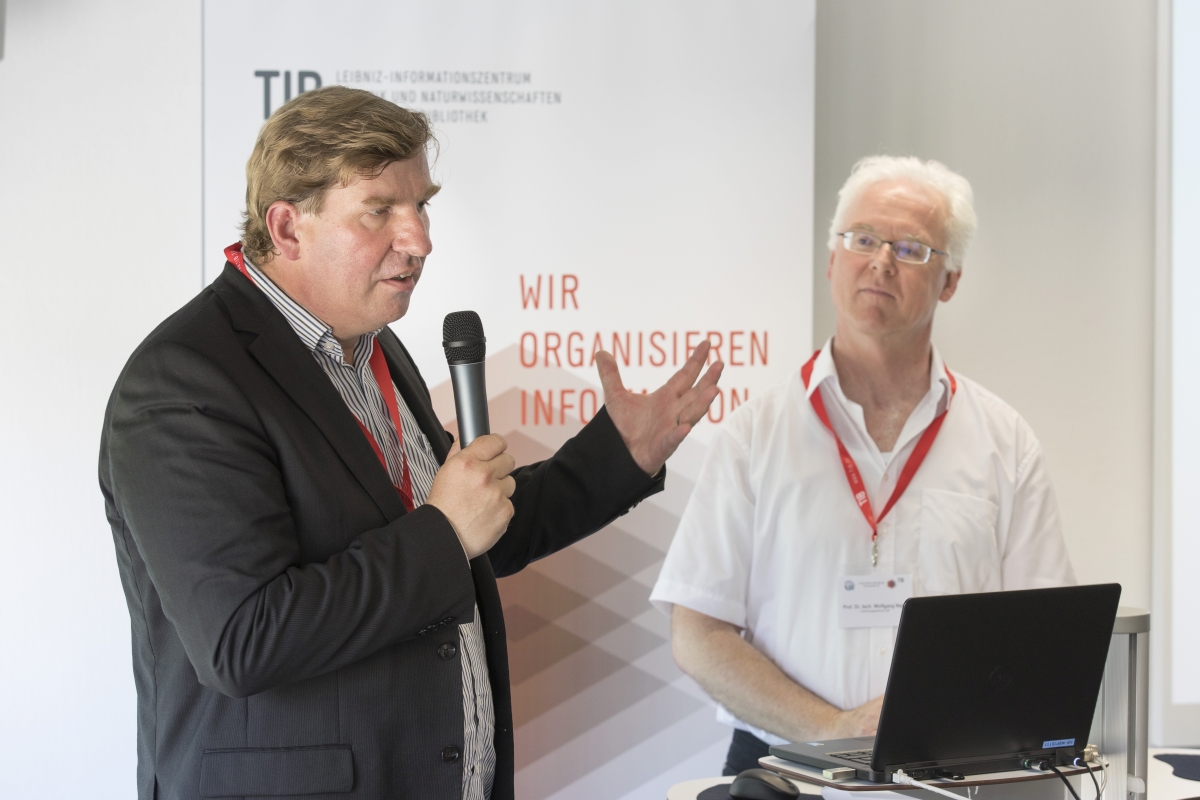 \n\t\t\t
 \n\t\t\t
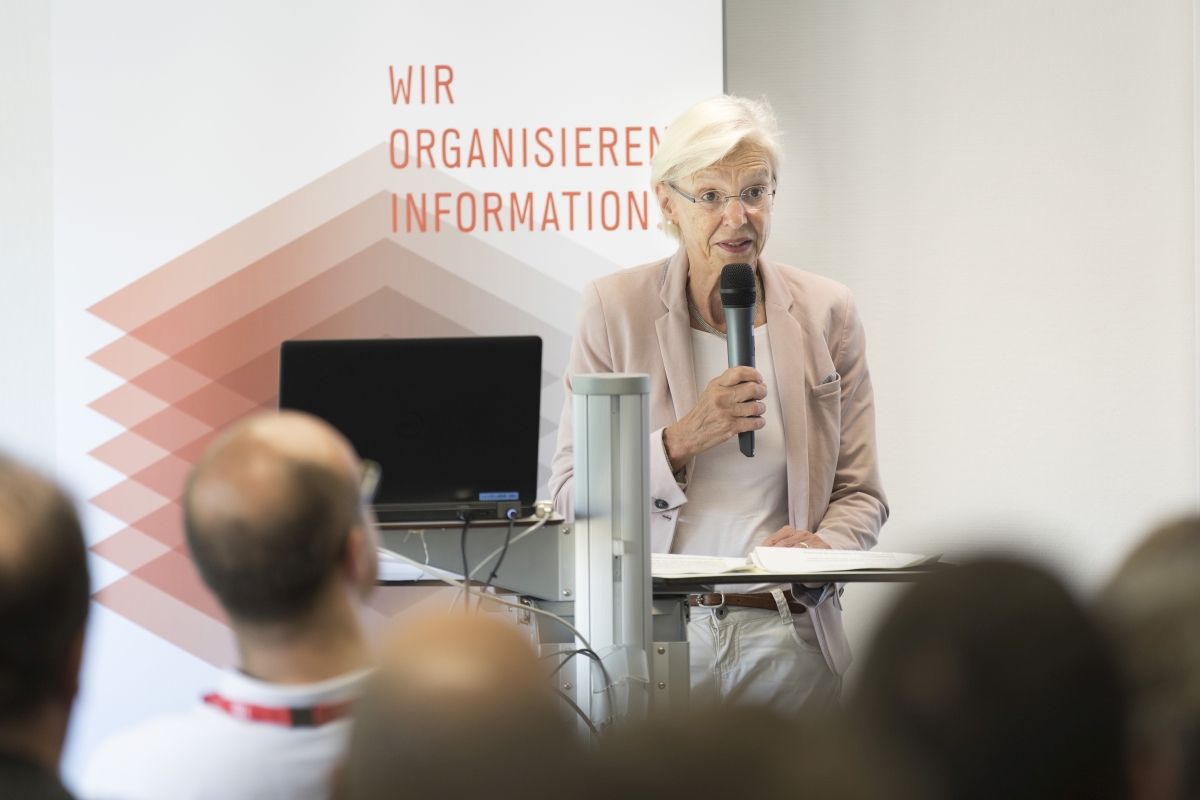 \n\t\t\t
 \n\t\t\t
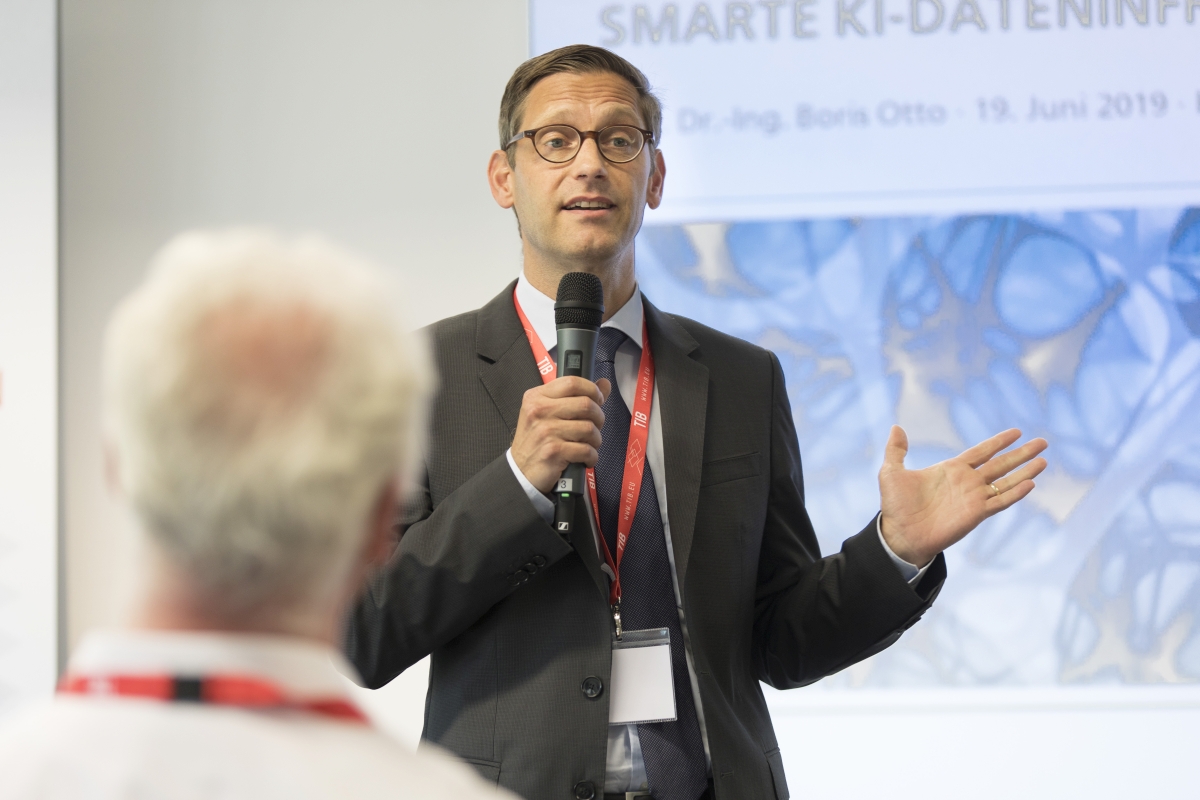 \n\t\t\t
 \n\t\t\t
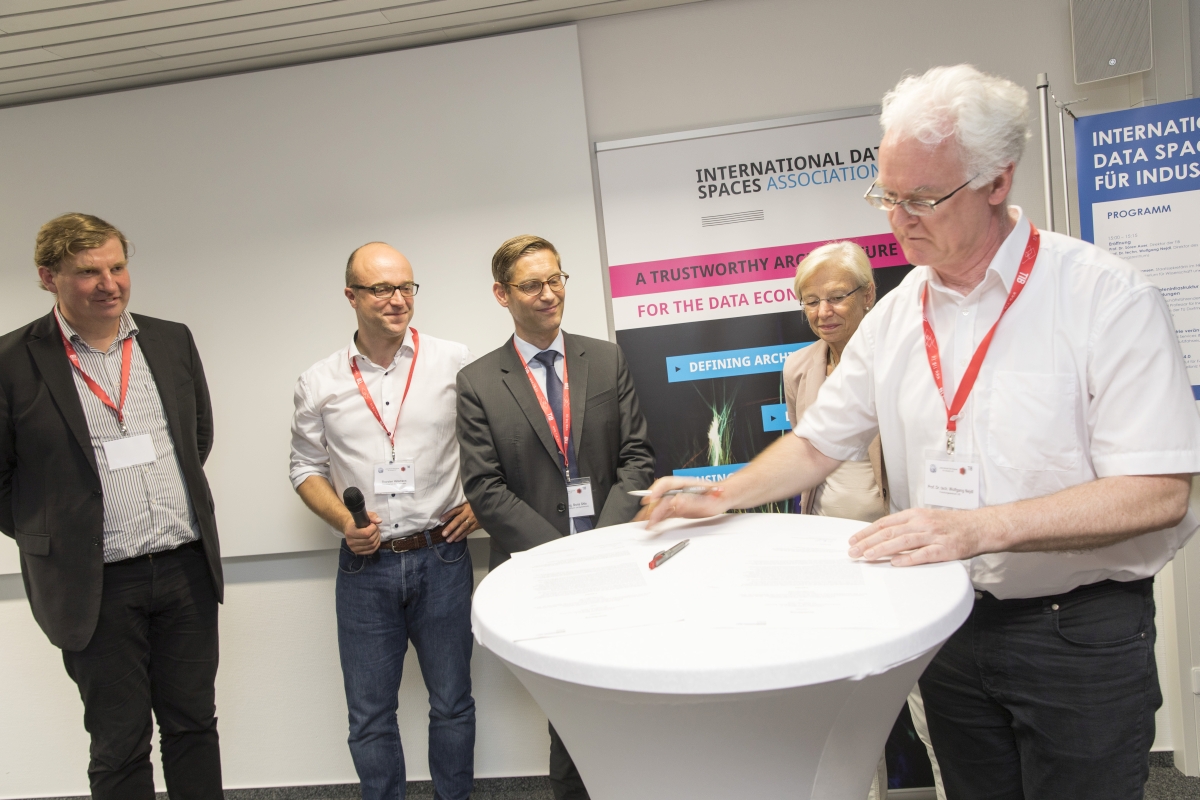 \n\t\t\t


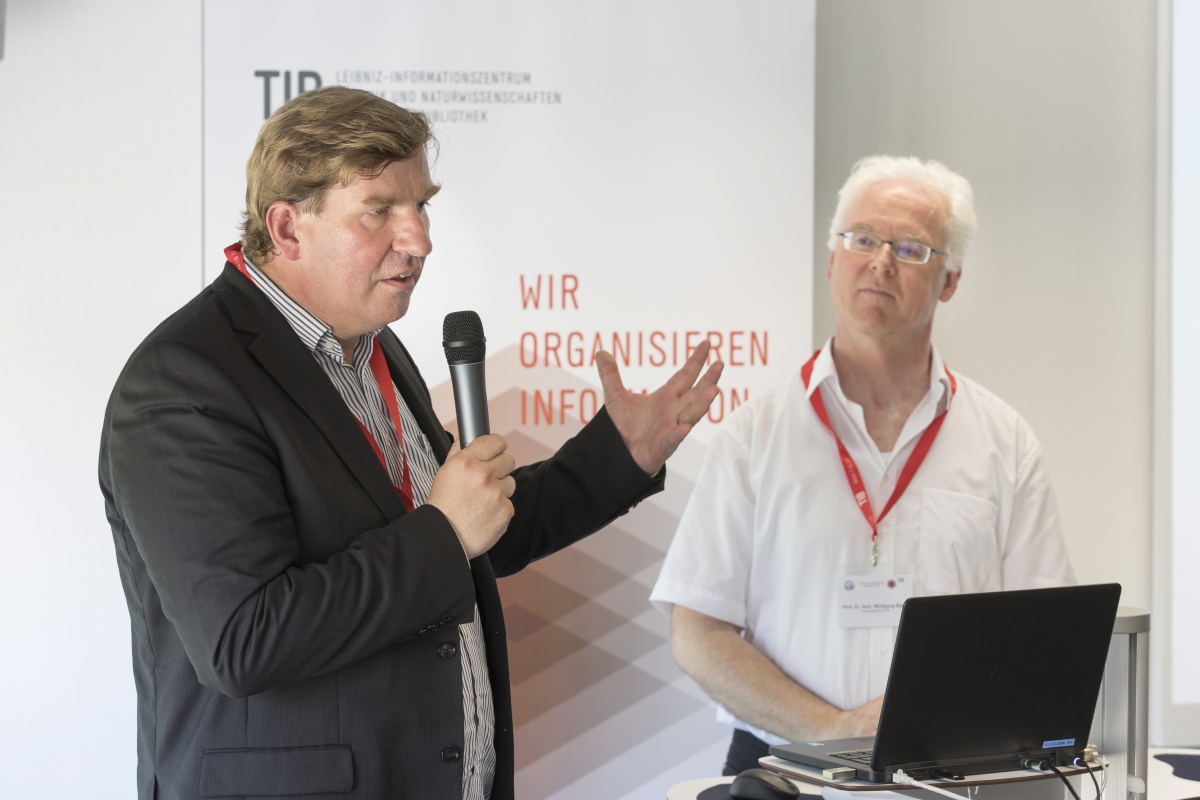
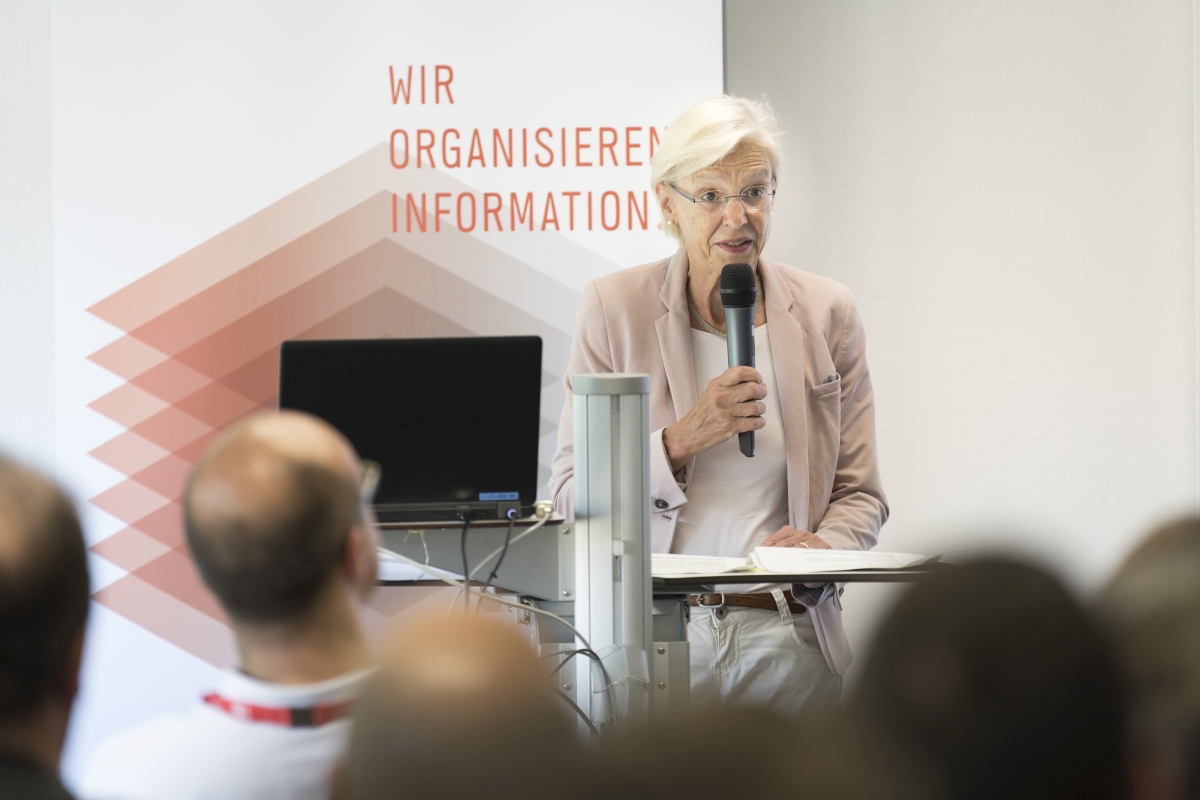
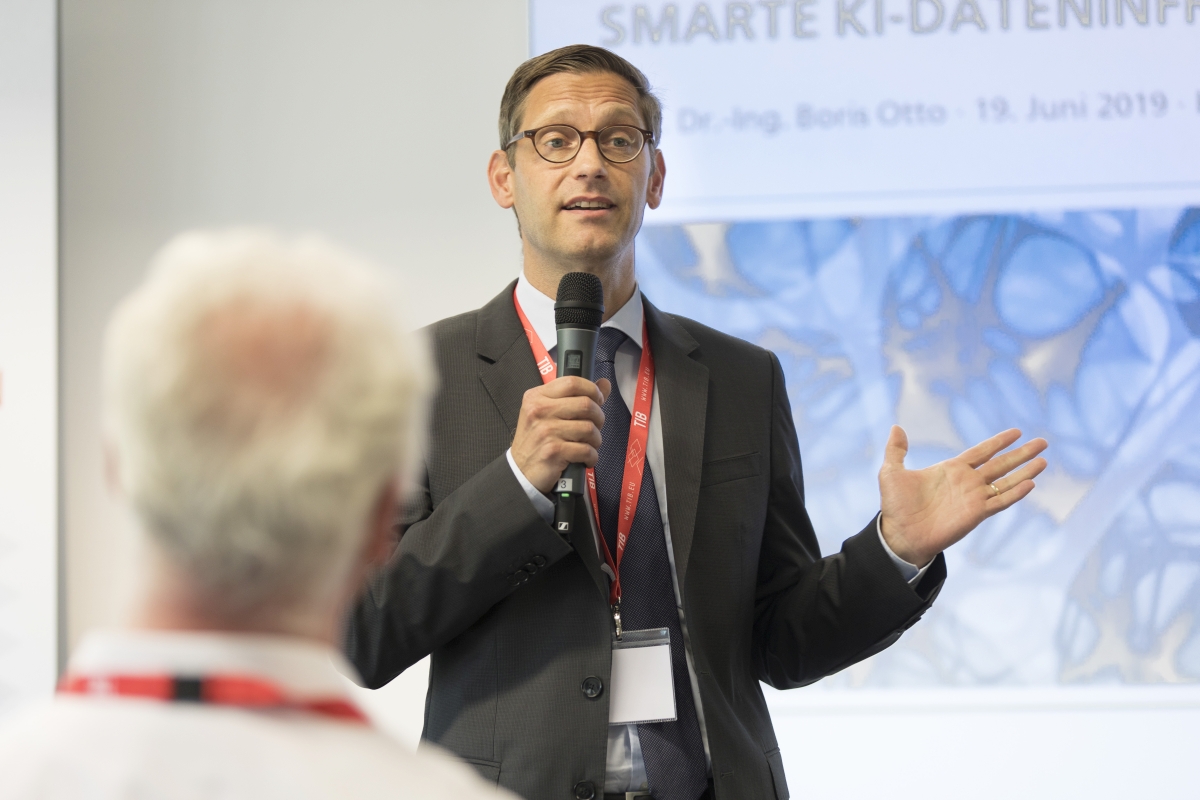
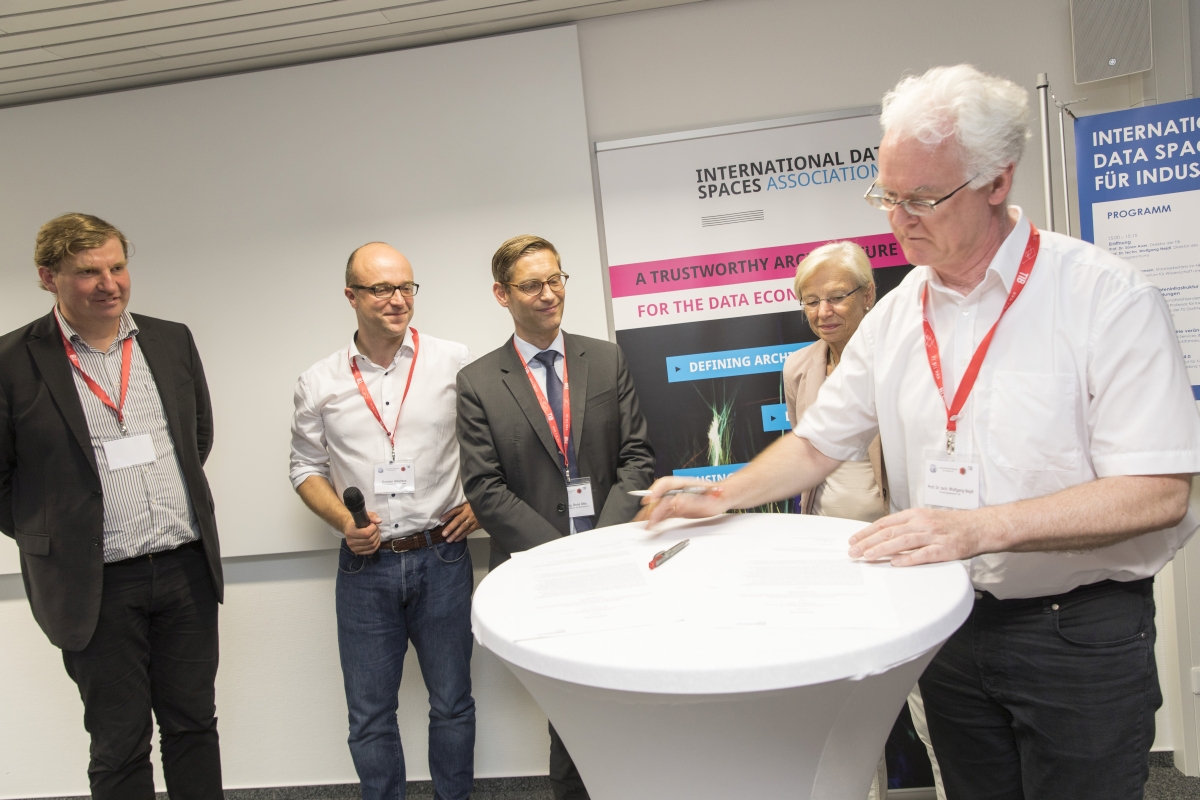


 Frist f\u00fcr die Erstellung von Lehrmaterialien: 1. Oktober 2018